

Selecting the right contract electronics manufacturer can make or break a product launch. In 2026, the stakes are higher than ever: supply chains remain volatile, product lifecycles are shorter, and end-users demand flawless reliability from automotive sensors to medical devices. A contract electronics manufacturer that holds the right quality certifications offers more than a compliance checkbox — it demonstrates a systematic approach to defect prevention, traceability, and continuous improvement.

Whether you need SMT assembly services for a consumer gadget or full-scale electronic manufacturing services for an industrial system, understanding the certification landscape helps you separate genuine quality partners from those who merely claim it. This guide breaks down the certifications that matter most when evaluating a contract electronics manufacturer in 2026 and how to verify them.
Why Quality Certifications Matter for a Contract Electronics Manufacturer
Quality certifications serve as third-party validation that a contract electronics manufacturer follows documented, audited processes. Without them, quality claims are just marketing. Here is why certifications matter in practice:
- Risk reduction: Certified manufacturers undergo regular surveillance audits, meaning their processes are continuously verified by independent auditors.
- Traceability: Standards like ISO 9001 require documented procedures for every step — from incoming components to final test — enabling root-cause analysis when issues arise.
- Regulatory compliance: For medical (FDA), automotive (IATF 16949), and aerospace products, certification is not optional — it is a legal requirement for market access.
- Cost predictability: A certified contract electronics manufacturer typically achieves higher first-pass yields, reducing rework costs and field failure rates that erode margins.
A manufacturer without certifications may offer lower unit prices, but the hidden cost of quality escapes, production delays, and product recalls easily wipes out any upfront savings. The cheapest contract electronics manufacturer is rarely the least expensive overall once warranty claims, brand damage, and lost customer trust are factored into the total equation.
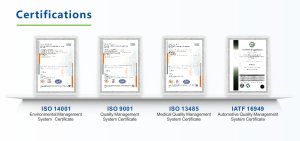
ISO 9001 and ISO 13485: Foundation and Medical-Grade Quality
ISO 9001: The Universal Baseline
ISO 9001 is the most widely recognized quality management standard in the world. Every reputable contract electronics manufacturer should hold ISO 9001 certification as a minimum. The standard requires:
- A documented quality management system (QMS) with clear scope and process maps.
- Risk-based thinking throughout the organization, from strategic planning to daily operations.
- Customer focus and continual improvement processes driven by data, not intuition.
- Internal audits and management reviews at planned intervals, with corrective action tracking.
ISO 9001 alone does not guarantee perfect PCBs, but it ensures that when problems occur, the contract electronics manufacturer has a systematic framework to identify, correct, and prevent recurrence. Without this framework, quality becomes dependent on individual operators rather than repeatable processes.
ISO 13485: Medical Device Manufacturing
For medical electronics, ISO 13485 adds a stricter layer on top of ISO 9001. It builds on the same quality management principles but adds requirements specific to medical device production:
- Design controls and risk management per ISO 14971, documenting how each design risk is mitigated.
- Sterilization process validation and cleanroom controls where applicable.
- Biocompatibility and cleanliness requirements for patient-contacting components.
- Unique device identification (UDI) traceability for post-market surveillance.
If your product touches healthcare — from patient monitors to wearable diagnostics — your contract electronics manufacturer must hold ISO 13485. Keep Best PCBA maintains both ISO 9001 and ISO 13485 certifications across its Shenzhen headquarters and Thailand production lines, enabling medical-device customers to source with confidence.
IATF 16949: Automotive-Grade Manufacturing Standards
The automotive industry demands zero-defect quality. IATF 16949 is the automotive-specific quality management standard that every contract electronics manufacturer serving OEMs must hold. It is far more prescriptive than ISO 9001, embedding specific tools and methods directly into the QMS. Key requirements include:
- Advanced Product Quality Planning (APQP): A structured five-phase process for managing new product introduction, ensuring quality is designed in from concept through production.
- Production Part Approval Process (PPAP): A comprehensive documentation package proving the manufacturing process can consistently produce parts meeting all engineering requirements.
- Statistical Process Control (SPC): Real-time monitoring of critical process parameters — solder paste volume, reflow profile, placement accuracy — with Cpk targets of 1.33 or higher.
- Failure Mode and Effects Analysis (FMEA): Proactive risk assessment for both design and process, ranking failure modes by severity, occurrence, and detectability.
A contract electronics manufacturer certified to IATF 16949 demonstrates that it can meet the stringent traceability and defect-prevention requirements of automotive production. This matters even for non-automotive customers — the discipline of IATF 16949 raises the quality bar across all production lines, not just automotive ones.

IPC Standards: Process and Product Quality Benchmarks
While ISO and IATF define management systems, IPC standards define the technical acceptance criteria for PCB assembly. A competent contract electronics manufacturer should reference these standards daily on the production floor:
- IPC-J-STD-001: Requirements for soldered electrical and electronic assemblies — solder joint quality, fillet shape, and wetting criteria.
- IPC-A-610: Visual acceptability of assembled PCBs, the standard reference for inspectors and operators.
- IPC-9201: Solder paste inspection guidelines and SPI measurement methodology.
- IPC-7095: BGA and chip-scale package assembly, including rework and inspection criteria.
Class 2 vs Class 3 Acceptance
IPC-A-610 defines three acceptance classes that every contract electronics manufacturer must understand:
- Class 1 (general electronics): Consumer products with limited life and function — basic workmanship acceptable.
- Class 2 (dedicated service): Industrial and telecom equipment — higher reliability expected, longer service life.
- Class 3 (high reliability): Life-support, aerospace, automotive safety — must not fail, zero tolerance for defects.
When evaluating a PCB assembly manufacturer, ask which IPC class they routinely build to. A contract electronics manufacturer capable of Class 3 production can always produce to Class 2 or Class 1, but the reverse is not guaranteed — Class 3 requires tighter process controls, more rigorous inspection, and more experienced operators.
ESD, RoHS, and Environmental Compliance
ANSI/ESD S20.20
Electrostatic discharge (ESD) damage accounts for a significant percentage of latent component failures that pass outgoing inspection but fail in the field. ANSI/ESD S20.20 is the standard for ESD control programs. A qualified contract electronics manufacturer should maintain:
- ESD-controlled production floors with conductive flooring and grounded workstations.
- Ionization systems in areas where grounding is impractical, such as hand-assembly zones.
- ESD monitoring wrist straps with continuous testers and alarm logging.
- Regular ESD audits, training records, and compliance verification using surface resistance meters.
RoHS and REACH Compliance
RoHS (Restriction of Hazardous Substances) restricts lead, mercury, cadmium, hexavalent chromium, and specific flame retardants in electronics. REACH requires registration, evaluation, and authorization of chemical substances used in manufacturing. Every contract electronics manufacturer shipping to the EU must comply with both regulations.
Providers offering a one-stop PCBA solution like Keep Best PCBA maintain full material declarations and RoHS/REACH compliance documentation for every project, ensuring smooth customs clearance and regulatory approval in target markets.
How to Verify a Contract Electronics Manufacturer’s Certifications
Certifications are only as good as their validity and scope. Here is a practical checklist for verifying a contract electronics manufacturer before signing a production contract:
- Request current certificates — Ask for PDF copies with the auditor name, certificate number, issue date, and expiry. Cross-check on the certification body’s website (e.g., SGS, TUV, BSI) to confirm authenticity.
- Check scope coverage — Ensure the certificate scope explicitly includes PCB assembly or electronics manufacturing, not just consulting, design, or distribution.
- Review the last audit report — A reputable contract electronics manufacturer will share non-conformity findings and corrective actions from their most recent surveillance audit, not just the certificate itself.
- Ask about IPC class capability — Request documented evidence of Class 2 or Class 3 production capability, including sample inspection reports and operator certifications.
- Verify traceability systems — Confirm the manufacturer uses MES traceability to track every board through every process step, from solder paste printing to final functional test.
- Visit the factory or request a virtual tour — Certificates tell you the system exists; a factory visit shows whether it is actually followed on the production floor. Look for ESD signage, calibrated equipment labels, and organized material flow.
- Evaluate audit frequency and history — Annual surveillance audits are standard. Be cautious if the last audit was more than 12 months ago or if the manufacturer has switched auditors frequently, which may indicate certification shopping.
get a free quotefrom Keep Best PCBA to verify our certifications firsthand — we welcome audits, factory visits, and technical due diligence at both our Shenzhen and Thailand facilities.
Choosing a contract electronics manufacturer based solely on price is a gamble that most product teams cannot afford. The right certifications — ISO 9001, ISO 13485, IATF 16949, IPC Class 3 capability, ANSI/ESD S20.20, and RoHS/REACH compliance — provide objective, third-party-verified evidence that a partner has the systems, discipline, and culture to deliver consistent quality at scale.
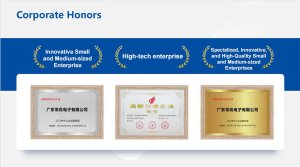
Contact Keep Best PCBA for professional SMT assembly services and comprehensive electronic manufacturing services backed by ISO 9001, ISO 13485, and IATF 16949 certifications. With 15+ SMT lines, 99.9% yield rates, and dual-factory capacity in Shenzhen and Thailand, we are the contract electronics manufacturer you can trust for your next product launch.