
Robotics systems rarely fail because the software was miswritten. More often, the failure starts in the physical layer — a solder joint under a high-current motor driver, a BGA void on a vision-processing module, or a connector that loosens after ten thousand vibration cycles. That is why PCBA for robotics is governed by quality standards that go well beyond ordinary consumer electronics manufacturing. A robot board must survive repeated motion, thermal shock, electrical noise, and long-term mechanical stress while still delivering deterministic performance.
This guide explains the certification and quality framework that separates production-grade robotics boards from hobby prototypes. Whether you are building collaborative robot arms, autonomous mobile robots, surgical robots, or drone flight controllers, understanding these standards helps you evaluate any PCB assembly manufacturer before you commit a robotics product to volume. Robotics programs move too fast and carry too much liability to discover manufacturing gaps after the first field deployment.
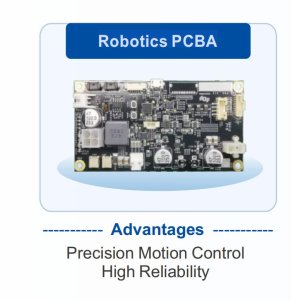
Why PCBA for Robotics Needs a Higher Reliability Bar
Consumer electronics are designed for controlled environments. A smartphone is not expected to function while bolted to a vibrating robotic joint in a welding cell. PCBA for robotics, by contrast, must survive inside systems that generate and endure constant mechanical, thermal, and electrical stress. The assembly process must therefore anticipate those stresses from the first design review.
Four failure modes dominate robotics applications:
- Mechanical fatigue. Repeated acceleration, deceleration, and vibration stress solder joints, connectors, and large passive components. Without strain relief, staking, and board stiffening, cracks propagate quickly.
- Thermal cycling. Motor drivers, power stages, and compute modules heat and cool as the robot changes operating state. Coefficient-of-thermal-expansion mismatch between PCB, copper, and components creates fatigue.
- Electrical noise. Servo motors, switching regulators, and long cable harnesses inject noise into sensitive encoder, sensor, and communication lines. Layout and grounding decisions made during PCBA for robotics design directly determine immunity.
- High-current density. Power distribution networks must deliver clean current to motors and actuators without voltage collapse or excessive heating. Trace width, copper weight, and via stitching matter far more than in low-power devices.
A manufacturing partner experienced in PCBA for robotics treats these constraints as design inputs, not afterthoughts. That mindset difference shows up in DFM feedback, component selection, process controls, and final test coverage. When PCBA for robotics is treated this way from the start, reliability becomes a predictable outcome rather than a hopeful claim.
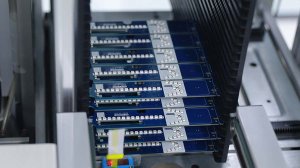
Core Quality Standards for PCBA for Robotics
Robotics spans industrial, medical, logistics, agricultural, and consumer markets, so the exact certification stack depends on the end application. Several standards, however, appear repeatedly in any serious PCBA for robotics program.
ISO 9001 Quality Management Systems
ISO 9001 is the baseline management-system certification for any electronic manufacturing services supplier. It does not guarantee perfect boards, but it does require documented processes, corrective-action discipline, supplier management, and management review. For PCBA for robotics, ISO 9001 is the minimum evidence that a factory can consistently follow a controlled process and improve it over time. Without it, scaling PCBA for robotics production across multiple lots becomes unmanageable.
IATF 16949 Automotive Quality Standard
Although written for automotive, IATF 16949 has become a de facto reliability benchmark for robotics manufacturing. Its core tools — Advanced Product Quality Planning, Production Part Approval Process, Failure Mode and Effects Analysis, Statistical Process Control, and Measurement System Analysis — map directly onto robotics programs that cannot tolerate field failures. Many robotics OEMs now require IATF 16949 certification from their PCBA for robotics suppliers because the failure-cost profile is similar to automotive: high volume, long service life, and safety-critical motion. In practice, PCBA for robotics programs that adopt IATF 16949 tools see fewer surprises during NPI and lower field-failure rates.
IPC-A-610 Acceptability of Electronic Assemblies
IPC-A-610 defines the visual acceptability criteria for solder joints, components, and cleanliness. For robotics boards, Class 2 (dedicated service products) is typical, while Class 3 (high-performance/high-reliability) is specified for surgical, aerospace-defense, or safety-critical robots.
A one-stop PCBA solution with IPC Class 3 capability gives robotics developers a clear path when product liability or mission profile demands the highest workmanship level.
IPC-J-STD-001 Requirements for Soldered Electrical and Electronic Assemblies
This standard governs materials, methods, and verification criteria for soldering processes. Robotics manufacturers often require J-STD-001 Class 3 or at minimum Class 2 with additional customer-specific requirements. The standard covers everything from flux selection and solder alloy to cleanliness and inspection sampling.
Application-Specific Standards
- IEC 61508 / ISO 13849 — Functional safety for robots with human-robot collaboration or safety-related control systems
- IEC 60601-1 — Medical electrical equipment safety for surgical and rehabilitation robots
- UL 1740 — Industrial robot safety standard for North American market access
- CE Machinery Directive 2006/42/EC — European compliance for robot systems and subsystems
The right certification stack for your program depends on where the robot will be sold and how it interacts with people. A manufacturing partner with broad certification coverage can help you navigate that matrix without restarting the supply chain for each new market.
Design and Manufacturing Practices for PCBA for Robotics
Standards matter, but they are only as good as the process discipline behind them. In PCBA for robotics, several manufacturing practices directly influence field reliability. The best PCBA for robotics suppliers translate design intent into process controls that repeat consistently across thousands of units.
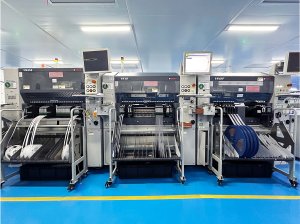
DFM for Mechanical and Thermal Stress
Robotics boards are rarely simple rectangles with uniform component density. They must fit into compact enclosures, route high-current motor phases alongside microamp sensor signals, and survive vibration. DFM for robotics emphasizes:
- Component placement. Heavy parts placed away from board edges and strain points; connectors oriented to reduce cable-induced torque
- Stiffening and support. Additional mounting holes, standoffs, and board stiffeners for large PCBs or flex-rigid sections
- Trace and via design. Heavier copper for power paths, thermal vias under power components, and controlled impedance for high-speed signals
- Conformal coating or potting. Protection against moisture, dust, and conductive contamination in industrial environments
Mixed-Technology Assembly
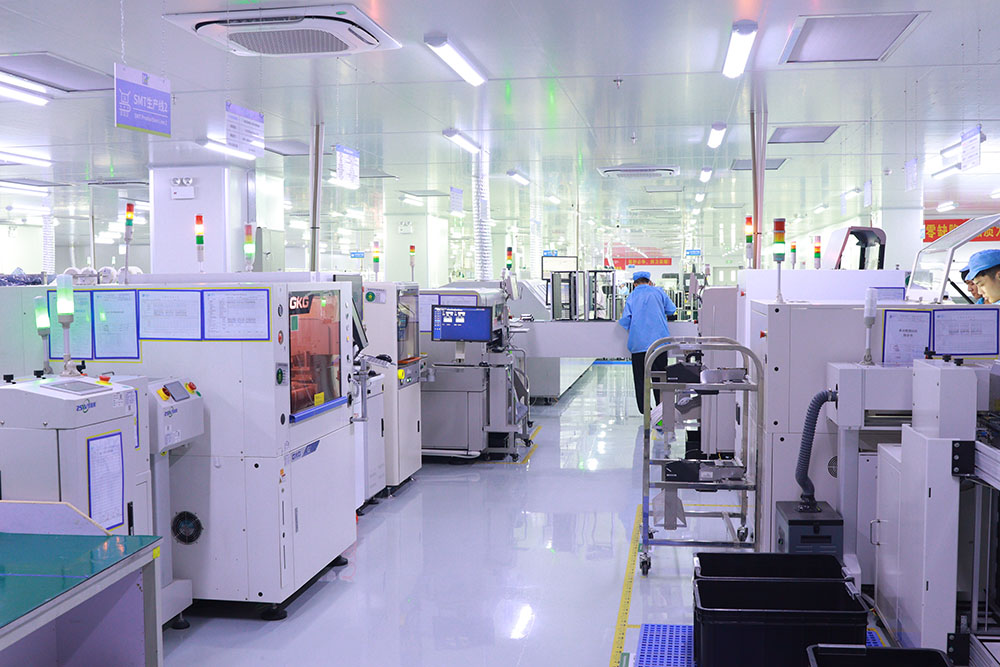
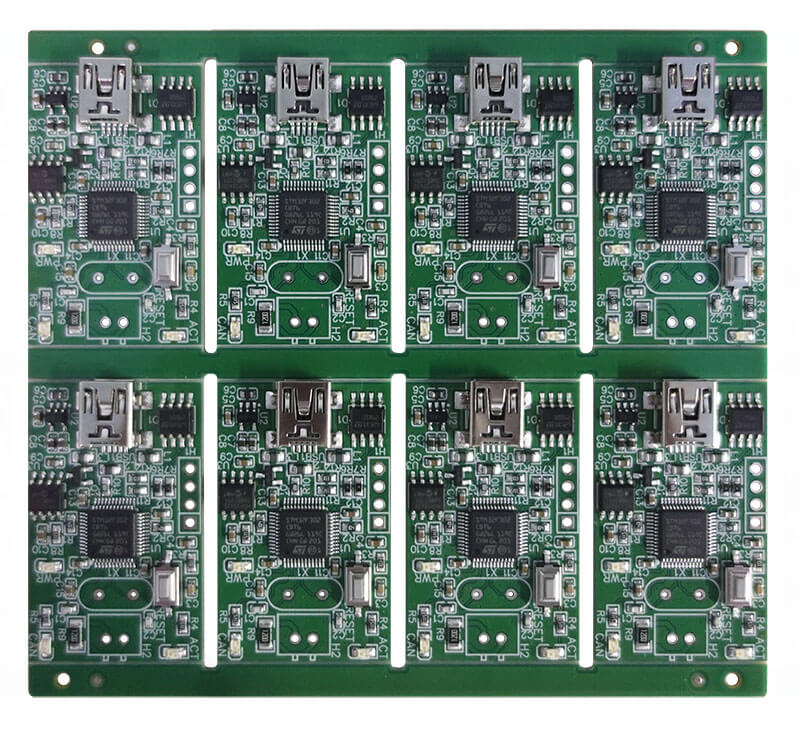
Robotics boards often combine fine-pitch SMT microcontrollers and FPGAs with through-hole connectors, power terminals, and large capacitors. A line configured only for high-density SMT will struggle with the mechanical parts. A line configured only for through-hole will miss placement accuracy on QFNs and BGAs. Capable electronic manufacturing services for robotics run both technologies with controlled handoff between SMT reflow, selective wave soldering, and hand-assembly stations for specialized components. This flexibility is essential for modern PCBA for robotics designs.
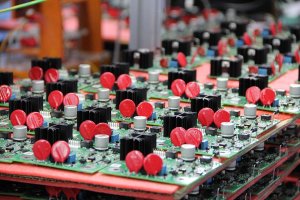
Soldering Process Control
Lead-free SAC305 remains the default alloy, but robotics programs sometimes specify SAC405, SN100C, or even high-reliability alloys with added bismuth or antimony for improved thermal fatigue resistance. Profile development must account for mixed thermal mass, especially when large motor-driver packages share a panel with small sensor ICs. Nitrogen reflow, selective soldering, and careful fixture design reduce voiding and improve joint consistency in PCBA for robotics production.
Inspection and Testing Stack for PCBA for Robotics
Visual inspection alone is insufficient for PCBA for robotics. The hidden joints under BGAs, the fine-pitch QFNs on motor controllers, and the high-current connections all require layered verification.
SPI and 3D AOI
Solder paste inspection catches volume, height, and alignment defects before reflow. Three-dimensional AOI then verifies post-reflow joint quality, component presence, polarity, and alignment. For PCBA for robotics, these two stages catch the majority of process defects before functional testing.
X-Ray Inspection
BGAs, QFNs, and power-package bottom-terminated components hide their joints from optical cameras. X-ray inspection reveals voids, head-in-pillow defects, bridging, and insufficient solder. High-reliability PCBA for robotics programs typically require X-ray sampling or 100 percent coverage on safety-critical devices.
In-Circuit and Functional Testing
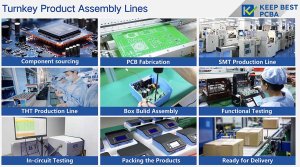
ICT validates component values, orientation, and continuity against the netlist. Boundary scan helps when physical probe access is limited by dense layouts. Functional testing powers the board under realistic loads, exercises motor drives, reads encoder feedback, and runs communication loops. For robotics, FCT often includes motion-profile simulation to confirm that power and signal paths behave under dynamic load.
Environmental Stress Screening
Depending on the end market, robotics boards may undergo temperature cycling, vibration testing, highly accelerated life testing, or burn-in. These screens validate that the PCBA for robotics survives the stress profile defined in the product specification. They are not a substitute for good design, but they catch latent defects that escape electrical testing.
How to Choose a PCBA for Robotics Manufacturing Partner
Not every PCB assembly manufacturer is equipped for robotics. When evaluating partners for PCBA for robotics, focus on capabilities that directly reduce field risk.
- Robotics or high-reliability vertical experience. Ask for reference projects in collaborative robots, AMRs, drones, surgical devices, or precision motion controllers.
- Certification scope. Confirm ISO 9001, IATF 16949, IPC-A-610 Class 2 or 3, and any market-specific standards your product requires.
- Engineering engagement. Look for early DFM, DFT, and test-strategy reviews rather than quote-only responses.
- Full inspection capability. SPI, 3D AOI, X-ray, ICT, and FCT should all be available in-house with documented coverage.
- Traceability and MES. Serial-level traceability of components, processes, and test results supports field failure analysis and regulatory audits.
- Supply chain resilience. Long-lifecycle robotics programs need secure sourcing, obsolescence management, and alternate qualification.
- Geographic flexibility. A partner with both China and Thailand manufacturing can help balance cost, capacity, and regional market access.
Visit the line, review the quality manual, and run a pilot build before committing volume. The best partners welcome that scrutiny because their process discipline is the product. Most teams eventually get a free quote from a shortlist of two or three qualified PCBA for robotics manufacturers before final selection.
Conclusion
PCBA for robotics sits at the intersection of mechanical engineering, power electronics, embedded computing, and quality systems. A robot is only as reliable as the boards inside it, and those boards are only as reliable as the standards and processes used to build them. ISO 9001 and IATF 16949 provide the management backbone, IPC standards define workmanship expectations, and a layered inspection stack confirms that every joint meets the specification.
Success comes from choosing a manufacturing partner that treats robotics reliability as a design input rather than a final test. From DFM through environmental stress screening, every step either builds in margin or borrows against future field failures. Contact Keep Best PCBA for professional PCBA for robotics services — backed by ISO 9001 and IATF 16949 certifications, full 3D AOI and X-ray inspection, China and Thailand manufacturing options, and engineering support from prototype through volume production.