
Leaded and lead-free processes represent two core soldering technologies in PCBA manufacturing, exhibiting significant differences in melting point temperature, alloy composition, cost structure, and process equipment. This paper systematically compares the technical parameters and applicable scenarios of both processes, providing decision-making references for electronic manufacturing selection.
1.Fundamental Process Concepts
Lead-based soldering refers to traditional techniques using tin-lead alloy solder, typically composed of 63% tin and 37% lead. Lead-free soldering employs environmentally friendly alloys such as tin-silver-copper to replace lead, with the mainstream formulation being SAC305 (96.5% tin, 3% silver, 0.5% copper). It is important to clarify that lead-free soldering does not mean absolutely zero lead content. Instead, lead content is controlled below 0.1%, meeting the limits set by environmental regulations such as RoHS.
2.Core Parameter Comparison
2.1 Melting Point and Operating Temperature
The melting point of leaded tin alloys ranges from 180 to 185 degrees Celsius, with actual soldering temperatures set between 240 and 250 degrees Celsius. Lead-free alloys exhibit significantly higher melting points, ranging from 210 to 235°C, necessitating corresponding operating temperatures of 245 to 280°C. This temperature differential directly impacts soldering thermal shock, component temperature tolerance requirements, and energy consumption levels.
2.2 Alloy Composition Systems
Lead-based processes utilize eutectic tin-lead alloys with a 63:37 tin-to-lead ratio, offering the lowest melting point and excellent fluidity. Lead-free processes employ tin-based alloys with added silver, copper, bismuth, and other elements to enhance performance. SAC305 has become the industry standard, where silver content provides structural reinforcement, copper content inhibits copper dissolution, and the formulation balances wettability, reliability, and cost.
3. Cost Structure Analysis
Significant cost differences exist between solder types. Tin’s market price substantially exceeds lead’s, resulting in lead-free solder raw material costs typically 30% to 50% higher than leaded solder. This cost is passed on to processing stages, with lead-free process quotations generally exceeding leaded ones. Additionally, lead-free processes demand higher-temperature equipment and nitrogen protection systems, increasing capital investment and operational expenses.
4.Process Equipment Differences
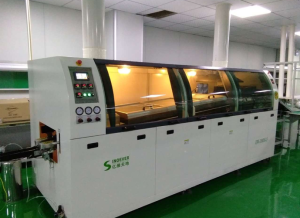
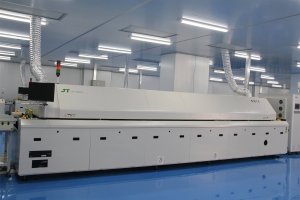
The two processes exhibit distinct differences in equipment configuration and parameter settings. The solder systems are entirely different: leaded processes use tin-lead solder paste, while lead-free processes use tin-silver-copper solder paste. Component selection must match process temperatures, with lead-free processes demanding higher temperature ratings. Wave soldering equipment requires upgrades to high-temperature materials and heating systems. Solder paste printers need optimized stencil aperture designs. Manual soldering irons require increased set temperatures and corrosion-resistant tips.
5.Application Scenario Selection
Lead-based processes suit cost-sensitive traditional products with moderate reliability requirements and no export environmental restrictions. Lead-free processes are mandatory for export products like consumer electronics, automotive electronics, and medical devices, complying with regulations such as EU RoHS and China’s Restriction of Hazardous Substances in Electrical and Electronic Products. While some high-reliability military and aerospace sectors retain lead-based processes, they are transitioning toward high-reliability lead-free solutions.
6.Conclusion

Both leaded and lead-free processes possess distinct technical characteristics and economic considerations. The leaded process offers lower costs and a broader process window but faces environmental regulatory constraints. The lead-free process is environmentally friendly and aligns with international trends, yet it entails higher costs and greater process complexity. Selection decisions require comprehensive evaluation of product positioning, target markets, cost budgets, and reliability requirements to achieve optimal technical and economic outcomes while ensuring compliance.