
Selecting the right turnkey PCB assembly partner is one of the most consequential decisions an electronics hardware team can make in 2026. A turnkey provider manages the entire production cycle, from component procurement and bare board fabrication through SMT assembly, through-hole assembly, functional testing, and final box build delivery. When executed well, this model compresses lead times, eliminates handoff errors, and lets product teams concentrate on design rather than logistics. When executed poorly, it introduces hidden costs, quality escapes, and shipment delays that ripple through your entire supply chain.
This guide walks through the eight factors that separate a reliable turnkey PCB assembly provider from a risky one, with a practical evaluation checklist you can apply during vendor selection.
What Is Turnkey PCB Assembly?
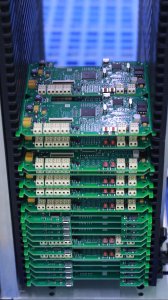
Turnkey PCB assembly is a full-service manufacturing model in which a single PCB assembly manufacturer takes responsibility for every production stage. The customer submits design files, Gerber data, and a bill of materials; the manufacturer handles bare board fabrication, component sourcing, SMT and through-hole assembly, functional testing, and final assembly. The name derives from the concept that the customer simply turns the key to receive a finished, tested product ready for deployment.
This model contrasts with consignment assembly, where the customer supplies all components and the manufacturer only performs board assembly. Turnkey PCB assembly shifts supply-chain risk to the manufacturer but demands robust procurement capabilities, established supplier relationships, and sophisticated inventory management on their part.
Why Partner Selection Matters More Than Price
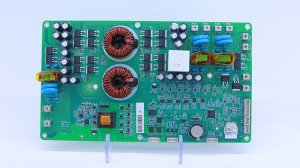
It is tempting to select the lowest bidder, but turnkey PCB assembly involves dozens of cost variables that are easy to obscure. A provider quoting four dollars per board may use grey-market components, skip AOI inspection, or run no functional test, while a competitor at five dollars fifty might include full traceability, IPC-A-610 Class 3 inspection, and X-ray screening. The cheaper option frequently costs more after rework, field returns, and reputational damage are factored in.
Beyond cost, the wrong partner can stall your product launch. Missed component lead times, inadequate DFM feedback, and poor communication during new product introduction routinely add weeks to a schedule. For startups and established enterprises alike, time-to-market often outweighs modest unit-price savings when choosing a turnkey PCB assembly partner.
8 Key Factors to Evaluate a Turnkey PCB Assembly Partner
1. Technical Capabilities and Equipment
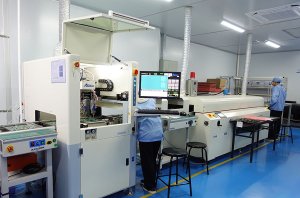
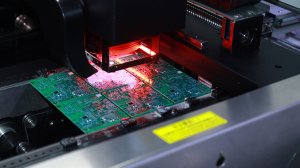
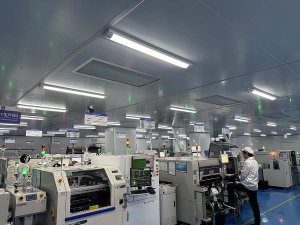
A capable turnkey PCB assembly partner should demonstrate modern equipment across the entire production line. Look for high-speed pick-and-place machines capable of placing 01005 components and fine-pitch QFNs, automated solder paste printers with SPI solder paste inspection, 3D AOI for post-reflow inspection, and X-ray systems for hidden solder joints on BGAs and QFNs. For through-hole components, selective soldering or wave soldering equipment should be available.
Ask whether the facility supports lead-free PCB assembly and mass production PCB assembly volumes, and request specific equipment brand and model numbers. Facilities that cannot or will not share this information may be outsourcing your work to unknown subcontractors, which eliminates the accountability that turnkey PCB assembly is supposed to provide.
2. Component Sourcing and Supply Chain
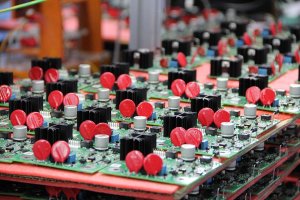
Because turnkey means the manufacturer purchases components on your behalf, sourcing capability is critical. Evaluate whether the provider maintains direct relationships with authorized distributors such as Digi-Key, Mouser, Arrow, and Avnet. Ask about their approach to component obsolescence management, alternative part cross-referencing, and counterfeit prevention protocols.
A strong turnkey PCB assembly partner will flag BOM risks early, including parts with long lead times, single-source dependencies, or imminent end-of-life notices. They should also offer buffer-stock programs so that minor demand fluctuations do not trigger production stops or partial shipments.

3. Quality Management Systems
Quality should be verifiable, not merely claimed. At minimum, a turnkey PCB assembly partner should hold ISO 9001 certification. For regulated industries, look for ISO 13485 for medical devices, IATF 16949 for automotive electronics, or AS9100 for aerospace applications. Request actual certificate numbers and verify them against the issuing certification body.
Beyond certifications, ask about their DPPM defective parts per million rate, first-pass yield percentage, and corrective and preventive action process. A provider that tracks and openly shares these metrics demonstrates genuine commitment to continuous improvement rather than checkbox compliance.
4. Production Capacity and Scalability
Your turnkey PCB assembly partner should handle both prototype and mass production PCB assembly without forcing you to switch manufacturers mid-program. Confirm the number of SMT lines, their throughput per shift, and whether the facility operates multiple shifts or weekends. A partner with three or more production lines can absorb demand spikes without extending lead times.
Also ask about their experience with quick turn PCB assembly for prototyping stages. The ability to deliver boards in three to five days during NPI, then scale to tens of thousands of units per month in production, is a hallmark of a well-rounded electronic manufacturing services provider.
5. DFM and Engineering Support
Design for Manufacturing analysis is where a turnkey partner adds the most measurable value. Before production begins, their engineering team should review your Gerber files, BOM, and assembly drawings for issues such as insufficient solder-pad clearance, component placement conflicts, thermal imbalance during reflow, and test-point accessibility for ICT and FCT fixtures.
A partner that offers DFM analysis as a standard pre-production step will catch problems that would otherwise cause rework cycles or yield loss during initial runs. This is especially important for complex boards with BGA packages, fine-pitch devices, or rigid-flex constructions. If the provider simply accepts files without engineering feedback, they are treating your turnkey PCB assembly project as a transaction rather than a collaboration.

6. Lead Time and Flexibility
Standard turnkey PCB assembly lead times range from two to four weeks for production runs, depending on component availability and board complexity. For prototypes, expect five to ten business days. A reliable partner will commit to realistic lead times and communicate proactively if delays arise due to component shortages or capacity constraints.
Flexibility matters as much as raw speed. Can the provider accommodate last-minute BOM changes during NPI? Do they offer expedited service for urgent builds? Can they manage partial shipments if certain components arrive late while others are ready? These questions reveal how well the turnkey PCB assembly partner handles real-world supply chain volatility.
7. Communication and Transparency
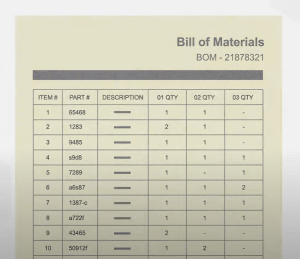
Effective communication separates a smooth production run from a costly nightmare. Your turnkey PCB assembly partner should assign a dedicated project manager, provide regular status updates, and use a visible tracking system such as an MES manufacturing execution system portal. You should be able to check order status, component availability, and production milestones without sending repeated follow-up emails.
Transparency extends to issue reporting as well. When a problem occurs, whether it is a component shortage or an unexpected yield drop, the partner should notify you immediately with a root-cause analysis and proposed solution, not bury the issue until shipment day when your options are limited.
8. Certifications and Industry Compliance
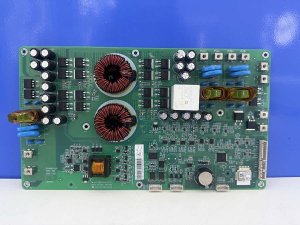
Beyond ISO quality certifications, your partner should comply with environmental and material regulations relevant to your target markets. Confirm RoHS and REACH compliance for all products destined for the European market. For North American customers, ask about FCC and UL readiness. If your product targets the medical sector, ensure the partner can support FDA registration documentation and maintain design history files.
A truly comprehensive one-stop PCBA solution provider will maintain compliance records, material declarations, and full traceability from component lot number to finished board, enabling rapid response to any field issue or regulatory audit.
Turnkey vs. Partial Assembly: Which Do You Need?
Turnkey is not always the right choice for every project. If you already maintain a mature supply chain, hold long-term component contracts with distributors, or require specialized parts that only you can source directly, consignment assembly may be more cost-effective. Similarly, if your volumes are very low and you prefer to purchase components from distributors you already trust, a partial-service model gives you more control over material quality and cost.
However, for most hardware companies, especially those without dedicated procurement teams or established supplier networks, turnkey PCB assembly delivers better total cost of ownership. The time saved on sourcing, the reduction in inventory carrying risk, and the single-point accountability for quality and delivery often outweigh the per-component markup that turnkey providers charge.
Red Flags to Watch For During Evaluation
During vendor evaluation, watch for these warning signs that indicate a provider may not be ready for a serious turnkey PCB assembly partnership:
- Refusal to share equipment lists, certification copies, or quality metrics
- No DFM feedback provided on submitted design files
- Quotes significantly below market rate without clear cost breakdown
- Lack of a dedicated project manager or customer communication portal
- No documented process for handling component shortages or EOL parts
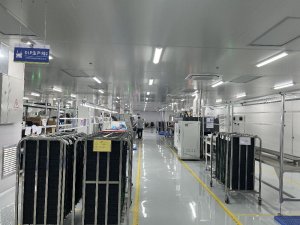
- Unwillingness to provide customer references or arrange a factory tour
- Missing or expired quality certifications with no remediation timeline
Any one of these signals warrants further investigation before committing to a turnkey PCB assembly partnership. Two or more should prompt you to continue your search.
Quick Selection Checklist
Use this checklist to compare candidates during your next turnkey PCB assembly vendor evaluation round:
- Equipment audit: Do they have SPI, 3D AOI, X-ray, and ICT/FCT capabilities in-house?
- Sourcing depth: Do they hold direct accounts with major authorized distributors?
- Quality certifications: Are ISO 9001 and industry-specific certs current and verifiable?
- Capacity: Can they handle your prototype volume today and production volume next year?
- DFM process: Do engineers review your files and provide written feedback before quoting?
- Lead time commitment: Do they offer realistic, contractually stated delivery windows?
- Communication: Is there a dedicated PM and a visible order-tracking system?
- Compliance: Can they provide RoHS, REACH, and material declarations on request?
Conclusion
Choosing a turnkey PCB assembly partner is a strategic decision that affects product quality, launch timing, and long-term manufacturing cost. By evaluating technical capabilities, sourcing strength, quality systems, scalability, engineering support, lead times, communication transparency, and regulatory compliance, you can identify a provider that will grow with your product from initial prototype through full mass production PCB assembly.
Keep Best PCBA has delivered electronic manufacturing services since 2012, holding ISO 9001, ISO 13485, and IATF 16949 certifications across three factory locations in Shenzhen, Jiangmen, and Thailand. With full turnkey PCB assembly capabilities from DFM analysis through final box build assembly, the company serves industries spanning robotics, automotive electronics, medical devices, and IoT. Contact Keep Best PCBA to discuss your next turnkey PCB assembly project and request a comprehensive DFM review for your design files.