
Turnkey PCB assembly (one-stop assembly services) is becoming the mainstream model in electronics manufacturing. Customers need only provide design files, while the factory handles the entire process from procurement to delivery.
Advantage 1: Shorter Time to Market
Under the traditional model, customers must procure PCBs and components separately and coordinate with assembly factories. Turnkey services integrate these multiple steps, typically reducing project timelines by 30%–50%. Factories leverage their supplier networks to source materials quickly, eliminating the time wasted by customers on individual price inquiries.
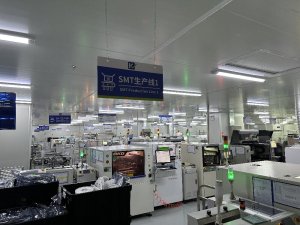
Advantage 2: Reduced Inventory Risk
Electronic component prices fluctuate significantly, and there is a risk of discontinuation. Turnkey service providers assume responsibility for inventory management, so customers do not need to stockpile large quantities of components. Factories secure better prices through bulk purchasing and pass on a portion of these cost savings to customers.
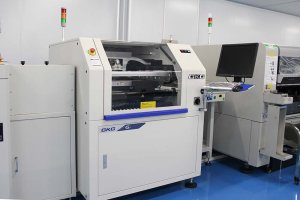
Advantage 3: Professional Engineering Support
Experienced PCB assembly factories are staffed with teams of DFM engineers. They get involved during the design phase to identify potential manufacturing issues, such as insufficient component spacing, thermal design flaws, or missing test points. Detecting these issues early can prevent costly redesign expenses later on.

Advantage 4: Quality Assurance System
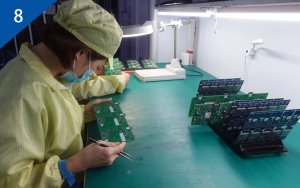
Turnkey service providers assume full responsibility for the final product quality. From PCB board selection and SMT placement to final testing, every step operates under a unified quality system. With clear lines of accountability, there is no need to navigate blame-shifting among multiple suppliers when issues arise.
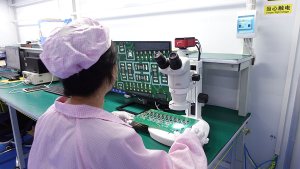
Advantage 5: Flexible Response to Demand Fluctuations
When market demand fluctuates, turnkey factories can quickly adjust production capacity. Customers need not worry about idle production lines or insufficient capacity. This flexibility is particularly well-suited for seasonal products or startups in the market validation phase.
Analysis of Applicable Scenarios The turnkey model is best suited for companies lacking a dedicated procurement team, those with products in a rapid iteration phase, or those needing to enter new markets quickly. Large enterprises with established supply chains may opt for partial turnkey services, retaining procurement rights for core materials.
When selecting a Turnkey PCB Assembly service, be sure to verify the factory’s BOM review capabilities, alternative component recommendation mechanisms, and change management processes. These factors determine the actual value of the service.
Frequently Asked Questions (FAQ)
Q1: What types of companies are best suited for Turnkey PCB Assembly? A: It is best suited for startups lacking a dedicated procurement team and needing rapid time-to-market, as well as small and medium-sized enterprises (SMEs) seeking to reduce the burden of inventory management. Large enterprises can also adopt the Partial Turnkey model to retain control over core materials.
Q2: How much more expensive is a turnkey service compared to in-house procurement? A: Unit prices are typically 5%–15% higher, but when factoring in procurement labor costs, inventory occupancy, and the risk of material shortages, the total cost is often lower. Factories also pass on a portion of the discounts they receive through bulk purchasing to their clients.
Q3: How can I ensure that the materials used by the turnkey service provider are genuine? A: Require the factory to provide a material traceability report to confirm that procurement channels are authorized distributors or the original manufacturer. If necessary, specify suppliers for critical ICs and include clear compensation clauses for counterfeit goods in the contract.
Q4: What is the difference between Partial Turnkey and Full Turnkey? A: Full Turnkey involves the factory procuring all materials; Partial Turnkey involves the client providing some core materials (such as the main control chip), while the factory procures the remaining general-purpose materials. The latter is suitable for clients who have advantages in chip distribution channels.
Q5: What is the minimum order quantity (MOQ) for Turnkey services? A: Most factories accept prototyping orders starting from a single unit, but mass production typically has an MOQ requirement (e.g., 100–500 units). This depends on the product’s complexity and the difficulty of procuring materials, so it must be confirmed with the factory in advance.