
Global buyers evaluating China vs Thailand PCB assembly in 2026 are no longer asking which country is “better” in absolute terms — they are asking which hub fits a specific product, volume, and risk profile. After a decade of supply-chain shocks, tariff escalation, and a deliberate push toward regional diversification, the China vs Thailand PCB assembly decision has become a strategic routing rule rather than a simple cost calculation.
Both countries host world-class electronic manufacturing services (EMS) clusters, but they serve very different roles in a modern supply chain. China remains the densest, fastest, and most vertically integrated PCB assembly ecosystem on the planet. Thailand has emerged as a credible “China + 1” alternative for buyers seeking tariff arbitrage, geographic diversification, and lower exposure to US–China trade frictions. This guide breaks down the real differences between China vs Thailand PCB assembly — cost, lead time, quality, IP protection, supply-chain depth, and scalability — so you can decide where your next build belongs.
Why PCB Assembly Location Matters in 2026
Three forces are reshaping where printed circuit board assemblies are built in 2026, and they directly affect any China vs Thailand PCB assembly strategy:
- Tariff and trade policy. Section 301 tariffs, anti-dumping duties, and the threat of new electronics-specific levies have made single-country sourcing from China commercially painful for US-bound products.
- Resilience and “China + 1” strategies. After pandemic disruptions and geopolitical shocks, most OEMs now want a qualified second source for PCB assembly — even if China remains the primary one.
- Speed and complexity. HDI boards, AI hardware, and EV power electronics have pushed lead times and technical requirements to the point that the local supplier ecosystem matters as much as labor cost in any China vs Thailand PCB assembly decision.
For a PCB assembly manufacturer operating across both countries, the question is rarely “China or Thailand?” — it is “which products should we route where, and how do we keep engineering, quality, and supply-chain data aligned across both sites?” The answer depends on the six dimensions below.
China vs Thailand PCB Assembly: Side-by-Side Comparison
Manufacturing Cost and Labor
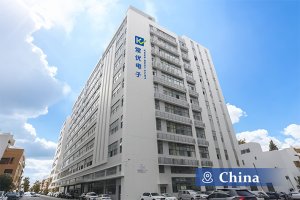
China still wins on absolute unit cost for most PCB assemblies, especially at high volumes, which is one reason the China vs Thailand PCB assembly debate is rarely settled on price alone. The Pearl River Delta and Yangtze River Delta clusters benefit from decades of capital investment, automation, and component ecosystem maturity. A typical SMT line in Shenzhen can produce a mid-complexity 0402-impedance board at a fully loaded cost that is 15–25% below an equivalent line in Thailand.
Thailand, however, has narrowed the gap significantly in the China vs Thailand PCB assembly comparison. Thai minimum wages have risen more slowly than Chinese coastal wages over the past five years, and the Thai Board of Investment (BOI) offers 5–8 year corporate income tax holidays for high-tech electronics manufacturers. For OEMs shipping to the US, the landed-cost equation often flips once Section 301 tariffs (currently 7.5–25% on many PCBA categories) are included in the China vs Thailand PCB assembly landed-cost model.
Tariffs, Duties, and Trade Policy
This is the single biggest variable in 2026 for any China vs Thailand PCB assembly sourcing decision. PCBA imports from China into the United States typically face:
- Section 301 tariffs of 7.5%–25% depending on HTS code
- Standard MFN duty (often 0% on assembled boards under most HTS classifications, but verify per SKU)
- Anti-dumping exposure on certain PCB categories
- Increased customs scrutiny and “de minimis” risk for direct-to-consumer shipments
Thailand-origin PCBA, by contrast, generally enters the US duty-free under MFN treatment and is not subject to Section 301 surcharges. For a $500,000 annual volume of mid-complexity assemblies, the tariff delta in the China vs Thailand PCB assembly calculation alone can be $40,000–$125,000 per year — often more than the entire labor savings from China.
Lead Time and Logistics
China’s logistics infrastructure remains unmatched and is a major reason the China vs Thailand PCB assembly choice still favors China for time-critical work. Shenzhen, Dongguan, and Suzhou offer next-day domestic component delivery, 24-hour express export clearance from Hong Kong or Shenzhen airports, and weekly consolidated ocean freight to every major US and EU port. For prototyping and quick-turn NPI builds, Chinese suppliers typically quote 5–10 working days versus 10–20 days from Thailand.
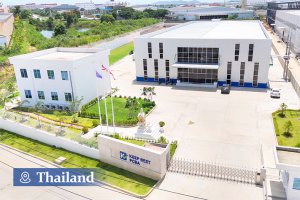
Thai logistics have improved but still trail China for very-fast-turn or highly customized builds. Where Thailand wins in the China vs Thailand PCB assembly comparison is predictability: port congestion at Laem Chabang is far less volatile than Shenzhen/Yantian, and Bangkok’s Suvarnabhumi airport offers reliable daily freighters to the US West Coast.
Quality Standards and Certifications
Top-tier Chinese EMS providers carry ISO 9001, ISO 13485, IATF 16949, AS9100, UL, and CE markings as routinely as their Thai counterparts, so certification parity does not by itself decide the China vs Thailand PCB assembly question. The certifications themselves are no longer a differentiator. What does differ is the depth of the supplier audit ecosystem:
- China has thousands of certified plants, making it easy to find capacity but harder to verify quality depth without on-site audits.
- Thailand has a smaller pool of certified EMS providers, but the leading ones (including BOI-promoted tech parks) tend to have more concentrated engineering talent and lower employee turnover.
For medical (ISO 13485) and automotive (IATF 16949) PCBA, both countries are well-served. The decision in the China vs Thailand PCB assembly matrix usually hinges on existing customer audits and language compatibility rather than certification availability.

Supply Chain and Component Sourcing
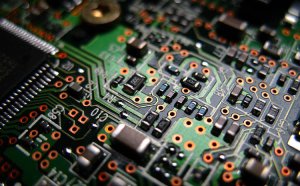
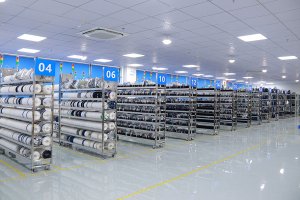
China is the global center of gravity for passive components, connectors, and PCB laminate, and that dominance still shapes the China vs Thailand PCB assembly outcome for complex builds. Shenzhen’s Huaqiangbei, Dongguan’s Songshan Lake, and Suzhou’s industrial parks hold millions of component SKUs in stock, with same-day courier delivery to any factory floor. For allocations, hard-to-find ICs, and obsolete part sourcing, China is still the deepest market in the world.
Thailand’s component ecosystem is thinner but improving. Most Thai EMS providers source through Hong Kong or Singapore distributors, which adds 3–7 days to the BOM procurement cycle. For projects using commodity parts (resistors, capacitors, common MCUs), this is invisible. For projects relying on long-tail or allocated parts, it can extend lead times materially and tilt the China vs Thailand PCB assembly decision back toward China.
Communication and IP Protection
English-language engineering support is now standard in both countries at the top electronic manufacturing services tier, but time-zone alignment still favors China for North American and European buyers (12–15 hours overlap). Thailand is GMT+7, giving slightly better real-time overlap with European customers and reasonable same-day turnaround for US West Coast teams.
IP protection remains a nuanced topic in the China vs Thailand PCB assembly discussion. China has strengthened trade-secret law and IP enforcement over the past five years, and reputable EMS providers sign robust NDAs, segregate production lines, and use audited IT systems. Thailand’s legal framework is more familiar to Western buyers (closer to common-law IP norms), which is sometimes cited as a comfort factor — though in practice, a well-vetted one-stop PCBA solution partner in either country is the strongest protection.
When to Choose China — and When to Choose Thailand
Rather than picking a single side, most procurement teams use a routing matrix. The two halves of the China vs Thailand PCB assembly decision typically look like this:
- Choose China for high-volume consumer electronics where unit cost dominates, for rapid prototyping and NPI where 5-day turnkey cycles matter most, for complex multi-technology boards combining HDI, flex, rigid-flex, and high-layer-count stackups, for allocated or obsolete components where Shenzhen’s open market is the only realistic source, and for EV battery management, AI server, and robotics PCBA shipped to APAC, MEA, or domestic Chinese customers.
- Choose Thailand when the end market is the United States and Section 301 tariffs make Chinese origin uncompetitive, when EU buyers want geographic diversification outside China for ESG or risk-management reasons, when the product is mid-to-high complexity with stable BOMs (industrial controls, medical devices, automotive sub-assemblies), when engineering overlap with European customers matters more than with North American customers, and when BOI-supported programs with tax holidays can be leveraged for 3–5 year product lifecycles.
The Hybrid “China + Thailand” Strategy
Most large OEMs in 2026 are not picking one country in the China vs Thailand PCB assembly decision — they are running a dual-shore model. A common pattern:
- China handles prototyping, NPI, low-volume production, allocated-component builds, and APAC-bound mass production.
- Thailand handles US-bound mass production, EU-bound builds with ESG preferences, and overflow capacity during China peak season.
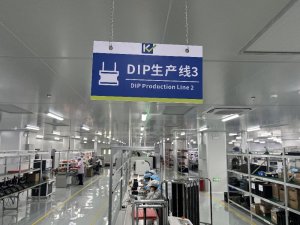
The challenge is engineering and quality alignment. A contract electronics manufacturer operating both facilities under a single MES, unified DFM rules, and shared quality systems can deliver true dual-shore turnkey PCB assembly without re-validating every BOM at each site. This is where the “two-country, one-supplier” model becomes a competitive advantage rather than a logistical headache, and it reframes the China vs Thailand PCB assembly question from “either/or” to “both, governed by one standard.”
How to Evaluate a Manufacturing Partner in Either Region
Regardless of geography, the evaluation framework for a China vs Thailand PCB assembly partner is the same. Ask for:
- Certifications and audit history — ISO 9001, ISO 13485, IATF 16949, UL, and recent customer audit reports.
- Engineering depth — DFM analysis, in-house tooling for stencils and fixtures, signal-integrity capability.
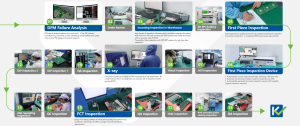
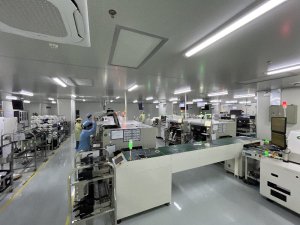
- Inspection stack — 3D AOI, X-ray for BGA/QFN, ICT, FCT, and traceability via MES rather than spreadsheets.
- Component sourcing model — authorized distributor relationships, allocation handling, and counterfeit-part prevention (AS6081).
- Capacity and scalability — number of SMT lines, placement speed (CPH), and rapid ramp capability for seasonal peaks.
- Logistics and trade-compliance support — HS code classification, certificates of origin, and bonded-warehouse options for tariff optimization.
For US-bound programs, also confirm the partner’s experience with country-of-origin documentation, Section 301 exemption processes, and US Customs reconciliation across both legs of the China vs Thailand PCB assembly routing model.
Conclusion
The China vs Thailand PCB assembly decision in 2026 is not a verdict — it is a routing rule. China remains the deepest, fastest, and most cost-effective hub for the majority of global electronics. Thailand has matured into a credible, tariff-friendly alternative that excels for US-bound volume, EU ESG-aligned sourcing, and geographic risk diversification. The smartest supply-chain strategies use both, governed by a single quality and engineering standard.
Keep Best PCB Assembly operates turnkey PCB assembly facilities in both Shenzhen and Thailand under a unified MES, shared DFM rules, and a common quality team — giving you the cost and speed of China plus the tariff and diversification benefits of Thailand, from a single accountable contract electronics manufacturer. If you are mapping your 2026 sourcing footprint, our engineering team can model a dual-shore China vs Thailand PCB assembly plan for your specific BOM, volume, and end-market mix. get a free quote and a free feasibility review today.