
Managing a hardware budget starts with understanding the real PCB assembly cost factors that shape every quote. Whether you are launching a small IoT prototype or scaling an automotive electronics program, the price you pay for a finished PCBA is never random. Material selection, board complexity, assembly technology, testing depth, order volume, and lead time all interact to determine the final invoice.
In 2026, as component markets fluctuate and smart factories raise quality expectations, buyers need a clear cost map. This guide breaks down the most important PCB assembly cost factors and shows practical ways to reduce PCB assembly cost while keeping reliability intact. If you are comparing partners, start with an experienced PCB assembly manufacturer that can explain every line of the quote.
What Drives PCB Assembly Cost Factors?
Every PCBA project begins with a bill of materials and a set of physical requirements. These two inputs create the largest share of cost variability. Once the design is fixed, the remaining price drivers are process choices, quality requirements, and business terms. The rest of this article explains the PCB assembly cost factors that matter most in 2026.
Raw material prices for copper, laminate, and solder alloys move with global commodity markets. Although a single buyer cannot control these trends, monitoring them is part of controlling PCB assembly cost factors over the product lifecycle. A well-planned procurement strategy can lock in stable pricing and reduce cost exposure across multiple builds.

Bill of Materials and Component Sourcing
The BOM typically accounts for 60–75% of total PCBA cost. Prices shift with package type, tolerance, temperature rating, and availability. Standard resistors and capacitors are inexpensive, but specialized ICs, high-frequency connectors, or automotive-grade parts can dominate the budget.
Sourcing strategy also matters. A turnkey PCB assembly partner purchases components on your behalf, leveraging volume discounts and verified supply chains. Consignment can look cheaper on paper, but it shifts procurement risk and logistics work to your team. Hidden costs include excess inventory, obsolete parts, and last-minute shortages that force expensive spot buys.
PCB Complexity and Layer Count
A two-layer board with generous trace widths is simple to fabricate and assemble. Add HDI, blind vias, fine-pitch BGA, or flexible-rigid construction, and both fabrication and inspection costs rise. More layers mean more lamination cycles, tighter registration tolerances, and higher scrap risk.
Complex boards also require advanced equipment such as 3D AOI and X-ray inspection. These tools protect quality, yet they add overhead that a basic SMT line does not carry. Balancing performance requirements against manufacturability is one of the fastest ways to reduce PCB assembly cost without compromising function.
Labor, Equipment, and Process Overhead
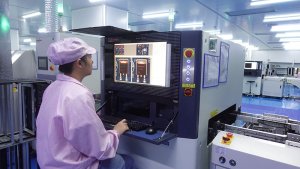
Assembly labor rates differ by region, but labor is only one part of process overhead. Machine time, stencil fabrication, programming, fixture creation, and quality documentation all contribute to the final price.
SMT vs. Through-Hole Assembly
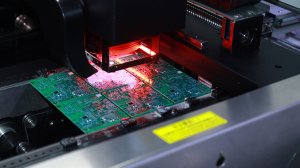
Surface-mount technology (SMT) is highly automated and usually the most cost-effective approach for high-volume runs. Through-hole PCB assembly requires manual or wave-soldering operations, which add labor and cycle time. Mixed assemblies containing both technologies need extra process steps and inspection.
Designers can reduce cost by choosing SMT equivalents whenever mechanical constraints allow. When through-hole is unavoidable, grouping through-hole parts on one side of the board minimizes handling and improves flow through the line.
Testing and Quality Assurance
Testing is not a place to cut corners, but it is a place to match the test strategy to the application. A consumer gadget may need only AOI and functional sampling, while a medical device or automotive module may require full ICT/FCT coverage, X-ray, and traceable lot records.
Certified facilities such as an ISO 9001, ISO 13485, or IATF 16949 factory invest heavily in process control. That investment prevents field failures, but it is reflected in pricing. Choose the quality level that matches your market, not the highest possible level for every board.
Another easily overlooked item is non-recurring engineering (NRE). Stencils, test fixtures, and first-article reports are typically charged once per design. Spreading NRE across a large volume lowers the per-unit impact, which is another reason prototypes feel expensive compared to production runs.
Volume, Lead Time, and Regional Supply Chain
Operational factors often outweigh design factors when total project cost is measured across the product lifecycle. Small batches and rush orders pay a premium because they disrupt production planning. Geography adds another layer through shipping, customs, and inventory carrying cost.
Economy of Scale
Setup costs are spread across each board in a build. A single prototype may absorb the full cost of stencil creation, machine programming, and first-article inspection. In a 10,000-unit run, those same setup costs become negligible per unit.
Planning stable monthly volumes and combining variants into one build can unlock better pricing. A one-stop PCBA solution helps forecast material needs and smooth demand across your product families.
Urgent Orders and Expedited Shipping
Rush jobs require overtime, premium freight, and sometimes air-shipped components. Each of these adds margin. Standard lead times let the factory schedule jobs efficiently and consolidate shipments. Whenever possible, build schedule slack into your project plan rather than paying for expedites.
Forecasting accuracy also affects material cost. Ordering components in advance allows the factory to use standard sea freight and avoid last-minute broker fees. Sharing a rolling forecast with your contract manufacturer turns unpredictable spot buying into planned, repeatable procurement and is a practical way to manage PCB assembly cost factors.
Regional Manufacturing and Total Landed Cost
Unit price is only part of the equation. Total landed cost includes shipping, customs duties, inventory carrying cost, and the administrative cost of managing a remote supplier. A PCBA manufacturer China with multi-site capacity can offer flexible routing that balances cost and speed.
Keep Best PCB Assembly Co., Ltd operates facilities in Shenzhen, Jiangmen, and Thailand, allowing customers to choose the most cost-effective production site for each project. Regional production can reduce freight expense, shorten lead times, and simplify communication without sacrificing technical capability.
Design Choices That Lower PCB Assembly Cost
Manufacturing cost is designed in long before the first component is placed. Decisions made during schematic capture and layout have a direct impact on yield, cycle time, and rework. Addressing these choices early is the most sustainable way to reduce PCB assembly cost.
DFM Analysis and Early Optimization
DFM analysis reviews the design for assembly risks before production begins. Catching pad size issues, component spacing problems, or asymmetric thermal loads early avoids costly redesigns later. A single engineering change order after production starts can cost more than the entire DFM review.
Early collaboration with your contract manufacturer also clarifies material alternatives. Substituting a widely stocked connector for a long-lead specialty part can shorten delivery and lower cost without affecting performance.
Small layout decisions matter too. Clear component orientation, consistent pad sizes, and accessible test points reduce programming time and inspection ambiguity. These details take little effort during design but can save hours on the factory floor and remove hidden PCB assembly cost factors from the production cycle.
Standard Components and Panelization
Using standard package sizes and widely available components improves machine placement efficiency and reduces procurement risk. Avoid one-off parts unless they deliver measurable performance benefits.
Panelization also drives cost. Arranging multiple boards on a standard panel reduces material waste and simplifies handling. However, poor panel design can make depaneling difficult and increase breakage. The right balance depends on board size, shape, and expected volume.
Silkscreen labels and fiducial placement also influence throughput. Readable reference designators speed manual verification, while well-placed fiducials help automated optical alignment systems register boards faster and more reliably. These finishing touches reduce handling errors and improve first-pass yield.
Smart Manufacturing and Hidden Cost Control
Modern factories use data to reduce waste rather than simply lowering labor rates. Investing in digital systems can appear expensive, but it often reduces the total cost of quality and shortens production ramp-up time.
AI-Driven Inspection and Yield Improvement
AI-driven manufacturing tools analyze visual inspection images, solder-paste deposits, and placement data in real time. Catching defects earlier in the process means less rework, less scrap, and fewer escapes to functional test. Over a long production run, even a small yield improvement can save thousands of dollars and protect delivery schedules.
MES Traceability and Planning Efficiency
A Manufacturing Execution System (MES) records every material lot, machine parameter, and test result. This traceability supports fast root-cause analysis and reduces the cost of recalls or customer quality audits. It also improves planning accuracy, helping factories avoid overtime and idle capacity.
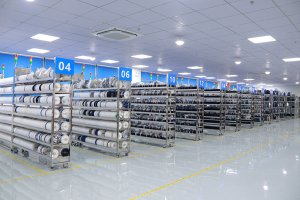
Predictive maintenance systems monitor placement nozzles, oven profiles, and solder-paste condition before they drift out of spec. Preventing downtime and batch defects is far cheaper than recovering from a failed lot. This proactive approach is a hallmark of a modern electronic manufacturing services provider.
Hidden Cost Factors to Watch
Beyond the obvious BOM and labor lines, several less visible items can inflate the final invoice. Buyers who understand these hidden PCB assembly cost factors can negotiate more accurate quotes and avoid surprises.
- Engineering change orders: Late design changes require new stencils, reprogramming, and sometimes scrapped materials.
- Rework and repair: Poor design or supplier quality issues create non-conformance costs that are often passed through.
- Packaging and logistics: Anti-static packaging, moisture-barrier bags, and cross-border customs handling add up, especially for international shipments.
- Compliance documentation: Certifications, traceability reports, and material declarations require administrative effort that may be billed separately.
- Excess and obsolete inventory: Ordering too much of a custom component leaves you with unusable stock when designs change.
- Custom packaging: Foam inserts, retail boxes, and special labels add cost beyond the bare board assembly.
Build a Cost-Effective PCBA Strategy in 2026
Reducing PCBA spending does not mean choosing the cheapest bid. It means aligning design, sourcing, volume, and testing with real project requirements. The most successful teams treat cost reduction as a continuous process rather than a one-time negotiation.
Start by selecting the right build model. Turnkey PCB assembly simplifies procurement and reduces your internal workload. Combine that with early DFM feedback, standard components, and stable forecasting to keep unit prices low. Match test coverage to the end application so you do not over-test consumer boards or under-test safety-critical devices.
Regular design reviews, transparent supplier communication, and disciplined change control keep these PCB assembly cost factors from creeping upward. Teams that monitor cost drivers continuously are better positioned to hit target margins when volumes scale.
Keep Best PCB Assembly Co., Ltd has supported customers since 2012 with ISO-certified facilities in Shenzhen, Jiangmen, and Thailand. From SMT and DIP to box-build and ODM/OEM services, we help engineering teams understand every PCB assembly cost factor before production starts. Get a free quote today and discover how a smarter manufacturing partner can protect both your budget and your product quality.