
When an electronics project moves from prototype to production, PCB components procurement quickly becomes one of the biggest determinants of success. A well-managed bill of materials (BOM) keeps your PCB assembly manufacturer on schedule and on budget, while a poorly sourced BOM can trigger last-minute redesigns, counterfeit parts, or production shutdowns. For engineering teams and purchasing managers alike, sourcing is no longer a back-office task—it is a strategic capability that directly affects product quality, compliance, and time-to-market. In this guide, we break down a practical framework for optimizing PCB components procurement so your next PCBA build runs smoothly from first article to full volume.

Why Pcb Components Procurement Matters More Than Ever
Modern electronics rely on thousands of discrete components, many of which face volatile availability, long factory lead times, and complex compliance requirements. A single out-of-stock integrated circuit can delay an entire assembly line, and a counterfeit capacitor can silently degrade reliability in the field. That is why PCB components procurement is now treated as a core engineering discipline rather than a simple purchasing function.
Beyond availability, sourcing decisions influence unit cost, solderability, test coverage, and regulatory compliance. A resistor that saves two cents on paper may require a special reel size that slows SMT placement. A connector chosen for its datasheet specs may have a 26-week lead time that pushes your launch into the next quarter. This is especially true for high-volume SMT assembly services, where consistent packaging and material quality directly determine placement speed and first-pass yield. Thinking about these trade-offs early is what separates smooth one-stop PCBA solution programs from projects that miss their window.
For companies sourcing from a PCBA manufacturer China, proximity to component distribution hubs in Shenzhen and Hong Kong offers significant advantages. Local purchasing teams can respond faster to allocation changes, negotiate better terms, and resolve quality issues before parts reach the production floor. This regional advantage is one reason many global OEMs choose a PCB assembly manufacturer with roots in South China.
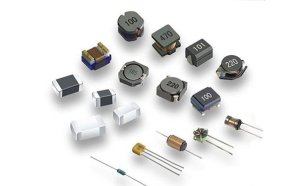
6 Steps to Optimize Your BOM Sourcing
Effective PCB components procurement follows a repeatable workflow. Use these six steps as a checklist for your next build.
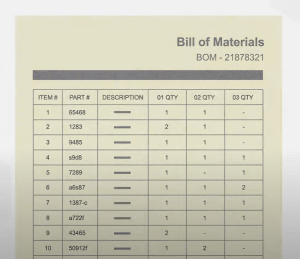
1. Consolidate Your BOM Early
The earlier you lock a clean BOM, the more leverage your PCB assembly manufacturer has with distributors and franchised suppliers. Avoid “engineer’s specials” such as one-off resistors or odd package sizes that add setup cost without adding value. Where possible, standardize on common voltage ratings, tolerance bands, and package codes so the same part numbers can be reused across multiple products.
Consolidation also simplifies inventory management. A one-stop PCBA solution partner like Keep Best PCBA can hold consigned or commonly used parts in stock, reducing recurring setup fees and shortening lead times for repeat builds. When every revision uses a narrower set of standard components, your PCB components procurement team can focus its energy on the few parts that truly matter.
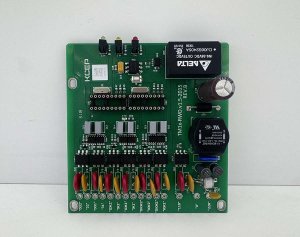
2. Classify Components by Risk
Not every part carries the same sourcing risk. Split your BOM into three categories:
- Low-risk commodity parts — Standard passives, common connectors, and jelly-bean semiconductors with multiple qualified suppliers.
- Medium-risk constrained parts — Specialized ICs, magnetics, or memory devices with limited supply but reasonable alternatives.
- High-risk sole-source parts — Custom components, proprietary modules, or parts under allocation that can stop production if unavailable.
Spend your procurement effort where the risk is highest. For high-risk items, consider buffer stock, approved alternates, or design changes that reduce dependency on a single supplier. A disciplined PCB components procurement process classifies every line item before the first purchase order is issued.

3. Qualify Alternate Sources
Every critical component should have at least one approved alternate. The alternate does not need to be identical in every parameter, but it must meet the electrical, mechanical, and thermal requirements of the design. Document the qualification process, including any A-B comparison testing, so the swap can be executed quickly if the primary source dries up.
For regulated industries such as medical device PCB assembly or automotive electronics PCBA, alternates may require formal re-qualification. Factor this timeline into your PCB components procurement plan well before the production gate. Waiting until a part goes on allocation is the most expensive way to discover that your alternate was never validated.
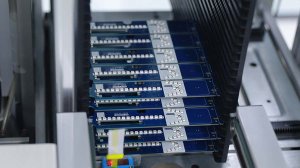
4. Lock Long-Lead-Time Parts First
In most BOMs, 20 percent of the parts drive 80 percent of the lead time. Identify these parts during the design review and place orders as soon as the design is frozen. Microcontrollers, power modules, displays, and specialized connectors often fall into this category. Your PCB assembly manufacturer should provide a lead-time report that flags these items before the first PCB panel enters the SMT line.
If you are using turnkey PCB assembly, the EMS provider can pool demand across multiple customers to secure better pricing and allocation. This is especially valuable for startups and mid-size OEMs that lack the purchasing volume of large multinational brands. Early commitment to long-lead-time parts is one of the highest-return activities in PCB components procurement.
5. Verify Counterfeit Risk
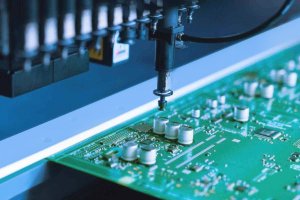
Counterfeit and substandard components remain a serious risk in global electronics supply chains. Protect your build by sourcing only from authorized distributors or franchised channels whenever possible. If you must use the open market, request certificates of conformance, lot traceability, and independent test reports.
At Keep Best PCBA, incoming material inspection includes visual checks, X-ray screening for high-risk packages, and electrical sampling where appropriate. Strong PCB components procurement practices combined with rigorous IQC procedures are the best defense against counterfeit parts reaching your product. Never assume that a low price from an unknown broker is a bargain—it is often a liability disguised as savings.
6. Align Procurement with Assembly Constraints
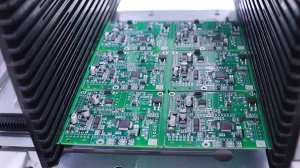
A component that looks perfect on paper can still cause problems on the factory floor. Consider these assembly-driven constraints during sourcing:
- Packaging format — Tape-and-reel is ideal for high-speed SMT placement. Trays or tubes may require manual handling and slow throughput.
- Moisture sensitivity level (MSL) — High-MSL parts need controlled baking and storage conditions to prevent popcorning during reflow.
- Component form factor — Very small passives or large connectors may limit which SMT assembly services equipment can be used.
- RoHS and REACH status — Ensure every part meets the environmental regulations of your target markets.
Involving your assembly partner during the sourcing phase prevents costly surprises and often reveals opportunities for cost reduction through package standardization. The best PCB components procurement decisions are made jointly by purchasing, engineering, and manufacturing teams.
Common Pcb Components Procurement Mistakes
Even experienced teams make sourcing errors. Here are the most common ones we see and how to avoid them.
Over-reliance on single sources: A single-source BOM is a single-point-of-failure BOM. Qualify alternates during NPI, not during a shortage.
Ignoring lifecycle status: Distributors flag parts as “not recommended for new designs” or “end of life” for a reason. Ignoring these warnings leads to forced redesigns later.
Underspecifying passive components: A generic “10 kΩ resistor” callout leaves too much ambiguity. Specify tolerance, temperature coefficient, power rating, and package to avoid mismatched reels.
Neglecting customs and tariffs: For a PCBA manufacturer China, sourcing routes and tariff exposure vary by country of origin. A good partner models total landed cost, not just unit price.
Separating procurement from design: When purchasing and engineering operate in silos, BOMs get optimized for price rather than manufacturability. Early collaboration prevents this.
How a Turnkey PCBA Partner Simplifies Procurement
Working with a one-stop PCBA solution provider transforms PCB components procurement from a fragmented vendor-management exercise into a managed service. Instead of chasing ten distributors, you issue one PO and receive a fully assembled, tested product. A capable partner offers:
- Global sourcing networks — Direct relationships with franchised distributors and key manufacturers.
- BOM health analysis — Automated reports on lifecycle, lead time, alternates, and compliance before build start.
- Strategic inventory — Bonded or consigned stock programs that buffer against supply shocks.
- Traceability systems — MES-linked lot tracking from component receipt through final test.
- Quality gates — IQC, AOI, X-ray, ICT, and FCT to catch material and process defects early.
Keep Best PCBA combines Shenzhen supply-chain speed with Thailand production capacity and multi-site quality systems certified to ISO 9001, ISO 13485, and IATF 16949. This structure gives customers both responsiveness and resilience across the full procurement-to-delivery cycle. For teams that want to focus on design and market development rather than distributor management, turnkey PCB assembly is often the most efficient path forward.

KPIs to Track Procurement Performance
What gets measured gets managed. Track these metrics monthly to keep your PCB components procurement process improving:
- Material availability at build start — Target 100 percent of BOM lines kitted before the first SMT panel.
- Average sourcing lead time — Track by commodity category to identify trends.
- Alternate qualification rate — Aim for approved alternates on all high-risk and sole-source parts.
- Incoming quality defect rate — Measured in parts per million (PPM) at IQC.
- Cost variance vs. target BOM — Monitor actual spend against the original cost estimate.
- On-time delivery — End-to-end from PO placement to finished goods shipment.
Reviewing these KPIs with your assembly partner creates accountability and surfaces improvement opportunities before they become emergencies. Over time, a data-driven PCB components procurement process becomes a genuine competitive advantage.
Pcb Components Procurement Across the Product Lifecycle
Sourcing strategy changes as a product matures. During prototyping, flexibility matters more than unit cost because volumes are low and design changes are frequent. A PCB assembly manufacturer that supports prototype builds with no minimum order quantities can accelerate iteration cycles.
During pilot production, the focus shifts to validating the supply chain at scale. This is the moment to confirm lead times, test alternates, and refine your PCB components procurement playbook. Once full production begins, cost, consistency, and capacity take priority. A partner with factories in Shenzhen, Jiangmen, and Thailand can flex capacity across sites to match demand.
Finally, during end-of-life management, sourcing teams must balance last-time-buy decisions against obsolescence risk. MES traceability and lot-control systems make these transitions far easier to execute without disrupting active production.
Conclusion
Pcb Components Procurement is the invisible engine behind every successful PCBA program. By consolidating your BOM, classifying risk, qualifying alternates, locking long-lead-time parts, verifying authenticity, and aligning sourcing with assembly constraints, you turn supply-chain uncertainty into a competitive advantage. Whether you are building a prototype or scaling to mass production, a strong PCB assembly manufacturer and a capable one-stop PCBA solution partner make the difference between guessing and knowing that your materials will arrive on time, meet spec, and perform reliably in the field.
If you are planning your next build and want to streamline PCB components procurement from day one, get a free quote from Keep Best PCBA. Our engineering team will review your BOM, identify sourcing risks, and deliver a detailed proposal for turnkey material management and assembly.