
Selecting a PCB assembly service provider is a critical step in electronics manufacturing. A reliable partner can ensure product quality, shorten lead times, and control costs.

Evaluate Production Qualifications:
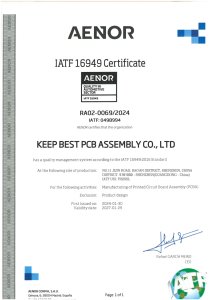
First, review the factory’s certification systems. ISO 9001, ISO 13485 (medical), and IATF 16949 (automotive) are the basic requirements. These certifications indicate that the factory has standardized processes and quality control capabilities.
Review Equipment and Technical Capabilities:
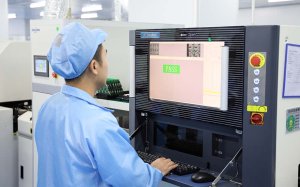
Advanced SMT production lines, AOI inspection equipment, and X-ray inspection capabilities are essential requirements. Ask the factory if it supports 01005 packaging, BGA soldering, and High-Density Interconnect (HDI) technology. These capabilities directly impact the manufacturing yield of complex circuit boards.
Assess Supply Chain Management Capabilities A top-tier PCB assembly factory should have a robust material procurement system. Confirm whether they offer turnkey services (one-stop procurement + assembly), which can significantly reduce the customer’s supply chain management burden.
Evaluate Sample and Small-Batch Services Rapid prototyping is essential during the new product introduction phase. Selecting a factory that supports small batches (1–50 units) with a lead time of 5–7 days helps accelerate product iteration.
Quality Control Processes: Inquire about the factory’s IQC (Incoming Quality Control), IPQC (In-Process Quality Control), and OQC (Outgoing Quality Control) processes. A comprehensive testing regimen—including functional testing, aging testing, and ICT testing—ensures that every batch of products complies with the IPC-A-610 standard.
Lead Times and Communication Efficiency:
In a globalized supply chain, responsiveness is critical. Assess whether the factory’s engineering team can provide DFM (Design for Manufacturability) recommendations within 24 hours, as this directly impacts project timelines.
Cost Transparency Obtain detailed quotations that clearly distinguish between NRE (Non-Recurring Engineering) costs, test fixture fees, and unit prices. Avoid hidden fees and ensure price stability for long-term partnerships.
Selecting the right PCB assembly service provider requires a comprehensive evaluation of technical, quality, and commercial capabilities. We recommend conducting an on-site visit to verify that the factory’s claimed capabilities align with reality.
Frequently Asked Questions (FAQ)
Q1: What are the three most important factors when selecting a PCB assembly factory?
A: Certifications (ISO, medical, and automotive certifications), equipment capabilities (SMT precision, AOI/X-ray inspection), and supply chain management experience. These three factors determine whether the factory can consistently deliver high-quality products.
Q2: What is the difference between Turnkey and Consignment services?
A: With Turnkey, the factory is responsible for procuring all materials and performing assembly; with Consignment, the customer provides some or all materials, and the factory is responsible only for assembly. Turnkey is suitable for companies lacking a procurement team, while Consignment is suitable for companies with an established supply chain.
Q3: How long does PCB assembly typically take?
A: The standard lead time is 7–10 business days (including material procurement). If all materials are available and the order involves assembly only, the lead time can be shortened to 3–5 days. For rush orders, please confirm production capacity arrangements with the factory in advance.
Q4: How can I verify the quality standards of a PCB assembly factory?
A: Request to see their IPC-A-610 certification, visit the IQC/IPQC/OQC inspection stations, and request recent customer quality reports. If possible, request a trial production run of samples for verification.
Q5: What are NRE costs? Can they be avoided?
A: NRE (Non-Recurring Engineering) refers to one-time costs such as stencil fabrication and SMT program development. Some factories may waive NRE fees for long-term partners or high-volume orders, but these costs are typically required for small-batch prototyping.