
When outsourcing production to a PCB assembly manufacturer, buyers often focus on price, lead time and component sourcing. Yet the real difference between a reliable partner and a risky one frequently lies in the factory’s quality credentials. PCB assembly certifications are not just marketing badges; they are structured proof that an electronic manufacturing services (EMS) provider can consistently meet customer, regulatory and industry-specific requirements. For companies building robotics, automotive electronics, medical devices or industrial control systems, the right certifications directly influence field failure rates, audit results and market access.
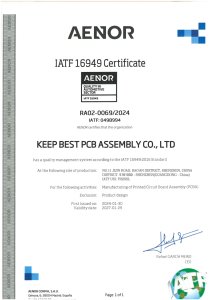
Keep Best PCB Assembly Co., Ltd., founded in 2012, operates ISO 9001, ISO 13485 and IATF 16949 certified facilities in Shenzhen, Jiangmen and Thailand. This article explains what these three quality standards cover, why they matter for different product categories, and how to verify that a supplier’s certificates are genuine and relevant to your project.
Why PCB Assembly Certifications Matter More Than Ever
Global supply chains are under pressure from shorter product lifecycles, tighter traceability rules and stricter end-market regulations. A single defective board in an automotive ECU, insulin pump or EV battery management system can trigger recalls, litigation or reputational damage. PCB assembly certifications reduce these risks by forcing the manufacturer to document processes, train operators, calibrate equipment and maintain corrective-action loops.
Certified factories also tend to deliver more predictable yields. When a line is audited against ISO 9001 or IATF 16949, variation in solder paste printing, placement accuracy and reflow profiling is controlled. That consistency lowers the total cost of ownership, even if the quoted unit price is slightly higher than a non-certified competitor.
From a procurement perspective, certificates help buyers pre-qualify suppliers quickly. Instead of running a full onsite audit for every RFQ, a valid ISO 13485 or IATF 16949 certificate tells you the facility already meets baseline quality-management expectations for medical or automotive electronics PCBA.

ISO 9001: The Foundation of Quality Management
ISO 9001 is the world’s best-known quality management system (QMS) standard. It applies to any organization that wants to demonstrate its ability to provide products and services that meet customer and regulatory requirements. For a one-stop PCBA solution provider, ISO 9001 covers the entire order lifecycle from quotation and DFM review to incoming material control, SMT and DIP assembly, inspection, packaging and delivery.
Key ISO 9001 Requirements for PCB Assembly
- Documented processes: Work instructions, control plans and inspection standards must be written, approved and accessible on the shop floor.
- Risk-based thinking: The manufacturer must identify risks in planning, production and supply chain management, then implement preventive actions.
- Management review: Top management reviews quality data, customer complaints and audit results at defined intervals.
- Continuous improvement: Corrective and preventive action (CAPA) records show how defects are investigated and eliminated.
- Customer focus: Requirements are captured during contract review and confirmed before production release.
ISO 9001 is generic, which is both a strength and a limitation. It proves the factory is well managed, but it does not by itself guarantee competence in medical or automotive-specific controls. That is why most serious EMS providers combine ISO 9001 with sector-specific standards.
ISO 13485: Quality Assurance for Medical Device PCB Assembly
ISO 13485 is the international QMS standard for medical devices and related services. Unlike ISO 9001, it focuses on regulatory compliance, traceability and risk management throughout the product lifecycle. For medical device PCB assembly, this standard is essential because patient safety depends on electrical reliability, biocompatibility and long-term stability.
What ISO 13485 Adds to PCB Assembly
- Traceability: Every lot of boards, components and solder materials must be traceable back to supplier, date code and production batch.
- Contamination control: Cleaning processes, electrostatic discharge (ESD) controls and handling procedures are validated for medical-grade cleanliness.
- Design and development controls: Changes to the PCB, stencil or test fixture go through formal review and approval before implementation.
- Regulatory awareness: The organization monitors FDA, EU MDR and other regional requirements that affect product registration.
- Supplier management: Component distributors and subcontractors are qualified, monitored and periodically re-evaluated.
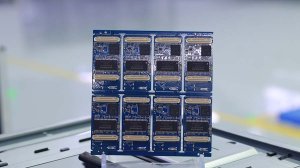
Keep Best’s ISO 13485 certification supports customers developing patient monitors, diagnostic instruments and portable therapeutic devices. The company’s MES traceability system records each process step, while 3D AOI and X-ray inspection catch solder joint anomalies before boards leave the line.
IATF 16949: The Automotive Electronics Standard
IATF 16949 is the global QMS standard for the automotive supply chain. Built on ISO 9001, it adds requirements for defect prevention, variation reduction and continuous improvement in high-volume production. Any supplier producing automotive electronics PCBA should hold this certificate, because OEMs and Tier-1 customers require it for new program approval.
Core IATF 16949 Requirements
- Advanced Product Quality Planning (APQP): Product and process design are validated before mass production launch.
- Production Part Approval Process (PPAP): Sample builds, dimensional reports, material certifications and control plans are submitted for customer approval.
- Failure Mode and Effects Analysis (FMEA): Both design and process FMEA identify potential failure modes and mitigation plans.
- Statistical process control (SPC): Key process parameters such as reflow temperature and placement offset are monitored with control charts.
- Traceability and containment: In the event of a quality escape, the supplier can quickly identify affected batches and implement containment.
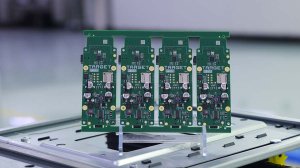
For EV charging modules, battery management systems, motor controllers and ADAS sensors, IATF 16949 certification is often a non-negotiable entry ticket. Keep Best’s automotive-qualified lines use automated optical inspection, ICT/FCT and MES data logging to meet these strict process-control expectations.
Comparing ISO 9001, ISO 13485 and IATF 16949
Understanding how these three standards differ helps buyers ask the right questions during supplier qualification. The following comparison summarizes scope, primary focus and typical end markets.
| Standard | Scope | Primary Focus | Typical End Markets |
|---|---|---|---|
| ISO 9001 | Generic QMS | Customer satisfaction and process consistency | Consumer, industrial, IoT |
| ISO 13485 | Medical devices | Regulatory compliance and traceability | Patient monitors, diagnostics, wearables |
| IATF 16949 | Automotive supply chain | Defect prevention and variation reduction | EV, ADAS, powertrain, body electronics |
Many Tier-1 EMS providers hold all three standards under one corporate certificate. However, the scope statement printed on the certificate matters. A factory may be ISO 9001 certified for “electronics manufacturing” but only ISO 13485 certified for “assembly of printed circuit board assemblies for medical devices.” Always request the certificate and its scope before placing an order.
How to Verify a Supplier’s PCB Assembly Certifications
Fraudulent or expired certificates exist in every manufacturing region. Buyers should verify four things before relying on a certificate.
- Check the certificate number: Every certificate has a unique number issued by an accredited certification body such as SGS, TÜV Rheinland, BSI or DNV.
- Confirm the certification body: Look for an accreditation mark from UKAS, ANSI-ASQ National Accreditation Board (ANAB) or an equivalent national body.
- Review the scope statement: Make sure the scope covers the exact products and processes you are buying, not just the headquarters office.
- Ask for the latest audit report: A valid certificate should have a recent surveillance audit with no major non-conformances.
Reputable suppliers will share their certificates during the RFQ stage. If a factory hesitates or provides only a low-resolution image without certificate number, that is a red flag. You can also contact the certification body directly to confirm validity.

Certifications in Action: What Buyers Should Expect on the Shop Floor
Certificates on the wall are only meaningful if the factory lives the standard every day. During a tour or virtual audit, look for evidence that the QMS is operational.
- Controlled documents: Work instructions at each station should be current, signed and aligned with the control plan.
- Training records: Operators should have documented training for their station, including ESD, soldering and inspection criteria.
- Calibration labels: Reflow ovens, AOI machines, X-ray systems and ICT fixtures should display current calibration stickers.
- Traceability screens: MES terminals should show real-time work-in-progress, serial numbers and component lot traceability.
- Defect tracking: A visible defect board or digital dashboard shows daily yield, top defects and corrective actions.
Keep Best integrates these practices across its Shenzhen headquarters, Jiangmen facility and Thailand plant. The multi-site structure allows customers to choose production location based on volume, cost target and regional compliance requirements while maintaining the same certified quality system.
Choosing the Right Certification Mix for Your Product
Not every product needs the most stringent standard. A consumer IoT device may only require ISO 9001, while an implantable medical device demands ISO 13485 and a battery management system for electric vehicles needs IATF 16949. The decision should be driven by your end market, customer requirements and regulatory path.
That said, working with a supplier that holds multiple PCB assembly certifications offers flexibility. If your product roadmap moves from industrial into automotive or medical, you will not need to re-qualify a new factory. A partner like Keep Best, with ISO 9001, ISO 13485 and IATF 16949 coverage, can support growth across several regulated markets from a single qualified supply base.
Conclusion
PCB assembly certifications are one of the most reliable indicators of a manufacturer’s capability, consistency and risk awareness. ISO 9001 provides the quality-management foundation, ISO 13485 addresses medical device compliance, and IATF 16949 satisfies automotive supply-chain demands. Together, they give buyers confidence that boards will perform reliably in the field.
Contact Keep Best PCBA for professional get a free quote on certified electronic manufacturing services. With ISO 9001, ISO 13485 and IATF 16949 accredited facilities in China and Thailand, Keep Best delivers the quality documentation, traceability and process control your next project deserves.