
DIP insertion and SMT assembly are two core assembly processes in electronics manufacturing. DIP insertion involves soldering components through pre-drilled holes using pins, offering high mechanical strength and making it suitable for high-power devices and harsh environments. SMT assembly involves mounting components directly onto the surface of the PCB; it is highly automated and suitable for high-density, miniaturised products. This article compares the advantages and disadvantages of the two processes from the perspectives of cost, efficiency and reliability, providing a reference for decision-making when selecting a process.

1.Definition and Characteristics of DIP Assembly
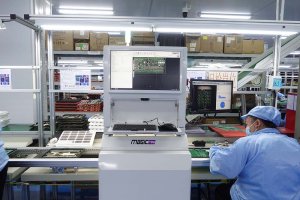
DIP assembly is a method of mounting components by inserting pins into pre-drilled holes in the circuit board and soldering them on the reverse side. DIP components are typically inserted manually or using an automatic insertion machine, and are suitable for traditional high-power devices and larger-package components, such as transformers and relays.
Key features include: Through-hole soldering ensures higher mechanical strength. Suitable for larger-sized, higher-power components. Commonly used in industrial control, automotive electronics and other fields requiring higher reliability.
2.Definition and Characteristics of SMT (Surface Mount Technology)
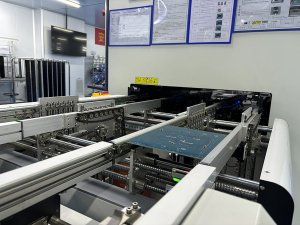
SMT is a process in which component pads are placed directly onto the surface of a PCB (printed circuit board) and soldered using reflow or wave soldering. This process is predominantly used for small, lightweight components, such as capacitors, resistors and integrated circuit chips.
Key features include: Smaller package sizes, suitable for high-density assembly. High degree of automation, suitable for mass production. Widely used in consumer electronics, communications equipment and modern smart products.

3. Cost Comparison
DIP (DIP) assembly involves manual insertion of components or the use of specialised insertion machines, and as the soldering process is relatively complex, the overall production cost is comparatively high. This is particularly evident in large-scale production, where labour costs increase significantly.
The SMT process is highly automated, substantially reducing the need for manual intervention. Although the initial investment in production equipment is higher, it lowers the unit manufacturing cost in large-scale production, making it more economical for medium to large batch production.
Cost Conclusion: SMT offers better cost-effectiveness in mass production, whilst DIP assembly incurs higher unit costs for specific requirements.
4.Comparison of Production Efficiency
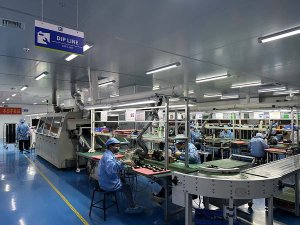
DIP technology relies on manual operations or semi-automatic equipment during production, resulting in slower production speeds. Production efficiency is particularly low when handling high-density, multi-pin components.
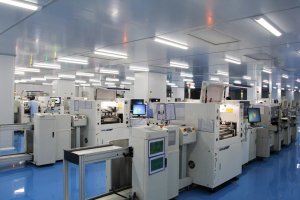
SMT technology is almost entirely automated, with processes from component feeding to soldering carried out by placement machines and reflow soldering equipment, resulting in extremely high production speeds. Modern SMT equipment can complete tens of thousands of placement operations in a short time, significantly improving production efficiency.
Conclusion on Efficiency: SMT assembly is clearly superior to DIP insertion in terms of production efficiency.
5.Comparison of Reliability
In DIP insertion, as the pins of the components pass through the entire PCB, the mechanical strength of the solder joints is higher, resulting in excellent performance in harsh environments such as those involving vibration and shock. Consequently, DIP insertion is more favoured in applications requiring high reliability, such as military electronics and industrial control equipment.
Although the solder joint strength of SMT components is relatively lower, their compact packaging ensures good electrical and thermal performance. Under normal operating conditions, the reliability of SMT assembly is entirely sufficient to meet requirements.
Reliability Conclusion: DIP assembly is more suitable for harsh environments and applications requiring high mechanical strength, whilst SMT assembly offers sufficient reliability for general applications.
Conclusion
DIP through-hole and SMT surface-mount technologies are not mutually exclusive but rather complementary and co-existing. DIP through-hole is the preferred choice for high-power, high-vibration and high-reliability requirements, whilst SMT surface-mount is essential for miniaturisation, high-density and high-volume production. Hybrid assembly processes, which combine the advantages of both, represent the mainstream trend in modern electronic product manufacturing. Scientific selection requires a comprehensive assessment of product functionality, operating environment, production volume and cost budget.