
Is a higher number of layers always better for PCBs?
Increasing the number of layers in a PCB can enhance circuit density and performance, but it also leads to greater processing complexity, higher costs and technical challenges. Starting with a classification ranging from single-sided to multilayer boards, this article systematically analyses the impact of increased layer count on SMT Assembly complexity, assembly density, thermal performance and cost efficiency, to assist engineers in making informed design decisions regarding the number of layers.

1.Basic Classification of PCB Layer Counts
PCBs can be categorised into three types based on their layer count. Single-sided PCBs have only one layer of conductive copper foil and are suitable for simple circuits, such as remote controls for household appliances. Double-sided PCBs have conductive layers on both sides, allowing for more complex circuit designs, and are widely used in mid-range electronic products. Multilayer PCBs typically refer to boards with four or more layers, containing multiple layers of conductive copper foil, and are suitable for complex circuits and high-performance devices such as smartphones and industrial controllers.
Through the design of internal and external layers, multilayer PCBs can achieve higher circuit density and superior performance, but this also brings increased manufacturing complexity and higher costs.
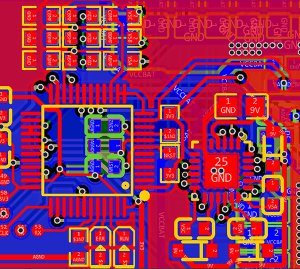
2.Changes in Manufacturing Complexity and Process Requirements
As the number of PCB layers increases, manufacturing complexity grows exponentially.
Flatness requirements are more stringent. Multilayer PCBs are prone to warping due to the lamination process, which can affect the precision of SMT equipment placement.
Pad design is more complex. The routing of electrical and ground layers in multilayer PCBs is denser, and pad dimensions must be designed to balance electrical performance with manufacturability.
Reflow soldering temperature management is more challenging. As the number of layers increases, so does the PCB’s thermal mass, requiring precise control of the temperature profile during reflow soldering to prevent soldering defects.
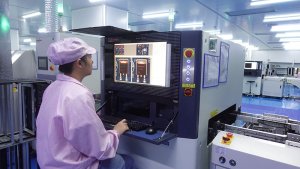
3. The Value of Increased Assembly Density
Multi-layer PCBs support higher assembly density, particularly in high-end electronic products with limited space, such as smartwatches and drones. The combination of SMT placement technology and multi-layer PCBs enables the integration of more components within a limited space, thereby achieving miniaturisation and high functionality.
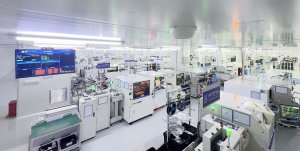
4.Optimisation and Challenges of Thermal Management
Increasing the number of layers can improve thermal performance through the design of dedicated heat dissipation layers; however, this also places higher demands on SMT processing.
Thermal management design becomes more complex. Increased thickness of heat-dissipating copper foil may affect temperature uniformity during soldering.
Particular attention must be paid to the reliability of heat-conducting components. Soldering high-power components requires specialised processes to prevent poor solder joints caused by uneven heat distribution.
5.The Trade-off Between Cost and Efficiency
The greater the number of PCB layers, the higher the processing costs and time investment.
Raw material costs increase. Multilayer PCBs require higher-quality base materials and lamination processes.
The manufacturing process is complex. From drilling and lamination to electroplating, the complexity of each process step affects the production cycle.
SMT placement efficiency decreases. PCBs with a higher number of layers typically involve higher component density and more complex placement procedures, placing greater demands on the precision and programming of SMT equipment.

Conclusion
More layers in a PCB are not necessarily better; rather, a comprehensive balance must be struck based on product functionality, space constraints, thermal management requirements and cost budgets. Simple circuits can be adequately served by single- or double-sided boards, whilst multi-layer boards are required only for high-end, complex equipment. A reasonable layer count design achieves the optimal balance between performance, manufacturability and cost, and is a core competency that PCB design engineers must master.