
PCB Surface Finish Determines Solderability and Long-Term Reliability of the Assembly
The exposed copper on a bare printed circuit board oxidizes within hours, and once that oxide layer forms, solder will not wet the pad cleanly. A PCB surface finish is the thin metallic coating applied to the exposed copper features after etching, and it exists for one reason: to protect the copper until the moment components are placed and reflowed. In modern PCB assembly, the choice of finish influences solder joint quality, shelf life, flatness for fine-pitch parts, and even the ability to wire-bond directly to the pad. Selecting the wrong finish can mean poor wetting, tombstoning, or premature field failures that no amount of rework can fully fix.
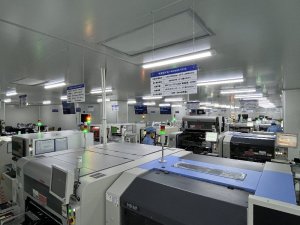
Every one-stop PCBA solution must therefore treat surface finish as a design decision, not an afterthought assigned by the fabrication house. The finish touches nearly every step of the SMT line, from stencil printing through reflow and final inspection. Understanding the trade-offs between the major finishes lets engineers match the coating to the product’s real manufacturing and service conditions.
HASL Remains the Most Cost-Effective Surface Finish for Standard PCB Assembly
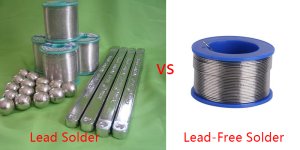
Hot air solder leveling (HASL) is the oldest and still the most common finish in high-volume PCB assembly. In this process the board is dipped into molten solder, then excess is blown off with hot air knives, leaving a thin, uniformly coated layer on every exposed pad. Lead-free HASL uses a tin-copper or tin-silver alloy, while traditional HASL uses tin-lead. The finish is robust, reworkable, and inexpensive, which explains its continued popularity for consumer and industrial boards.
The main drawback is flatness. The air-knife step leaves a slightly uneven surface, which becomes a problem for components with fine pitch below roughly 0.5 mm, such as BGAs and QFNs, where coplanarity matters. HASL also consumes more solder and creates a thicker coating than newer alternatives. For boards populated with larger discrete parts and connectors, however, HASL delivers the best cost-to-reliability ratio in PCB assembly.
ENIG Delivers Flat Surfaces and Wire-Bondable Pads for Fine-Pitch PCB Assembly
Electroless nickel immersion gold (ENIG) deposits a thin layer of nickel as a barrier, topped with a flash of gold that protects the nickel from oxidation. The result is an exceptionally flat surface, which makes ENIG the default finish for fine-pitch components, BGAs, and boards that require aluminum or gold wire bonding. The gold does not participate in the solder joint; it simply dissolves into the solder during reflow, leaving the nickel to form the intermetallic.
ENIG is lead-free, offers good shelf life of roughly twelve months, and handles multiple reflow cycles well. Its weaknesses are cost and a failure mode called black pad, a brittle nickel-phosphorus fracture caused by excessive phosphorus or contamination at the interface. When properly controlled, ENIG is one of the most reliable finishes available to PCB assembly, especially where flatness and bondability outweigh price.
OSP Offers a Lead-Free and Environmentally Friendly Option for Short-Shelf-Life Boards
Organic solderability preservative (OSP) applies a thin, transparent organic film that protects copper without adding a metal layer. Because there is no alloy to dissolve, the copper itself forms the solder joint, giving OSP excellent solderability and a perfectly flat surface at the lowest material cost among common finishes. It is also the most environmentally benign option, with no heavy metals and simple waste treatment.
The trade-off is a short shelf life, typically three to six months, and sensitivity to handling and multiple reflows. The coating can degrade if the board is touched, cleaned aggressively, or passed through too many thermal cycles. OSP therefore suits PCB assembly with tight production schedules where boards move quickly from fabrication to placement and where lead-free compliance and cost dominate the decision.
Immersion Silver and Tin Provide Alternatives for Specific PCB Assembly Needs
Immersion silver deposits a thin layer of pure silver over copper, yielding a flat, lead-free finish with excellent solderability and good signal integrity for high-frequency PCB assembly. It is a favorite for RF and antenna boards because silver does not introduce the skin-effect losses associated with some nickel-based finishes. Its limitation is tarnish: silver discolors in sulfur-containing environments and requires careful packaging and faster turnaround.
Immersion tin plates a flat layer of tin that is ideal for press-fit connectors and fine-pitch SMT, and it avoids the brittle intermetallic growth that can affect other finishes. However, immersion tin is prone to whisker formation and dissolution into solder during reflow, and it has a moderate shelf life. Both finishes fill important niches in PCB assembly where flatness, signal performance, or press-fit termination drive the selection.
A Comparison Table Shows How the Main Finishes Stack Up in PCB Assembly
The following table summarizes the practical differences that matter on the SMT line and in the field:
| Finish | Flatness | Relative Cost | Shelf Life | Best Use in PCB Assembly |
|---|---|---|---|---|
| HASL (lead-free) | Moderate | Low | 12 months | Standard SMT, connectors, cost-sensitive volume |
| ENIG | Excellent | High | 12 months | Fine-pitch BGA, wire bonding, flat pads |
| OSP | Excellent | Lowest | 3-6 months | Fast-turn, lead-free, cost-driven boards |
| Immersion Silver | Excellent | Medium | 6-12 months | RF, high-frequency, signal-integrity boards |
| Immersion Tin | Excellent | Medium | 6-12 months | Press-fit connectors, fine-pitch SMT |
This overview is a starting point, not a rulebook. The right choice depends on how the board is assembled, stored, and used, which the next sections make concrete.
Selection Depends on Component Density, Shelf Life, and Budget of the PCB Assembly
Engineers weighing a surface finish should score the decision against three axes. First, component density: boards with BGAs, QFNs, or pitches under 0.5 mm need the flatness of ENIG, immersion silver, or OSP rather than HASL. Second, logistics: if fabrication-to-assembly transit exceeds a few months, avoid OSP and choose ENIG or HASL. Third, budget: OSP and HASL win on cost, while ENIG and the immersion finishes carry a premium that only pays off when their properties are required.
The following checklist captures the most common decision triggers in PCB assembly:
- Fine-pitch BGA or QFN below 0.5 mm pitch – choose ENIG or immersion silver.
- Wire bonding required on the board – ENIG is the only practical finish listed.
- RF or high-frequency signal paths – immersion silver preserves signal integrity.
- Press-fit connectors – immersion tin provides the needed flat, solderable surface.
- Tight budget and standard SMT parts – lead-free HASL delivers the lowest cost.
- Fast turnaround with lead-free compliance – OSP balances price and performance.
Emerging Trends Point Toward Cobalt and Low-Arsenic Finishes in PCB Assembly
The surface-finish landscape is shifting as environmental and reliability pressures mount. Conventional immersion gold relies on arsenic as a stabilizer in the nickel bath, and regulators in several regions are tightening limits on arsenic and other heavy metals. This has accelerated interest in cobalt-based ENIG, often called low-arsenic ENIG, which removes arsenic while preserving flatness and bondability. For PCB assembly aiming at European and North American markets, low-arsenic finishes are becoming a differentiator rather than a niche.
Another trend is the rise of electroless palladium immersion gold (EPAG) and enhanced ENEPIG for advanced packages that combine SMT, wire bonding, and flip-chip on a single substrate. As PCB assembly manufacturer capabilities advance, finish selection increasingly overlaps with substrate and package-level decisions. Miniaturization toward 0201 and 01005 passives and denser BGAs also pushes more designs away from HASL toward flat finishes, making finish choice a front-line reliability lever in 2026 and beyond.
A Practical Decision Matrix Helps Engineers Select the Right PCB Surface Finish
Putting the trade-offs together, a simple weighted matrix keeps the selection objective. Assign each candidate finish a score from one to five on flatness, cost, shelf life, and process compatibility, then weight by your product’s priorities. A cost-driven consumer remote control will heavily weight cost and may land on HASL, while a medical sensor with fine-pitch parts and long storage will weight flatness and shelf life toward ENIG. Documenting the matrix also helps the fabrication house quote accurately and prevents last-minute finish changes that disrupt the PCB assembly schedule.
Finally, validate the finish choice with a small prototype run before committing to volume. A quick solderability test, cross-section of a representative joint, and a thermal-profile check confirm that the selected finish behaves as expected under your specific paste and reflow conditions. Treating finish selection as an engineered decision, supported by data, is what separates reliable PCB assembly from costly rework loops.
Summary
Choosing the right PCB surface finish is a design decision that directly affects solderability, flatness, shelf life, and field reliability across the entire PCB assembly process. HASL leads on cost for standard boards, ENIG delivers flatness and bondability for fine-pitch and wire-bonded designs, OSP offers the greenest and cheapest option for fast-turn work, and immersion silver or tin serve RF and press-fit needs. Matching the finish to component density, storage time, and budget, then verifying with a prototype, keeps the SMT line running and the joints sound.
FAQ
What is the most common PCB surface finish used in assembly today?
Lead-free HASL remains the most widely used finish because it is inexpensive, robust, and compatible with the vast majority of standard SMT components. ENIG has gained share for fine-pitch and wire-bonded boards, but HASL still dominates high-volume consumer and industrial PCB assembly where flatness is not critical.
Can I use OSP if my boards sit in storage for many months?
OSP has a relatively short shelf life of three to six months and degrades with handling and repeated reflows, so it is a poor choice for long storage or multiple assembly passes. For boards that will sit before placement, ENIG or HASL with their roughly twelve-month shelf life are safer selections in PCB assembly.
Why is ENIG preferred for fine-pitch BGA and QFN parts?
ENIG produces a very flat nickel-and-gold surface that supports the coplanarity fine-pitch packages demand, and it withstands multiple reflow cycles without the uneven topography of HASL. Its gold flash also enables wire bonding, making it the default finish when both SMT and bonding appear on the same PCB assembly.
Is immersion silver safe for high-frequency RF boards?
Yes. Immersion silver is favored for RF and high-frequency PCB assembly because silver has low electrical resistance and does not add the nickel layer that can affect signal integrity. The main caution is tarnish in sulfur-rich environments, so boards should be packaged well and assembled promptly.
How do I avoid black pad defects with ENIG?
Black pad is caused by excessive phosphorus or contamination at the nickel-gold interface, producing a brittle joint. Control it through strict bath chemistry management, proper immersion gold thickness, supplier qualification, and periodic cross-section inspection of representative ENIG joints in your PCB assembly process.
Should finish selection happen during design or at fabrication?
It should happen during design, because the finish constrains stencil printing, reflow, and inspection, and changing it later can force re-qualification. Specify the finish in the fabrication drawing and confirm it with your assembly partner before the first prototype to avoid surprises on the SMT line.