
When your product requires more than just a populated circuit board, box build assembly becomes the critical bridge between raw electronics and a market-ready device. Unlike standalone PCB assembly, PCB assembly manufacturer services that deliver only soldered boards, box build assembly encompasses the full mechanical and electrical integration of components into an enclosure, followed by comprehensive testing and packaging. For engineering teams racing against tight product-launch schedules, understanding exactly what this process involves—and how to manage it effectively—can mean the difference between a six-week delay and an on-time release. This guide breaks down every stage of modern system integration services so you can plan smarter, reduce risk, and ship faster.
What Is Box Build Assembly?
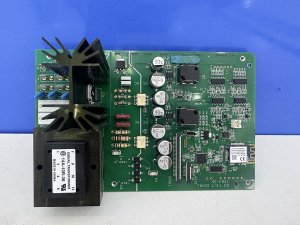
At its core, box build assembly is the process of integrating printed circuit boards, cabling, mechanical hardware, and user interfaces into a finished product enclosure. The term originates from the idea of building the complete assembly inside a box or chassis, but today it covers everything from handheld consumer devices to rack-mounted industrial controllers. A typical box build project may include PCB integration, power-supply mounting, connector routing, display installation, firmware loading, and final functional testing. Because the scope is far broader than traditional board-level assembly, this discipline demands tight coordination between mechanical engineering, electrical design, supply-chain management, and quality assurance teams.
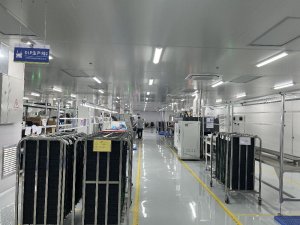
Companies that specialize in this level of integration are often called system-level integrators or electronic manufacturing services (EMS) providers. Their facilities combine precision SMT and through-hole lines with mechanical assembly stations, cable-harness departments, burn-in chambers, and automated test equipment. When you partner with a single provider for both board-level and system-level work, you eliminate hand-offs between vendors, reduce shipping damage, and gain one accountable source for quality and delivery.
Key Components of Box Build Assembly Services
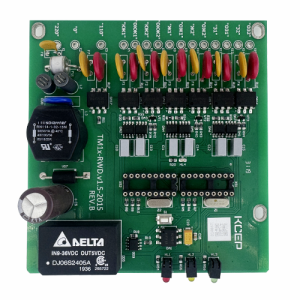
Not every project needs the same level of integration, but a full-service integration partner should be able to offer the following capabilities under one roof:
- PCB Mounting and Interconnection — Secure attachment of boards to chassis, daughter-card insertion, and backplane integration using standoffs, card guides, and high-reliability connectors.
- Cable and Harness Assembly — Custom wire harnesses, ribbon cables, coaxial assemblies, and power-distribution looms fabricated to IPC/WHMA-A-620 standards.
- Mechanical Integration — Installation of displays, keypads, fans, heatsinks, brackets, and sealing gaskets; torque-controlled fastening to prevent stress fractures.
- Power and Thermal Management — Integration of AC/DC supplies, battery packs, thermal pads, and forced-air or liquid-cooling systems to meet derating guidelines.
- Firmware and Software Loading — Flashing bootloaders, calibration tables, device drivers, and application code via JTAG, SWD, UART, or Ethernet interfaces.
- Labeling and Serialization — Barcode, QR-code, or RFID tagging for traceability, often linked to a manufacturing execution system (MES) database.
- Packaging and Kitting — ESD-safe bags, foam inserts, retail boxing, and accessory bundling ready for direct-to-customer shipment.
Choosing a turnkey PCB assembly and system integration partner means you can source all of these services through a single purchase order instead of juggling five or six subcontractors. That consolidation not only simplifies project management but also reduces the total landed cost by 10–20 percent in most cases.
The Box Build Assembly Process Step by Step
While every product is unique, a disciplined integration workflow generally follows seven distinct phases. Understanding each phase helps you identify where delays typically occur and how to prevent them.
1. Design for Assembly (DFA) Review
Before any parts are ordered, the integrator reviews your CAD files, BOM, and assembly drawings for manufacturability. Common DFA checks include fastener accessibility, cable-bend radius compliance, clearances for automated test probes, and ESD-path verification. Catching a cable-routing conflict at this stage costs minutes; discovering it on the production line costs hours or days.
2. Component and Material Sourcing
With the DFA review complete, the procurement team issues purchase orders for long-lead items such as custom enclosures, displays, and connectors. A system integration partner with global sourcing leverage can often negotiate better pricing and secure allocation during component shortages. At Keep Best PCBA, our Shenzhen and Thailand facilities share a centralized supplier database that flags obsolescence risks before they derail a build.
3. PCB Assembly and Inspection
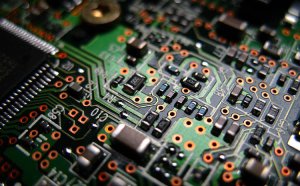
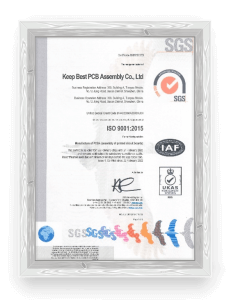
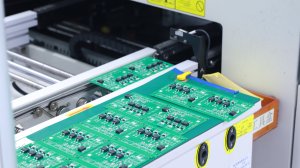
The heart of the system is built first. SMT placement, reflow soldering, through-hole insertion, and selective soldering are executed under the same ISO 9001 and IATF 16949 quality systems used for standalone board builds. Inspection steps include SPI (solder-paste inspection), 3D AOI (automated optical inspection), and X-ray analysis for hidden solder joints. Only boards that pass all checkpoints advance to system integration.
4. Mechanical and Electrical Integration
Technicians mount the verified PCB assemblies into the chassis, route cables through strain-relief points, and install sub-assemblies such as power supplies and cooling modules. Torque settings are documented in the work instruction, and critical fasteners receive dot-mark inspection to confirm proper tightening. For products subject to vibration—automotive controllers, power-tool electronics, or robotic drives—thread-locking compound or captivated screws are applied per the engineering specification.
5. Software Configuration and Calibration
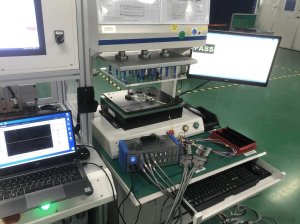
Once hardware is integrated, the unit moves to a programming station where firmware is flashed, MAC addresses are assigned, and calibration coefficients are written to non-volatile memory. Many modern facilities use automated ICT (in-circuit test) and FCT (functional circuit test) rigs that verify every analog input, digital output, and communication port against golden-unit limits. MES traceability ensures that each serial number is permanently linked to its test results, component lots, and operator IDs.
6. Final Assembly and Cosmetic Inspection
After functional verification, the product receives its front panel, bezel, or cover. A cosmetic inspection checks for scratches, dust particles, and label alignment under controlled lighting. For medical device PCB assembly and other regulated industries, this step also confirms that regulatory markings—CE, FCC, UL—are present and legible.
7. Packaging and Logistics
The finished units are sealed in anti-static bags, cushioned with foam, and packed into cartons that meet international shipping standards. Some PCB assembly manufacturer customers request drop-testing of packaging to simulate Amazon-style distribution abuse. With a fully integrated one-stop PCBA solution, your product can ship directly to end customers or regional distribution hubs without ever returning to your office.

Benefits of Full-Service Box Build Assembly
Outsourcing the entire integration flow to a single system-level provider delivers measurable advantages across schedule, cost, and quality dimensions:
- Faster Time-to-Market — Parallel sourcing, shared BOMs, and co-located mechanical and electrical teams compress typical NPI schedules by three to five weeks.
- Lower Total Cost — Consolidated freight, reduced inventory carrying costs, and volume-based component pricing drive per-unit savings that improve as volumes scale.
- Higher First-Pass Yield — Because the same engineering team designed the DFA rules, built the boards, and integrated the system, root-cause analysis is faster and corrective actions are more precise.
- Simplified Supply Chain — One vendor, one invoice, one point of contact. You spend less time on vendor management and more time on product innovation.
- Scalable Capacity — A partner with factories in Shenzhen, Jiangmen, and Thailand can shift production across sites to absorb demand spikes or mitigate tariff exposure.
Common Challenges and How to Avoid Them
Even experienced teams encounter pitfalls during system integration. Here are the four most frequent issues and proven prevention strategies:
Incomplete Documentation: Missing 3D STEP files, under-specified cable drawings, or ambiguous torque values are the leading causes of first-build delays. Prevent this by conducting a documentation audit with your integrator before releasing the BOM. A good partner will supply a checklist that covers every drawing, specification, and test requirement.
Component Obsolescence: Displays, connectors, and custom plastics often carry longer lead times than semiconductors. Your integration partner should run a lifecycle analysis on every non-commodity part and propose alternates before you commit to the design.
Thermal Mismanagement: Enclosures that look elegant on the outside can trap heat on the inside. Always request thermal simulation or prototype testing with thermocouples at maximum ambient conditions. A 10°C junction-temperature reduction can double component life in many applications.
Test Coverage Gaps: If your functional test only verifies 60 percent of the unit’s features, field failures will eventually expose the remaining 40 percent. Invest in comprehensive ICT/FCT fixtures and, where appropriate, environmental stress screening (ESS) to catch infant-mortality defects before shipment.
How to Choose the Right Box Build Assembly Partner
Not every electronic manufacturing services provider is equipped to handle system-level integration. When evaluating potential partners, use this six-point scorecard:
- Integration Breadth — Can they handle PCBs, cables, mechanics, software, and testing in-house, or do they subcontract key steps?
- Quality Certifications — Look for ISO 9001 as a baseline, plus ISO 13485 for medical, IATF 16949 for automotive, and IPC-A-610 / IPC/WHMA-A-620 for workmanship standards.
- Engineering Support — Do they offer DFA feedback, tooling design, and test-fixture development, or do they simply execute your instructions?
- Traceability Infrastructure — A modern MES should track every component lot, test result, and process parameter by serial number.
- Geographic Flexibility — Multi-site production across China and Southeast Asia provides tariff hedging and supply-chain resilience.
- References in Your Industry — Robotics, automotive, medical, and consumer electronics each impose unique regulatory and reliability requirements. Prioritize partners with relevant case studies.
Conclusion: From Board to Box with Confidence
Box build assembly is where engineering vision becomes a tangible product. By mastering each phase—from DFA review through final packaging—you reduce risk, control cost, and accelerate time-to-revenue. The key is choosing a partner that treats system integration with the same rigor as board-level soldering: detailed work instructions, automated inspection, full traceability, and continuous process improvement. If you are preparing a new product launch or looking to consolidate vendors for an existing platform, get a free quote from Keep Best PCBA. Our team will review your drawings, propose DFA optimizations, and deliver a detailed quote for turnkey board and system integration.