
How Can Turnkey PCBA Services Reduce Workload and Boost Efficiency?
Turnkey PCBA services allow EMS providers to take full charge of the entire production process. The full workflow includes PCB manufacturing, component procurement, soldering, assembly and final delivery. This article analyzes the core advantages of the turnkey model. It covers cost control, efficient production and quality assurance. It helps enterprises cut production workloads and improve overall operational efficiency.
1. Definition of Turnkey PCBA Services
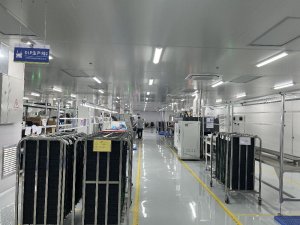
Turnkey PCBA services are a one-stop production model. The electronics manufacturing provider takes full responsibility for the whole project. The service scope covers every key stage. It includes PCB manufacturing, component procurement, SMT and DIP assembly, functional testing and final product delivery. Clients only need to provide design files and technical specifications. The manufacturer manages all follow-up production work.
2. Advantages in Cost Control
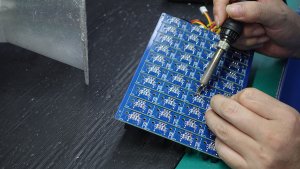
Volume purchasing discounts are the core benefit. Professional manufacturers maintain long-term and stable supply chain resources. They obtain more competitive component pricing than individual enterprises.
This model greatly reduces internal management costs. Companies no longer need to manage complex supply chains and inventory. It cuts extra material handling fees and procurement labor costs.
It also supports flexible production scaling. The solution adapts to small-batch prototyping and mass production. It maintains optimal cost-effectiveness for different order sizes.
3. Support for Efficient Production
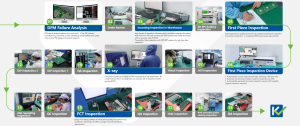
Automated production lays a solid foundation for high efficiency. SMT placement, DIP insertion and other core processes rely on automated lines. It ensures fast, stable and consistent production output.
Turnkey solutions effectively shorten overall lead times. Standardized workflows and high-speed production lines streamline processing. They greatly reduce production cycles and delivery waiting time.
Flexible capacity improves market responsiveness. Production scale can be adjusted according to actual order demands. Brands can quickly respond to market fluctuations and order changes.

4. Quality Assurance System
Strict full-process inspection standardizes quality control. Multiple quality measures run through the whole production flow. It includes IQC incoming inspection, AOI optical inspection and X-ray detection. Every production link maintains stable quality standards.
Professional testing verifies final product performance. Standard ICT and FCT functional tests are fully implemented. All finished products strictly meet original design specifications.
Complete certification support ensures product compliance. Manufacturers provide standardized third-party testing and certification services. It helps products meet domestic and international industry requirements.
Conclusion
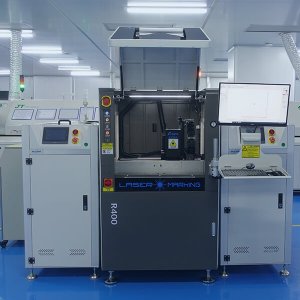
The turnkey PCBA model relies on professional manufacturing division of labor. It outsources complex production and processing work to experienced EMS suppliers. Enterprises can fully focus on core R&D and market expansion. Meanwhile, they gain optimized costs, higher efficiency and stable quality. The turnkey PCBA model effectively reduces corporate production burdens. It is a reliable solution to improve overall manufacturing efficiency.