
Checklist for Pre-Mass Production Assessment of PCBA
A comprehensive preparatory assessment must be carried out prior to PCBA mass production, covering five key areas: PCB design, component procurement, assembly and soldering, testing and validation, and process flow. This article provides a systematic checklist to help companies identify potential risks, ensure the smooth commencement of mass production, and minimise quality incidents and cost losses.
1.PCB Design Assessment
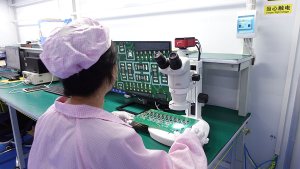
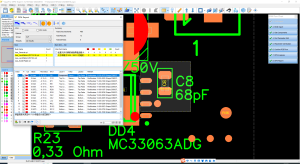
Prior to mass production, a Design for Manufacturability (DFM) assessment of the PCB design is crucial to ensure the design is suitable for mass production and to minimise production difficulties and risks.
With regard to Design Rule Checks (DRC), verify that the PCB design complies with the manufacturer’s process capabilities, including whether parameters such as line width, line spacing and via size fall within the manufacturing process tolerances.
With regard to routing optimisation, ensure that the routing is reasonable to minimise signal interference (EMI) and impedance issues, particularly in PCB designs involving high-speed signals.
Regarding pad design, verify that the pad layout complies with SMT placement requirements to prevent soldering defects or short circuits.
With regard to thermal design, the board’s heat dissipation design is assessed to ensure that no failures due to overheating occur during mass production.

2.Component Procurement Assessment
Component supply chain management is directly linked to production continuity and cost control. Prior to mass production, the stability and quality of component procurement must be ensured.
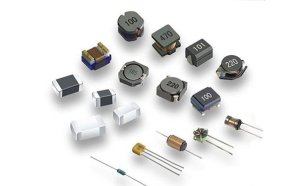
Regarding the Bill of Materials (BOM) verification, the completeness and accuracy of the BOM are confirmed to ensure that each component has detailed specifications and part numbers that are consistent with the design.
With regard to supplier evaluation, reputable component suppliers must be selected to ensure component quality and supply stability, thereby avoiding production interruptions caused by component shortages or quality issues.
Regarding material certification, the certification and test records of critical components must be assessed to ensure compliance with relevant standards such as RoHS and CE.
3. Assembly and Soldering Assessment
The assembly and soldering of PCBA boards are core steps in mass production, with quality control maintained throughout the process.
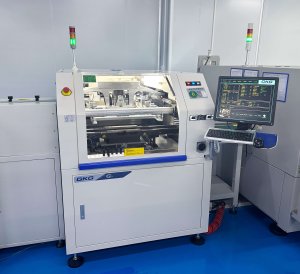
With regard to the SMT placement process, the stability of the placement process must be assessed to ensure machine placement accuracy and component alignment, thereby preventing misplacement and omissions.
Regarding the soldering process assessment, whether using reflow or wave soldering, the stability of the soldering temperature profile must be ensured. Solder joints must undergo visual and X-ray inspection to prevent issues such as cold solder joints and cold soldering.
With regard to the quality of soldering materials, the quality of the solder is assessed, including the composition, flow properties and reflow temperature of the solder paste, to ensure the strength and reliability of the solder joints.
4.Testing and Evaluation
Prior to mass production, the testing phase for PCBA boards is crucial, as it effectively identifies potential design and process defects and ensures that the product’s functionality and performance meet requirements.
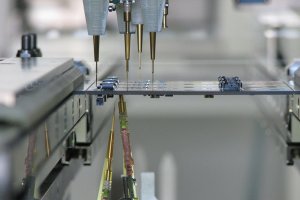
Functional testing (FCT) verifies whether the PCBA operates correctly by checking component functionality, electrical performance and signal integrity, ensuring the circuit board meets design requirements.
In-circuit testing (ICT) utilises automated test equipment to inspect solder joint connections, capacitance, resistance and other parameters, thereby preventing circuit failures caused by poor soldering or damaged components.
With regard to environmental testing, products requiring high reliability must undergo environmental simulation tests, such as temperature and humidity testing and vibration testing, to ensure their reliability under harsh conditions.
5.Production Process Evaluation
The entire production process is optimised and inspected to ensure that every stage, from component receipt to the dispatch of finished products, complies with mass production standards.
In terms of process standardisation, each production step is standardised to minimise human error and production variability.
With regard to production line equipment assessment, SMT placement equipment, soldering equipment and testing equipment are inspected to ensure they are in optimal condition, thereby guaranteeing production efficiency and consistent quality.
In terms of the quality management system, a rigorous quality management system such as ISO 9001 is implemented to ensure that every product undergoes thorough testing before leaving the factory.
6.Assessment Implementation Process
Design Review: The design and manufacturing teams jointly conduct a Design for Manufacturing (DFM) review to ensure the design meets process requirements.
Small-Batch Trial Production: Small-batch trial production is used to verify the stability of the production process and to check product consistency and functionality.
Prototype Testing: Comprehensive functional and reliability testing is carried out on trial production prototypes to ensure that the design and process are error-free.
Issue Feedback and Improvement: Issues identified during trial production are promptly addressed through feedback and improvements to ensure that the same problems are avoided during mass production.
Conclusion
A comprehensive pre-mass production ‘health check’ for PCBA is a crucial step in preventing quality incidents and ensuring successful delivery. Through a comprehensive five-dimensional inspection covering design evaluation, material verification, process validation, test confirmation and process optimisation—combined with a four-step implementation process comprising design review, small-batch trial production, prototype testing and issue rectification—potential risks can be effectively identified and eliminated, laying a solid foundation for high-quality, high-efficiency and low-cost mass production.