
Panel Separation and Post-Assembly Processes Following PCB Assembly
Once PCB assembly is complete, the boards must undergo post-assembly processes such as panel separation, cleaning, coating, assembly and packaging before the finished products can be delivered. These processes also affect product quality and reliability. This article analyses the key control points in the post-assembly process.
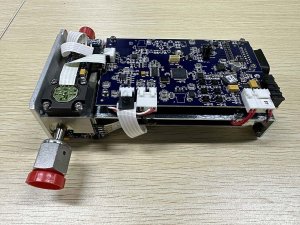
Selection of Panel Separation Methods
Products manufactured using panelised production must be separated into individual boards.
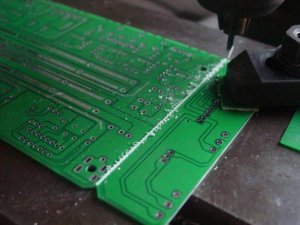
Panel separation methods: V-cut (straight-line cutting, low cost), milling (curved cutting, high precision), laser cutting (stress-free, suitable for thin boards), and manual breaking (limited to simple V-cuts only; not recommended).
Stress control: Stress generated during panel separation may cause component cracking (particularly in BGAs and ceramic capacitors). Prioritise milling or laser cutting, or design a separation groove (‘Mouse Bite’) to reduce stress.
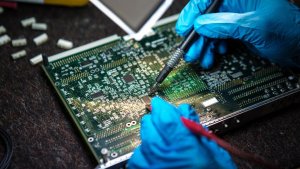
Cleaning Process
Soldering residues (flux, solder balls) must be removed.
Cleaning methods: water-based cleaning (environmentally friendly, requires drying), solvent cleaning (highly effective, requires explosion-proof equipment), vapour-phase cleaning (suitable for precision products), and no-clean processes (low-solid-content flux, where residues are acceptable).
Inspection criteria: ionic contamination (<1.56 μg NaCl eq/cm², per IPC-TM-650) and surface insulation resistance (SIR test).
Conformal Coating
Some products require a protective coating.
Application methods: brushing, spraying, dipping, selective coating. See Article 12 for details.
Process Control: Temperature, time and humidity control to prevent dust contamination.
Enclosure Assembly and Fastening
Placing the PCBA into the enclosure is a critical step in the final assembly process.
Assembly Key Points: Electrostatic protection, screw torque control (to prevent PCB warping), connector alignment accuracy, and uniform application of thermal interface material (TIM).
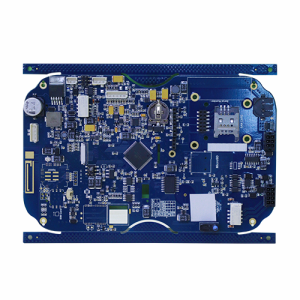
Final Test
Comprehensive verification prior to dispatch.
Testing scope: FCT (Functional Test), burn-in testing, visual inspection (AOI or manual), and random sampling of electrical performance prior to packaging.
Packaging and Dispatch Standards
Appropriate packaging protects the product during transit.
Packaging materials: anti-static bags, desiccants, humidity indicator cards, cushioning foam, and outer carton labelling (RoHS, ESD, Fragile, etc.).
Shipping documentation: COA (Certificate of Analysis), test reports, and declarations of conformity.
The back-end process is the final stage of PCB assembly, yet quality incidents occur from time to time. Establishing comprehensive back-end Standard Operating Procedures (SOPs) and inspection criteria is the last line of defence in ensuring customer satisfaction.
Frequently Asked Questions (FAQ)
Q1: Which is better: V-cut or milling for PCB separation?
A: It depends on the product. V-cut is suitable for straight lines, simple contours and low-cost requirements; milling is suitable for complex contours, high precision and low-stress requirements. For products with numerous BGAs and ceramic capacitors, milling is recommended to avoid hidden cracks caused by separation stress.
Q2: Why do PCBs turn white after cleaning?
A: Possible causes: 1) Incomplete drying after water-based cleaning, leaving water residue; 2) A reaction between the flux and the cleaning agent, producing a white precipitate; 3) Incompatibility between the PCB solder mask and the cleaning agent. Remedies: Optimise drying parameters, change the cleaning agent, or conduct a pre-cleaning test to verify compatibility.
Q3: What is the appropriate torque for screws during enclosure assembly?
A: This depends on the screw specification and PCB material. For M3 screws, the torque is typically 0.8–1.2 N·m; for M2 screws, 0.3–0.5 N·m. Excessive torque can cause PCB deformation, copper layer cracking or component damage; insufficient torque results in poor fastening. It is recommended to use a torque screwdriver and calibrate it regularly.
Q4: Is burn-in testing mandatory?
A: This depends on the product’s reliability requirements. It is not usually carried out for consumer electronics; for industrial control applications, 4–24 hours is recommended; for automotive electronics, 48–168 hours; and for military/aerospace applications, several hundred hours may be required. Burn-in testing screens for early failures under high temperature and stress conditions, but it increases costs and lead times.
Q5: What are some common errors in shipping packaging?
A: Common errors include: 1) damaged or expired anti-static bags (usually valid for 1–2 years); 2) insufficient desiccant (calculated based on packaging volume); 3) failure to attach a humidity indicator card; 4) absence of ESD or ‘Fragile’ labels on the outer carton; 5) mixing of different versions or batches. These can be avoided by establishing packaging Standard Operating Procedures (SOPs) and checklists.