
As electronic products continue to evolve toward miniaturization and higher density, SMT assembly has become a core process in modern electronics manufacturing. This article systematically outlines the definition, complete process, and key control elements of SMT assembly to help professionals grasp quality essentials and reduce production anomalies.
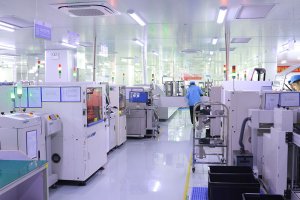
SMT Assembly Is a Surface Mount Technology
SMT (Surface Mount Technology) is an assembly method in which electronic components are soldered directly onto the surface of a printed circuit board (PCB). Compared to traditional through-hole technology (THT), SMT eliminates the need to route component leads through board holes, significantly saving board space, increasing wiring density, and enabling more flexible circuit design. This technology is widely used in consumer electronics, communications equipment, medical devices, automotive electronics, and other fields.
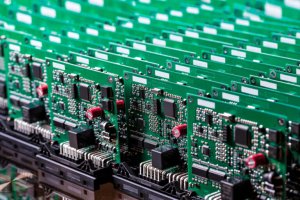
The SMT manufacturing process consists of six stages
A complete SMT manufacturing process encompasses a systematic sequence of steps from design to inspection, with each stage directly impacting the consistency and reliability of the final product. The main steps include PCB design, component procurement, solder paste printing, component placement, reflow soldering, and inspection and testing.
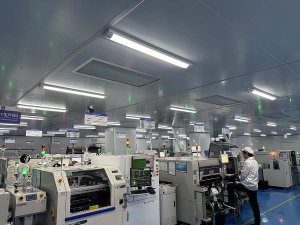
PCB Design Determines Placement and Soldering Reliability
Successful SMT manufacturing begins with sound PCB design. During the layout phase, engineers must coordinate routing, component placement, thermal management, and electromagnetic compatibility, while ensuring that pad dimensions, shapes, and component spacing comply with SMT process standards. A well-designed PCB effectively prevents defects such as placement misalignment and solder bridging during subsequent processes.

Component Procurement Quality Affects Manufacturing Stability
High-quality components are the foundation for the smooth progression of SMT manufacturing. During the procurement phase, priority should be given to suppliers with compliant specifications and stable supply chains, and incoming material inspections should be strictly enforced to prevent counterfeit or moisture-damaged components from entering the production line. Reliable incoming material quality is a prerequisite for reducing anomalies such as cold solder joints and missing components.
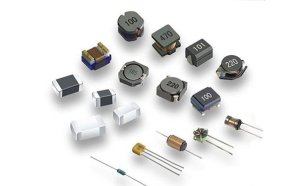
Solder Paste Printing Quality Affects Solder Joint Strength
Solder paste printing is used to form a uniform layer of solder on PCB pads. A screen printer precisely transfers the solder paste to the pads; its thickness, accuracy, and viscosity directly determine the wetting effect on components. Poor printing often results in insufficient solder, solder bridges, or misalignment, making it a critical process that requires strict control prior to reflow soldering.
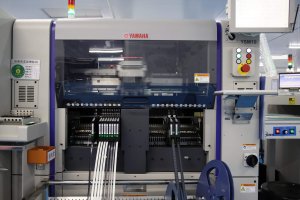
SMT Placement Machine Accuracy Determines Component Placement Quality
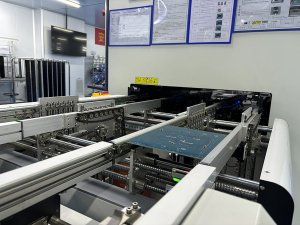
The SMT placement machine is the core equipment of the SMT production line, responsible for precisely placing components onto the solder paste pads according to the program. Placement accuracy, speed, and the ability to handle multiple component types collectively influence production efficiency and product consistency. Excessive placement errors can lead to typical defects such as misalignment and tombstoning.
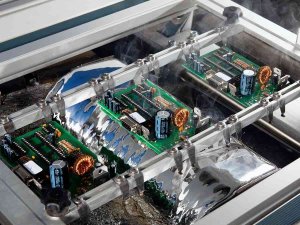
The Reflow Soldering Temperature Profile Is a Critical Control Point
After component placement is complete, the board enters the reflow oven, where the solder paste melts under heat to form secure solder joints. The peak temperature, heating rate, and cooling rate of the temperature profile must be precisely set: excessively high temperatures can damage components, while insufficient temperatures prevent adequate solder wetting. Stable temperature control is key to ensuring solder joint strength.
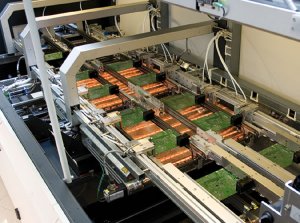
Inspection and Testing Ensure Product Quality Before Shipment
After processing is complete, comprehensive verification of component placement, solder joint morphology, and electrical performance must be conducted using methods such as Automated Optical Inspection (AOI), X-ray inspection, and Functional Test (FCT). A systematic inspection process can detect potential defects early on, ensuring that products meet delivery standards.
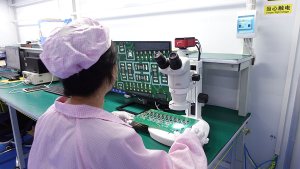
Component Precision and Solder Joints Are the Two Key Factors
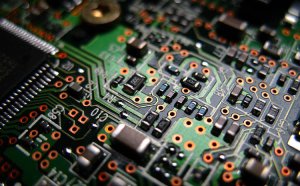
In SMT assembly, component placement accuracy and solder joint quality are the two most critical control factors. With the trend toward miniaturization, component sizes continue to shrink, placing higher demands on the precision and error control of placement machines; meanwhile, solder joint reliability directly affects the long-term stability of products under complex operating conditions.
Production Environment Management Impacts Process Stability
SMT workshops require systematic control of temperature, humidity, and static electricity. Excessive humidity can cause solder paste to absorb moisture, while electrostatic discharge may damage sensitive components. Standardized environmental management is the fundamental guarantee for maintaining consistency in mass production.
SMT Assembly Offers Significant Application Advantages
Compared to the THT process, SMT assembly offers clear advantages in terms of space utilization, production efficiency, and product reliability. By saving board space, supporting high-density integration, and enabling rapid mass production through automated production lines, it has become a key driver of miniaturization and high performance in electronic products.