
As electronic products become smaller, lighter, and more mechanically complex, flexible and rigid-flex PCB assembly has moved from niche applications into mainstream electronics manufacturing. From foldable smartphones and medical implants to automotive sensor modules and aerospace avionics, flex circuits enable design possibilities that rigid boards cannot achieve.
However, assembling flexible circuits presents unique challenges that differ fundamentally from traditional rigid PCB assembly. The materials behave differently under heat, the handling requirements are stricter, and the process windows are narrower. This article explores the key technologies, common pitfalls, and evolving applications of flex and rigid-flex assembly.
Und
erstanding Flex and Rigid-Flex Constructions
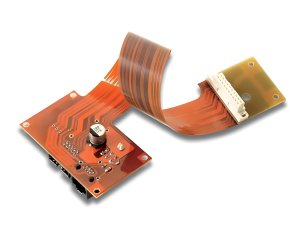
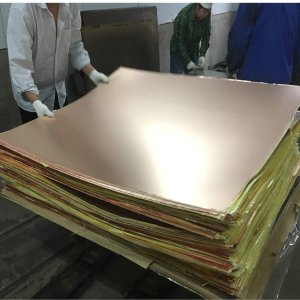
Flexible PCBs use polyimide or polyester base materials instead of the rigid FR-4 laminate used in conventional boards. Polyimide is the dominant choice for most applications due to its superior thermal stability, allowing it to withstand multiple reflow cycles without degradation. The copper traces are bonded to the polyimide substrate using acrylic or epoxy adhesives, or in adhesiveless constructions that offer better flexibility and thinner profiles.
Rigid-flex PCBs combine rigid FR-4 sections with flexible polyimide sections in a single integrated assembly. This construction eliminates the connectors and cables that would otherwise join separate rigid boards, reducing assembly steps, improving reliability, and saving space and weight. Rigid-flex is particularly valuable in applications where the assembly must fold into a compact housing or where vibration and mechanical stress would challenge connector reliability.
The transition zones between rigid and flexible sections require careful design. Stress concentrations at the rigid-flex boundary are a common failure point, particularly under repeated flexing. Proper design includes generous bend radii, strain relief features, and avoidance of vias and component placement in the bend area.
Assembly Challenges Unique to Flex Circuits
Dimensional Stability
Polyimide substrates expand and contract more than FR-4 during thermal cycling. This dimensional instability creates challenges for solder paste printing, where stencil alignment must be precise to within tens of microns. As the flex circuit heats and moves during reflow, the registration between paste deposits and component pads can shift, causing misalignment defects.
The solution typically involves using dedicated carrier pallets that hold the flex circuit flat and constrain its movement during printing, placement, and reflow. These pallets are often made from materials with thermal expansion coefficients matched to the flex substrate. For high-volume production, custom tooling with vacuum hold-down or mechanical clamping ensures consistent registration across the entire panel.
Handling Damage Prevention
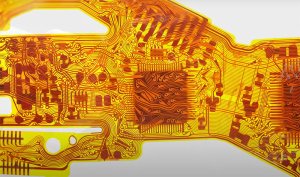
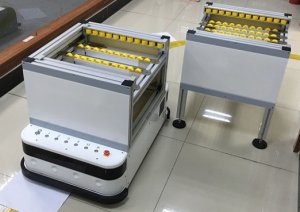
Thin polyimide circuits are easily damaged by improper handling. Edge nicks, creases, and surface scratches that would be cosmetic on an FR-4 board can cause functional failures on flex circuits. Operators must be trained in proper handling techniques, and automated handling systems must be configured with gentler grip forces and slower transfer speeds than those used for rigid boards.
Protective coverlay or covercoat layers add thickness and protection to the copper traces but also require careful processing. The openings in coverlay for component pads must be precisely aligned, as misalignment can partially cover pads or expose adjacent traces. Laser-cut coverlay openings offer the best precision for fine-pitch components.
Reflow Profile Optimization
Flex circuits have different thermal mass and heat dissipation characteristics than rigid boards. The thin substrate heats and cools more quickly, which can be advantageous for cycle time but requires careful profile development to avoid thermal shock. The polyimide material can also absorb moisture, making pre-baking essential before reflow to prevent delamination.
For rigid-flex assemblies, the thermal challenge increases because the rigid and flexible sections heat at different rates. The reflow profile must be developed to ensure adequate soldering on the higher-mass rigid sections without overheating the lower-mass flexible areas. Profiling with thermocouples attached to both rigid and flex sections is essential for developing a balanced profile.
Growing Applications Driving Demand
Wearable electronics represent the fastest-growing application for flex PCB assembly. Smartwatches, fitness trackers, and medical wearables require circuits that conform to curved surfaces and withstand constant movement. The latest generation of devices integrates multiple rigid-flex assemblies to maximize component density within severely constrained volumes.
Automotive electronics increasingly rely on flex and rigid-flex assemblies for sensor modules, camera systems, and LED lighting. The harsh automotive environment, with wide temperature ranges, vibration, and exposure to fluids, tests the reliability limits of flex circuits. Rigid-flex designs that eliminate connectors at sensor interfaces have proven more reliable than conventional board-and-cable approaches in long-term vehicle testing.
Medical implantables push flex circuit technology to its extremes. Cochlear implants, neurostimulators, and cardiac devices use ultra-thin flex circuits that must survive years of implantation while maintaining electrical integrity. The assembly processes for these devices operate under the most stringent cleanliness and quality control requirements in the electronics industry.
Aerospace and defense applications leverage flex circuits for weight reduction and reliability improvement. Every gram saved in an avionics assembly translates to fuel savings over the aircraft’s service life. Rigid-flex assemblies that replace multiple rigid boards and interconnecting cables can reduce weight by 30 to 50 percent while improving reliability by eliminating connector failure modes.

For companies developing products in these application spaces, partnering with a PCB assembly manufacturer that has demonstrated flex and rigid-flex experience is essential. The learning curve is steep for manufacturers whose experience is limited to rigid boards. Ask potential partners to walk through their specific flex assembly processes, tooling, and quality data. A comprehensive PCBA service provider should be able to demonstrate successful flex assembly programs with documented yield and reliability metrics.