
Not every electronic assembly is built the same way. The decision to use surface-mount technology, through-hole technology, or a hybrid of both shapes everything from board size and manufacturing cost to mechanical reliability. At Keepbest, we operate lines for pure SMT, pure THT, mixed assemblies, double-sided SMT, and rigid-flex constructions.
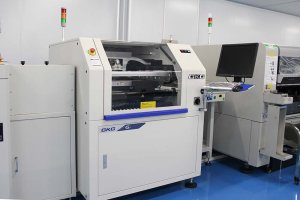
Pure SMT Assembly
Pure SMT boards contain only surface-mount components. This is the dominant technology for modern consumer electronics, IoT devices, and compact industrial controls.
How It Works — Solder paste is printed onto pads. Components are placed by pick-and-place machines. The board passes through a multi-zone reflow oven. AOI verifies solder joint quality. X-ray inspection validates hidden joints.
Best For — Smartphones, wearables, IoT sensors, LED lighting drivers, RF modules. Any application requiring maximum density and minimal board area.
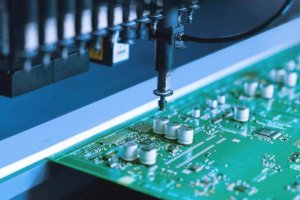
Pure THT Assembly
Pure THT boards use only through-hole components. While less common in new designs, THT remains essential where mechanical robustness outweighs density requirements.
How It Works — Components are inserted into drilled holes. Leads are clinched. The board passes over a wave soldering machine. Excess lead length is trimmed.
Best For — High-voltage power supplies, military and aerospace systems, industrial motor controls, legacy replacements, and audio equipment.
Mixed SMT/THT Assembly
Mixed-technology boards combine surface-mount and through-hole components. This is the most common type for industrial, automotive, and medical applications.
Construction — SMT components are printed, placed, and reflowed on the primary side. THT components are inserted on the secondary side. Selective soldering targets THT joints without disturbing SMT components.
Best For — Automotive ECUs, medical instruments, industrial automation controllers, and test equipment.
Double-Sided SMT Assembly
Double-sided SMT places components on both faces of the PCB, enabling maximum density.
Weight Limitations — Components on the secondary side must be light enough to remain attached during the primary-side reflow, or adhesive must be used.
Best For — Ultra-compact consumer electronics, advanced RF modules, drone flight controllers.
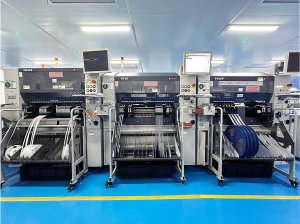
Rigid-Flex Assembly
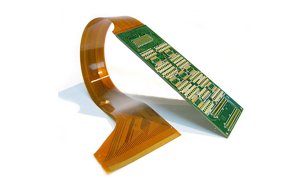
Rigid-flex boards combine rigid PCB sections with flexible polyimide circuits.
Best For — Medical endoscopes, aerospace instrumentation, wearable electronics, foldable smartphones.
Technology Selection Matrix
| Requirement | Recommended Technology |
| — | — |
| Maximum density | Pure SMT or double-sided SMT |
| Highest mechanical robustness | Pure THT or mixed with THT connectors |
| High power / high current | Mixed with THT power components |
| Best high-frequency performance | Pure SMT |
| Field repairability | Pure THT or mixed |
| Complex 3D form factor | Rigid-flex |
| Lowest cost at very high volume | Pure SMT |
Frequently Asked Questions
Q: Can I convert a through-hole design to surface-mount?
Often yes. Many THT components have direct SMT equivalents. However, high-power connectors and large transformers may not have SMT alternatives with equivalent performance.
Q: Is double-sided SMT more expensive?
Not significantly at volume. The main cost driver is thinner PCB material. At prototype quantities, expect a 10–20% premium.
Q: What is the minimum component size Your manufacturing partner can place?
0201 metric (0.6 × 0.3 mm) routinely. 01005 metric is possible with dedicated tooling.
Q: When should I choose selective soldering over wave?
Selective soldering is required when SMT components already exist on the underside. Pure THT boards are more efficiently processed with wave soldering.
Q: Does Keepbest support leaded soldering?
Primarily lead-free (SAC305). Leaded is available for specific exempt applications with documented justification.
Unsure which assembly type fits your project? Send your design files to the Keepbest engineering team. We will recommend the optimal assembly approach.