
What Drives PCB Assembly Tooling Costs, and How Can You Control Them?
A PCB assembly quotation usually arrives as one unit price, and most buyers go straight to that number. Then they reach the line marked tooling and pause. It is a real charge, it can be larger than the first production order, and it is the part of the cost structure least likely to be explained. PCB assembly tooling costs are not a vague markup hiding behind an acronym — they are physical assets and engineering hours that are paid for once and then spread across everything you build afterwards.
Reading those charges line by line changes the negotiation. A buyer who knows which items are genuinely one-time, which recur every time the design changes, and which are quietly rolled into the unit price at an unstated interest rate can ask much sharper questions.
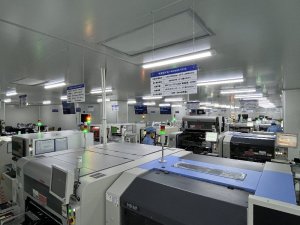
PCB Assembly Tooling Costs Cover Five Categories of Spend
Almost every tooling quotation sorts into five buckets: solder printing and soldering tooling (stencils, wave solder pallets, selective soldering fixtures, reflow carriers); handling and singulation tooling (depanelization fixtures, router programs, board supports); test tooling and programming (ICT fixtures, functional test fixtures, flying-probe and boundary-scan programs); machine and inspection setup (placement programs, AOI, SPI and X-ray programming, reflow profiling, first article inspection); and engineering deliverables such as DFM review and PPAP documentation.
The distinction between tooling and NRE matters more than it looks. Tooling is a physical object that should belong to you and can be transferred, re-cut and reused. NRE is engineering labor that cannot be recovered once the hours are spent. Suppliers sometimes merge the two into a single “engineering fee” because it is easier to digest, but merging them also removes your ability to verify either number.
The arithmetic is what makes tooling strategic. It is a fixed cost, so its effect on unit price is tooling divided by lifetime volume. The same $25,000 of fixtures is $25 per unit on a 1,000-piece build and $0.25 per unit on a 100,000-piece program.
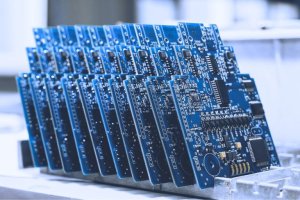
Stencil Fabrication Is the First and Most Recurring Tooling Charge
The solder paste stencil is the first tooling item every program buys, and the only one routinely purchased more than once. Most are laser-cut from stainless foil 0.10 mm to 0.15 mm thick, held in a frame or tensioned frameless. Cost rises with aperture count, the finest pitch on the board, and special processing such as electro-polished sidewalls, nano-coating for paste release, or stepped regions for mixed boards.
What makes stencils unusual is their revision lifecycle. Every design change touching the paste layer — a moved component, a new package, a pad correction after first article — requires a new stencil. Programs that pass through four or five ECOs before release can spend more on stencil revisions than a test fixture costs, and each re-cut carries lead time that lands directly on the schedule.
Managing this is discipline rather than clever negotiation. Freeze the paste layer before tooling release, verify pad geometry during DFM so the first stencil is already correct, agree how many revision re-cuts are included in the original price, and confirm that stencils are labelled, stored flat and returnable to you on request.
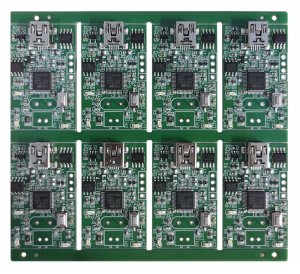
Solder Pallets and Carrier Fixtures Drive the Second Wave of Cost
Anything that must be held, masked or supported during soldering needs a fixture. Wave soldering a mixed-technology board usually calls for a pallet machined from high-temperature composite, with openings that expose only the through-hole areas. Selective soldering needs a fixture that positions the nozzle program against the board, thin boards benefit from a reflow carrier that controls warpage, and depanelization needs either a router program with vacuum support or a V-score fixture.
Cost here is driven by geometry more than technology: board outline, the number of separate openings, how many variants share a family, and the thermal duty the pallet sees. A pallet for a full-size backplane can exceed a thousand dollars, while a small carrier for a wearable module costs a fraction of that. Multi-cavity pallets and family tooling are the standard levers for reducing the count.
The best practices sit upstream of the tooling order. Standardize panel and board outlines where the roadmap allows, because identical outlines can share one pallet across several products. Involve the assembly partner during mechanical design so masking and support requirements are designed in rather than discovered at the tooling review.
Test Fixtures and Programming Quietly Dominate the Tooling Budget
On most programs test tooling outweighs every other category combined. An in-circuit test fixture is a mechanical assembly with hundreds of spring-loaded probes, a press-down frame and a wiring interface, and its cost tracks node count and probe density rather than board area. Functional test adds a second layer: enclosure, harnesses, load simulation, instrumentation and the software that sequences the test.
Flying probe is often described as the fixture-free alternative, and it does avoid the needle bed, but it does not avoid tooling cost. Program generation, test-point selection and debug hours still have to be paid, and throughput is far lower than on an ICT fixture, which pushes cost into unit time at volume.
Because test tooling is the largest and least transparent line, design decisions matter most here. Extra test access costs nothing at layout time and can save a second fixture later. Standardizing test point grids and connector interfaces across a family lets one fixture serve several boards. And recording who owns the fixture, where it is stored, and what happens if the program moves prevents the most expensive form of tooling loss: paying twice for the same hardware.
How Quotations Amortize PCB Assembly Tooling Costs
Suppliers present tooling in one of three ways. Itemized one-time charges list every fixture, stencil and program separately, invoiced when built and owned by you. Roll-in does not bill tooling at all but recovers it inside the unit price against a committed volume. A hybrid invoices part up front, amortizes the remainder over an agreed quantity, and states when the tooling becomes yours.
Each model suits a different situation. Itemized charges are best when volumes are uncertain or the product may move, because you keep control of the assets. Roll-in releases cash in the short term, but model what happens if you order less than committed — “free tooling” arrangements usually contain a shortfall clause, and it is rarely cheap. Two clauses deserve attention in any model: explicit tooling ownership with a right to a photographed tooling list, and a quantified revision allowance.
| Tooling item | Main cost driver | Frequency | Best practice |
|---|---|---|---|
| SMT stencil | Aperture count, finest pitch, step, coating | Recurs with each paste-layer ECO | Freeze the paste layer; cap revision re-cuts |
| Wave solder pallet | Board outline, openings, composite grade | One-time per revision | Standardize outlines to share pallets |
| ICT fixture and receiver | Node count, probe density, access sides | One-time, revalidated on layout change | Standardize the test point grid |
| Functional test fixture | Instrumentation, I/O count, software | One-time plus software upkeep | Name the owner in the contract |
| Programming fixture | Socket type, devices per panel | One-time, changes with silicon | Program on-board via the test fixture |
| AOI, SPI, X-ray programs | Program and library hours | One-time, updated per variant | Reuse a master library across families |
Where Tooling Spend Leaks After the First Build
The first build is the most visible tooling event, not the most expensive one. Late engineering changes are. A layout revision after qualification can invalidate the paste layer, the pallet masking and the test program simultaneously, so a change costing almost nothing in engineering hours triggers a fresh round of tooling. Programs that release tooling before the design is frozen buy the same fixtures twice.
Tooling built against wrong assumptions is the second leak: fixtures ordered from a panel drawing rather than released fabrication data, pallets made before an outline changed, test programs generated from a schematic that later gained a variant. A third is duplication — a second set of fixtures bought for the same board at another site, or a stencil re-ordered because nobody recorded where the original went.
A worked example shows the scale. A mid-complexity eight-layer control board might carry a stencil at roughly $450, two wave solder pallets at $1,200 each, an ICT fixture at $12,000, a functional test fixture and harness at $6,500, a programming fixture at $2,800 and router support tooling at $1,500 — about $26,650. Over 5,000 lifetime units that is $5.33 per board; over 50,000 it is $0.53. None of that moves with the bill of materials, which is why tooling deserves its own line in the business case.
Best Practices That Keep PCB Assembly Tooling Costs Predictable
Predictability comes from process discipline rather than hard negotiation, and most of it happens before a single fixture is ordered.
- Require an itemized quotation with a price, lead time and owner for every tooling line instead of one bundled fee.
- Complete DFM review before tooling release so pad geometry, panel layout and test access are fixed while changes are still free.
- Freeze the paste layer and board outline before stencils and pallets are cut, and treat changes as a formal re-tooling decision.
- Negotiate a written revision allowance, such as two stencil re-cuts per year at no charge.
- Standardize panel sizes and test point grids so one fixture serves several boards in a family.
- Record named ownership, storage location and photographs for every tool in the contract.
- Plan tooling transfer at the start, and ask how stencils, fixtures and programs would be handed over.
Evaluating a Tooling Quotation: A Buyer’s Checklist
Before approving a tooling line, work through the questions below. They reveal most gaps between what the supplier assumed and what the program actually requires.
- Is each item described specifically enough that a second source could reproduce it?
- Does any line combine tooling with engineering labor, and can it be split?
- Is the amortization basis stated, including the volume it was priced against and the shortfall terms?
- Which items become your property, when, and what documentation comes with them?
- What is included after delivery — fixture maintenance, probe replacement, program updates, or nothing?
- Are tooling lead times shown separately from production lead times?
- Is the tooling specification matched to the forecast, so a 500-unit project is not paying for a needle bed it will never amortize?
Turning Tooling Into a Managed Cost Rather Than a Surprise
Tooling behaves like capital expenditure, so it should be planned that way: itemized, owned, documented and reviewed against the volume it was priced for. Buyers who understand the categories of spend can tell a genuinely one-time charge from a recurring one, and can argue for the design decision that removes a fixture instead of paying for it.
That conversation is easiest with a partner who treats tooling as part of the same engineering dialogue as DFM and test strategy. A PCB assembly manufacturer that quotes stencils, pallets and fixtures line by line makes the amortization arithmetic visible while panel layouts and test access can still change for free. A one-stop PCBA solution provider that controls fabrication, assembly and test under one roof shortens the path further, because tooling no longer has to be renegotiated between separate suppliers.