
Selecting the right OEM PCB assembly partner can determine whether your electronic product launches on time, on budget, and with the reliability your customers expect. As hardware teams scale from prototype to mass production, the line between a successful product and a missed market window often comes down to the manufacturing partner behind the boards. In 2026, with supply chains fragmenting and quality expectations rising, knowing how to evaluate an OEM PCB assembly supplier is a core engineering and sourcing skill.
This guide walks through seven practical factors that buyers, engineers, and founders use to qualify an OEM PCB assembly vendor. It also clarifies how OEM PCB assembly differs from ODM and EMS, and offers a checklist you can apply to your next RFQ. Whether you are sourcing for industrial controls, IoT devices, automotive electronics, or consumer products, the framework below will help you make a defensible, low-risk decision.
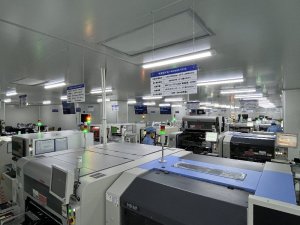
What OEM PCB Assembly Means and Why Quality Matters
OEM PCB assembly describes a manufacturing model in which a factory builds printed circuit board assemblies to your exact design files, bill of materials, and quality specifications. The factory owns the production line, equipment, and workforce; you own the design, the brand, and the intellectual property. This is the dominant model for most product companies that need repeatable production without investing in their own SMT lines.
It helps to separate OEM PCB assembly from two related services:
- ODM electronics manufacturing: The factory contributes or licenses the reference design, and you rebrand or customize it. R&D responsibility sits partly with the manufacturer.
- EMS (electronic manufacturing services): A broader category that includes OEM PCB assembly, box build, supply chain management, testing, and after-sales services under one contract.
Many suppliers position themselves as OEM, ODM, and EMS simultaneously. The distinction matters because contract structure, IP terms, design change control, and liability all shift depending on which model you sign. Be explicit with suppliers that you want a pure-play OEM PCB assembly relationship with no design ownership claims.
Every shipped unit is a physical representation of your brand promise. A single field failure can damage customer trust, trigger warranty costs, and in regulated industries lead to recalls. The qualification process for an OEM PCB assembly partner deserves the same rigor as component selection. Modern partners are expected to deliver consistent first-pass yield above 99%, documented process control (SPI, AOI, X-ray, ICT, FCT), full traceability, IPC-A-610 and IPC-J-STD-001 compliance, and the ability to ramp from 100 units to 100,000 without process revalidation.
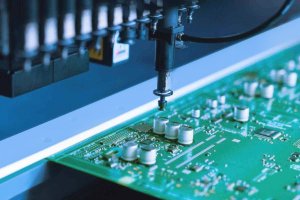
7 Key Factors to Evaluate an OEM PCB Assembly Partner
The seven factors below are ordered roughly from most fundamental to most operational. A supplier that fails on the first two is almost always disqualified regardless of price.
1. Engineering Depth and DFM Capability
A strong OEM PCB assembly partner treats your Gerbers and BOM as inputs to a collaborative engineering conversation, not as a final blueprint. Before any line is set up, the supplier should run a Design for Manufacturability (DFM) review and return a written report covering footprint and pad design issues, component placement and panelization, solder paste stencil apertures, test point coverage, and risk flags for BGA, QFN, fine-pitch, or high-current nets. If a supplier only asks for a price and a delivery date, they are acting as a board stuffer, not a partner. The best factories in this space have 5–15 engineers dedicated to DFM and process engineering per SMT line.
2. Quality Systems and Certifications
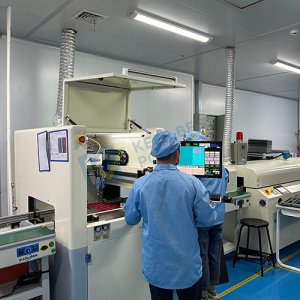
Quality must be auditable, not promised. Before signing with an OEM PCB assembly vendor, request current certificates and audit reports: ISO 9001 for general quality, ISO 13485 for medical devices, IATF 16949 for automotive, IPC-A-610 and IPC-J-STD-001 for workmanship, UL recognition for safety marks, and RoHS / REACH declarations for material compliance. Also request first-pass yield, DPPM, and customer-return metrics for the past 12 months. A serious OEM PCB assembly supplier produces this data on demand.

3. Component Sourcing and Supply Chain Transparency
Most schedule slips and quality escapes in OEM PCB assembly originate in the supply chain, not on the SMT line. Evaluate how the supplier handles authorized distribution (franchised vs open market), lifecycle management (EOL and PCN risk flagging), counterfeit avoidance (inspection and traceability policy), and BOM cost-down (proactive alternates at lower cost). Suppliers offering turnkey PCB assembly as part of their OEM PCB assembly service manage all of the above. Consignment-only models push this work onto you, which is fine for some teams but should be a conscious choice.
4. Production Capacity and Scalability
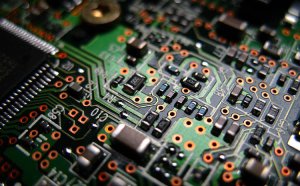
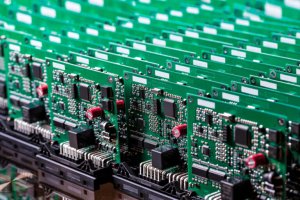
A prototype house that excels at 5–50 boards is rarely the same factory that runs 50,000 boards per month. Clarify how many SMT lines the OEM PCB assembly candidate operates, the current utilization, the maximum board size and layer count they support, whether they cover both NPI and mass production under one roof, and how they balance load between factory locations. Multi-shore factories operating in both Shenzhen and Thailand give you extra levers: tariff engineering, geopolitical risk hedging, and surge capacity during peak demand. A mature provider will be transparent about capacity and will not overcommit.
5. Process Control and Inspection Infrastructure
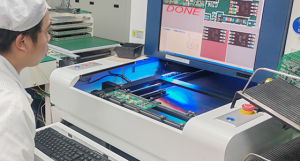
The minimum inspection stack for a serious OEM PCB assembly line should include SPI before component placement, AOI after reflow, X-ray for BGA and hidden joints, ICT and FCT for electrical verification, and 3D AOI for fine-pitch and high-density designs. Ask whether these checks are integrated into a Manufacturing Execution System that records per-unit traceability. Modern electronic manufacturing services providers offer this level of data capture, which is invaluable when you investigate a field issue or satisfy a regulator.
6. Communication, Project Management, and Time Zones
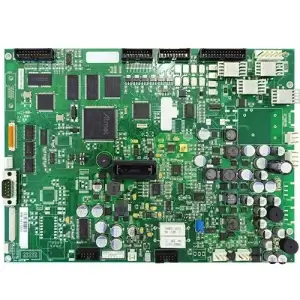
The most underrated factor in OEM PCB assembly success is daily communication. Look for a dedicated project manager or NPI engineer assigned to your account, clear escalation paths for engineering and quality issues, weekly review calls during ramp-up, English-speaking engineering contacts, and a modern PLM or ERP integration with portal access for order status. If you are sourcing from a different region, time-zone overlap matters. Many factories now run night shifts or split teams to cover North American, European, and APAC customers. Confirm this before placing a pilot order.
7. Commercial Stability and Long-Term Partnership Signals
Finally, evaluate the supplier as a business, not just a factory. Indicators of a stable OEM PCB assembly partner include 8+ years of operation in the same category, audited financial statements available on request, long-tenured customer references in your industry, a clear roadmap for capacity and equipment refresh, and willingness to sign NDAs, quality agreements, and supply contracts that protect your IP. A lower price from a financially fragile supplier is one of the most expensive mistakes you can make. If the factory shuts down mid-ramp, you absorb the recovery cost in expedited tooling, requalification, and lost sales.
Common Red Flags When Choosing an OEM PCB Assembly Vendor
Even with a strong framework, certain warning signs should pause your decision: no DFM feedback (a factory that accepts any Gerber without question is not protecting you), vague quality data (a recent DPPM or first-pass yield should always be available), reluctance to share certifications, unusually low pricing (25%+ below the median usually signals component substitution or hidden charges), no on-site visit option (a serious OEM PCB assembly factory welcomes audits), and one-channel communication (all contact through a single sales rep with no engineering access). If you encounter two or more of these in the same supplier, the risk usually outweighs any cost savings.
OEM PCB Assembly vs. ODM Electronics Manufacturing vs. EMS
Choosing between OEM PCB assembly, ODM electronics manufacturing, and EMS depends on where your team adds the most value. Choose OEM PCB assembly when you have a mature, validated design and need a production partner to build it reliably at scale — the right choice for most product companies with strong internal R&D. Choose ODM electronics manufacturing when you want to leverage a reference platform and customize it, or when speed-to-market matters more than full design control — common in consumer electronics and IoT. Choose a full EMS provider when you want a single supplier to manage the BOM, PCBA, box build, testing, logistics, and after-market services — a fit for companies that prefer to outsource the entire supply chain. A practical approach: start with OEM PCB assembly for your first three to five SKUs, then graduate to a broader EMS engagement once volume and complexity justify the integration. Structure contracts so you can move individual work cells between suppliers without re-engineering the entire program.
A Practical Checklist for Your Next OEM PCB Assembly RFQ
Use this checklist when issuing your next Request for Quotation to an OEM PCB assembly candidate:
- Provide complete Gerbers, BOM with alternates, centroid file, and assembly drawings
- Specify IPC class (1, 2, or 3) and required inspection steps
- Request DFM feedback before pricing is finalized
- Ask for unit price, NRE, tooling, and lead time at three volume tiers
- Require first-article inspection (FAI) report and sample approval
- Confirm component sourcing model (turnkey, consignment, or hybrid)
- Negotiate quality metrics (DPPM, first-pass yield, on-time delivery)
- Agree on traceability format and retention period
- Define change control process for both engineering and component changes
- Sign NDA, quality agreement, and supply agreement before tooling release
Suppliers that respond efficiently to this level of detail are the ones that will also handle your production cleanly. Those that treat the RFQ as a price exercise are unlikely to scale with you.
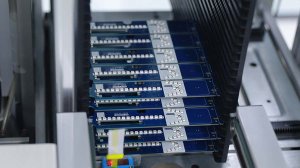
Final Thoughts: Treat OEM PCB Assembly as a Strategic Partnership
The cheapest OEM PCB assembly quote rarely produces the lowest landed cost. The strongest partnerships combine engineering depth, transparent quality systems, supply chain discipline, and clear daily communication. As products become more complex and supply chains more fragmented, the value of a reliable OEM PCB assembly partner only grows. Before you sign with your next supplier, run them through the seven factors above, watch for the red flags, and use the RFQ checklist to keep the conversation grounded in evidence. The few days you spend qualifying a partner will save you months of pain in production.
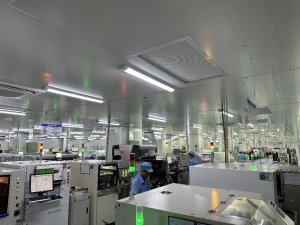
For teams that want to move faster, partnering with an established PCB assembly manufacturer that already operates audited SMT lines, multi-shore factories, and integrated quality systems can compress qualification timelines from months to weeks. A mature provider supports both OEM PCB assembly and ODM engagements, so you can adjust the model as your product evolves. When you are ready to compare specific capabilities, lead times, and unit pricing for your next build, get a free quote from a qualified engineering team and benchmark their response against the framework above. Contact Keep Best PCBA for professional guidance on selecting the right OEM PCB assembly model for your next program and to discuss how our one-stop PCBA solution supports everything from prototype to mass production.