
When electronics brands plan to bring a new product to market, one of the earliest strategic decisions is choosing between OEM vs ODM electronics manufacturing. This decision shapes who owns the design, who controls the BOM, how quickly the product reaches customers, and how intellectual property is protected throughout the production lifecycle. ODM electronics manufacturing has grown rapidly as companies seek faster, more cost-effective paths from concept to shipment, yet OEM manufacturing still dominates where custom engineering and full IP ownership are non-negotiable. Understanding the differences between these two models helps product teams align their manufacturing strategy with business goals — whether launching IoT devices, consumer electronics, or industrial control systems.

What Is OEM Electronics Manufacturing?
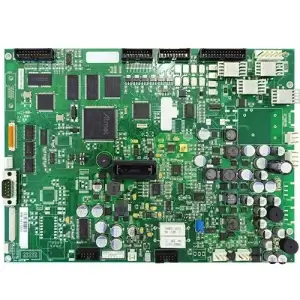
In an OEM electronics manufacturing arrangement, the brand company owns the complete product design — schematic, PCB layout, mechanical enclosure, firmware, and approved BOM — and contracts a manufacturer to build exactly to specification. The manufacturer contributes production expertise, quality processes, and capacity but does not modify the design. This model is common among companies with mature engineering teams that need tightly controlled OEM PCB assembly without surrendering design authority.
Key characteristics of OEM manufacturing include:
- Full design ownership stays with the brand
- Manufacturer builds strictly to client-provided Gerber files, BOMs, and assembly drawings
- Stricter change control — every engineering change notice originates from the client
- Higher engineering investment upfront but maximum customization and differentiation
What Is ODM Electronics Manufacturing?
ODM electronics manufacturing flips this dynamic: the manufacturer designs the product or offers a platform of reference designs that the brand can customize with branding, feature subsets, or minor hardware modifications. This approach dramatically shortens time-to-market because the core engineering is already validated, and the brand can focus on sales, marketing, and user experience rather than deep hardware R&D.
In practice, ODM electronics manufacturing ranges from light customization — logo and packaging changes on an existing design — to joint development where the ODM’s engineering team adapts a reference platform to the brand’s specifications. The ODM typically retains ownership of the base design, though terms vary by contract and negotiation.
OEM vs ODM: A Side-by-Side Comparison
Design Ownership and IP Protection
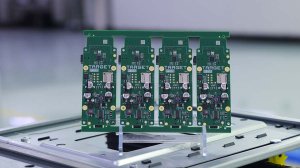
Under an OEM model, the brand retains 100% ownership of the design, BOM, and all associated intellectual property. This is critical for companies whose competitive advantage lives in their hardware design, firmware, or proprietary algorithms. ODM electronics manufacturing, by contrast, usually means the manufacturer owns the base platform design, and the brand licenses or co-owns specific customizations. Companies with sensitive IP — medical device manufacturers, defense contractors, or robotics innovators — often insist on the OEM model precisely to keep engineering assets fully in-house.
BOM Control and Component Sourcing
OEM clients specify every component, supplier, and alternate on the approved vendor list (AVL). The manufacturer must source exactly those parts, giving the brand tight control over quality, cost, and supply chain risk. In ODM electronics manufacturing, the ODM typically controls the BOM and leverages its own supplier relationships and volume purchasing power. This can lower component costs through the ODM’s aggregated purchasing, but it reduces the brand’s visibility into second-source qualification and long-term supply continuity.
Time-to-Market
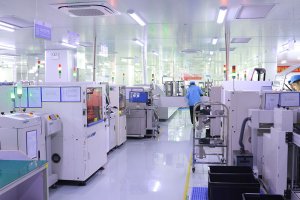
This is where ODM electronics manufacturing usually wins decisively. Because the ODM’s reference design is already prototyped, tested, and often in production for other clients, a brand can move from concept to mass production in weeks rather than months. An OEM project typically requires a full NPI cycle — DFM review, prototyping, design iterations, and pilot runs — which can take 3-6 months depending on complexity. For fast-moving consumer electronics or wearables markets, that speed advantage can be the difference between leading and lagging.
Cost Structure
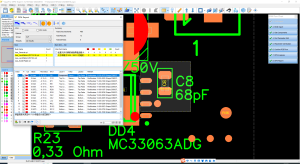
OEM manufacturing front-loads engineering costs: the brand pays for design, prototyping, tooling, and DFM optimization. Unit prices at mass production scale are often lower because the design is optimized for the specific BOM and process. ODM electronics manufacturing spreads engineering costs across multiple customers using the same platform, lowering per-project non-recurring engineering (NRE). However, the per-unit price may be slightly higher because the ODM prices in design margin and ongoing platform maintenance.
Scalability and Flexibility
Both models scale, but differently. OEM scaling requires the brand to forecast volumes, lock in long-lead components, and coordinate capacity reservations with the manufacturer. ODM electronics manufacturing offers more flexibility for demand swings because the ODM can shift shared platform capacity across multiple brands and balance component commitments. For products with uncertain demand forecasts, the ODM model significantly reduces inventory risk.
When to Choose OEM Manufacturing
OEM manufacturing is the right choice when:
- Your product requires unique, proprietary hardware design that is core to your competitive position
- You need full IP ownership for patent, regulatory, or security reasons
- Your engineering team can provide complete, production-ready design files and AVL
- You are producing at high volumes where design-for-cost optimization pays off over the product lifecycle
- You are in regulated industries such as medical or automotive where design traceability and change control are mandatory
When to Choose ODM Manufacturing
ODM electronics manufacturing is ideal when:
- Speed-to-market is the top priority and you cannot afford a 6-month NPI cycle
- Your team lacks deep hardware engineering resources or prefers to focus on software and branding
- The product category has mature, validated reference designs that meet your requirements with minor customization
- You are testing a new market and want to minimize upfront engineering investment
- Your volumes are moderate and you benefit from the ODM’s aggregated component purchasing
The Hybrid OEM-ODM Approach
An increasingly popular strategy is the hybrid model, where a single brand uses both OEM and ODM electronics manufacturing for different product tiers within the same portfolio. For example, a robotics company might develop its flagship collaborative robot under an OEM arrangement to protect proprietary motion-control algorithms, while outsourcing a simplified entry-level variant to an ODM partner who adapts a reference design for cost-sensitive markets.
This hybrid approach lets brands capture both ends of the market spectrum. The OEM pipeline ensures premium products carry unique, defensible engineering, while the ODM electronics manufacturing pipeline fills the gap with fast, budget-friendly alternatives. The key challenge is maintaining consistent quality and brand identity across both models — which is why choosing a manufacturing partner capable of supporting both pathways matters enormously.
How to Evaluate an OEM or ODM Partner
Whether you choose OEM or ODM electronics manufacturing, selecting the right partner requires careful due diligence. A PCB assembly manufacturer with diversified experience across both models offers the most flexibility and can guide you toward the best fit for your product roadmap.
Key evaluation criteria include:
- Design capability — For ODM, assess the depth of the in-house engineering team, reference design portfolio, and prototyping speed. For OEM, verify their ability to execute your design without modification and flag DFM issues early.
- Quality systems — Look for ISO 9001, ISO 13485 (medical), and IATF 16949 (automotive) certifications. These demonstrate a mature QMS regardless of the manufacturing model chosen.
- Supply chain strength — Evaluate their component sourcing network, inventory management, and ability to manage end-of-life and long-lead components proactively.
- Production capacity — Confirm SMT line count, cleanroom availability if needed, and ability to scale from prototype to mass production on compatible equipment.
- Inspection and testing — Ensure they offer 3D AOI, X-ray inspection, ICT/FCT, and full MES traceability for defect-free production at every stage.
- Communication and IP protection — Verify NDAs, data security practices, and English-language engineering support for seamless cross-border collaboration.
Making the Right Choice for Your Product
The OEM vs ODM electronics manufacturing decision is rarely black and white. Many companies use both models simultaneously — OEM for flagship products where differentiation is critical, and ODM for entry-level or regional variants where speed and cost matter more. Some electronic manufacturing services providers, including experienced contract electronics manufacturer firms like Keep Best PCBA, support both pathways under one roof, allowing brands to switch models as their product strategy evolves.
A practical decision framework:
- If IP sensitivity + design uniqueness + high volume — choose OEM
- If speed + low NRE + design maturity — choose ODM
- If uncertain demand + new market entry — start with ODM, migrate to OEM as volumes grow
For companies operating in high-stakes industries like automotive, medical, or new energy, the OEM model often aligns better with regulatory requirements and long-term product roadmaps. For consumer-facing brands chasing seasonal launch windows, ODM electronics manufacturing provides the agility needed to capture market share before competitors react.
Conclusion
Choosing between OEM and ODM electronics manufacturing depends on your product strategy, engineering resources, time constraints, and IP requirements. OEM gives you maximum control and design ownership at the cost of longer development cycles. ODM electronics manufacturing accelerates time-to-market and reduces upfront investment but limits design flexibility. The right one-stop PCBA solution partner can support either model — or both — with the quality systems, production capacity, and engineering depth to make your product succeed in 2026 and beyond.
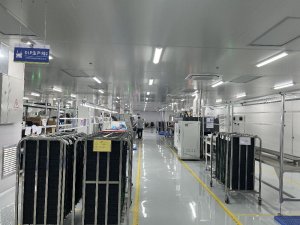
Contact Keep Best PCBA for professional OEM and ODM electronics manufacturing services tailored to your product roadmap. Our Shenzhen, Jiangmen, and Thailand facilities deliver certified quality — ISO 9001, ISO 13485, and IATF 16949 — across every production run, from quick-turn prototypes to high-volume mass production.