
What Does Ignoring Moisture Sensitivity Levels Really Cost Your PCB Assembly?
Moisture sensitivity level (MSL) ratings are printed on nearly every moisture-barrier bag that arrives at an SMT facility, yet MSL data remains one of the most ignored pieces of information in electronics manufacturing. When a moisture-sensitive device sits outside its bag longer than its rated floor life, the damage is invisible at incoming inspection and often invisible after assembly — until the package pops, cracks, or fails silently months later in the field. For purchasing and engineering teams, the practical question is financial: what does weak MSL discipline actually cost a PCB assembly program? This guide explains the failure mechanisms, decodes the MSL classification table, quantifies the hidden costs, and summarizes the handling best practices that professional assemblers follow under IPC/JEDEC J-STD-033.
Why Moisture Sensitivity Level Matters in PCB Assembly
Most modern components are not hermetic. BGAs, QFNs, CSPs, power modules and large plastic ICs are encapsulated in epoxy molding compound, a material that absorbs water vapor from the surrounding air. The amount of moisture a package absorbs depends on ambient temperature, relative humidity and exposure time, which is why a component that is harmless inside a sealed bag can become a reliability risk after three days on an open shop floor.
The danger point is reflow soldering. During reflow the entire package is heated to 217–260 °C within seconds, and any trapped moisture flashes into steam. Internal pressure builds rapidly; if the vapor cannot escape, the package delaminates internally, the die-attach layer separates, or the molding compound cracks with an audible pop — the origin of the industry term ‘popcorning’.
To make this risk manageable, IPC/JEDEC J-STD-020 classifies plastic-encapsulated SMDs into moisture sensitivity levels, and J-STD-033 defines how they must be packed, tracked, dried and used. The MSL rating tells an assembler exactly how long a package may remain outside its moisture-barrier bag — its floor life — before it must be baked or scrapped. Treating that number as a suggestion rather than a limit is where the costs begin.
How Absorbed Moisture Destroys Components During Reflow Soldering
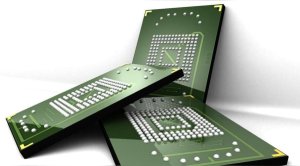
Popcorning starts at the weakest internal interface. Steam pressure lifts the molding compound away from the die pad or the die itself, and the expanding vapor forces the package to bulge and fracture. Large, thin packages with big die pads — many BGA and QFN families, for example — are the most susceptible because there is plenty of internal surface area for moisture to accumulate and few escape paths.
Not every moisture-damaged package fails dramatically. Common outcomes include micro-cracks in the molding compound, delamination at the die attach, wire bond lift-off, substrate crazing around vias, and cracking of the package body. All of these can pass automated optical inspection and even electrical test, because the damage is mechanical and internal, not visible on the surface.
That is what makes MSL failures so expensive: they are latent defects. An assembly can leave the factory fully functional, then fail during thermal cycling, power-on hours or mechanical stress in the field. A delaminated interface that survived reflow can open after hundreds of power cycles, turning a handling mistake in week one into a warranty claim in month eighteen.
Understanding MSL Ratings and Floor Life Limits
The MSL scale runs from 1 to 6, with higher numbers meaning greater sensitivity and shorter allowable exposure. The classification assumes storage and handling at no more than 30 °C and 60 % relative humidity — conditions that themselves require a controlled production environment.
| MSL | Floor life (≤30 °C / 60 % RH) | Typical interpretation |
|---|---|---|
| MSL 1 | Unlimited | No special handling required |
| MSL 2 | 1 year | Low sensitivity; simple date logging |
| MSL 3 | 168 hours (7 days) | Common for BGAs, QFNs and many ICs |
| MSL 4 | 72 hours | Tight control; same-day or next-day use |
| MSL 5 | 48 hours | High sensitivity; dry storage mandatory |
| MSL 6 | Bake before use | Baking is mandatory regardless of exposure |
Two details trip up even experienced teams. First, the floor-life clock includes all exposure between reflow passes, so a double-sided assembly consumes much of its budget on side one. Second, exposure is cumulative: a component that spends four days out of the bag and then returns to a dry cabinet does not reset to zero — it must be tracked against its total allowable time. Humid production environments make the clock run faster in every sense.
The Hidden Costs of Poor MSL Control in PCB Assembly
Quality engineers use the ‘rule of ten’ to describe how defect costs escalate: a problem caught at incoming inspection costs one unit of money, the same defect after reflow costs ten, after final test costs one hundred, and in the field costs a thousand. Moisture damage rarely gets caught early precisely because it hides inside the package, so MSL failures tend to be discovered at the expensive end of that curve.
- Scrapped components — high-value silicon such as FPGAs, application processors and RF modules can cost tens or hundreds of dollars per unit.
- Scrapped or reworked assemblies — a board with soldered, damaged packages often cannot be reworked reliably and must be scrapped.
- Re-inspection labor — X-ray screening and functional retest of suspect batches adds hours of machine and operator time.
- Line stoppages — quarantined material halts SMT changeovers and forces replanning of the whole schedule.
- Expedited replacement parts — emergency sourcing of long-lead-time components at spot prices and premium freight.
- Warranty and field failures — the most expensive outcome, including return logistics, root-cause analysis and reputational damage with customers.
For a contract manufacturer, a single mishandled reel can erase the margin of an entire build. For an OEM, it can delay a product launch. Neither outcome appears on any quotation, which is why MSL discipline belongs in cost analysis, not just in quality audits.

Worked Example: The Real Cost of One Expired Reel
Consider a realistic scenario. A build of 500 smart-home controller boards requires an MSL-3 application processor costing $85 each. The reel is opened on a Friday afternoon and — because the line is re-planned — is finally placed on Monday morning, three days past its 168-hour floor life. Nobody logs the exposure, the boards run, and X-ray sampling after reflow reveals internal delamination in a portion of the population. Every assembled board is now suspect.
| Cost item | Basis | Cost (USD) |
|---|---|---|
| Scrapped processors | 120 × $85 | $10,200 |
| Scrapped assembled boards | 120 × $38 assembly value | $4,560 |
| X-ray and functional retest of 500 boards | $2.50 per board | $1,250 |
| Line interruption and replanning | 6 labor-hours plus idle time | $2,400 |
| Expedited replacement components and freight | Spot buy plus air shipment | $2,800 |
| Total | $21,210 |
The total is roughly $42 per affected board — for a defect that costs almost nothing to prevent. A dry storage cabinet, an MSD exposure log enforced in the MES, and a baking step scheduled before Monday’s run would have consumed a fraction of one labor-hour. Prevention is not free, but it is three orders of magnitude cheaper than recovery.
Best Practices for MSL Handling and Dry Storage
Disciplined facilities treat moisture-sensitive devices as tracked inventory with a countdown clock. The following practices follow J-STD-033 and are easy to audit:
- Verify every moisture-barrier bag on receipt: intact seal, readable MSL label, and a humidity indicator card whose 10 % spot has not turned pink.
- Log the date and time every bag is opened — on paper at minimum, ideally directly in the MES so the clock follows the material through the factory.
- Return unused MSDs to a dry cabinet at 1–5 % RH immediately; storage at or below 5 % RH pauses moisture absorption and is the cheapest insurance in the plant.
- Bake only when required, and bake correctly: typical high-temperature baking is 125 °C for 24–48 hours depending on package thickness, while a low-temperature bake at 40 °C protects heat-sensitive reels, tubes and trays.
- Remember that some carrier materials — certain tubes, reels and trays — are not rated for 125 °C; baking in the wrong carrier destroys the packaging and sometimes the parts.
- Enforce FIFO with an MSL budget: schedule the oldest exposure first and never stage more material at the line than the shift will place.
- Track cumulative exposure across double-sided reflow so a package cannot quietly exceed its total allowance.
None of this requires advanced equipment. It requires the same mindset as expiration dates in a kitchen: the clock is real, someone must own it, and exceptions must be visible on the shop floor.
Choosing a Partner With Disciplined Moisture Management
Buyers rarely ask about MSL control during supplier selection, which is a missed opportunity. Any capable PCB assembly manufacturer should be able to show its MSD handling procedure, dry storage capacity, baking oven capability and MES-based exposure tracking on a short audit walk. If incoming inspection has no humidity indicator cards and the dry cabinets have no logging, the savings quoted per board may be an illusion funded by deferred quality costs.
Integration also matters. When component sourcing, storage and assembly sit in one organization — the advantage of a one-stop PCBA solution — the MSL clock is managed by a single team from goods-in to reflow, without the handoffs between distributors, warehouses and assemblers where exposure most often goes unrecorded. Fewer custody transfers mean fewer opportunities for the floor-life budget to disappear.