
PCB Prototype to Production: Scaling From NPI to Volume Manufacturing
The journey from PCB prototype to production is where many product programs encounter costly delays. A prototype that functions correctly in the lab does not guarantee a design that can be manufactured reliably at volume. The transition requires systematic validation, process development, quality planning, and supply chain preparation. Rushing this transition or skipping steps inevitably creates problems that are more expensive to fix in production than during development.
This article outlines a structured approach to scaling from prototype through pilot production to volume manufacturing, covering the key activities, decisions, and pitfalls at each stage.
Stage 1: Prototype Validation
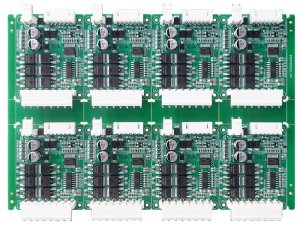
The first prototype builds serve two purposes: verifying that the design functions as intended and identifying manufacturability issues before committing to production tooling. The prototype assembly should use the same component packages and board technology planned for production, not simplified alternatives. Using through-hole substitutes for SMT components, for example, means the prototype does not validate the production assembly process.
Prototype builds should include thorough functional testing that exercises all design features under expected operating conditions. Environmental testing, including temperature cycling and vibration, should be performed on prototype assemblies to verify that the design meets reliability requirements. Any failures discovered at this stage are far less expensive to fix than failures found in production or, worse, in the field.
Design for manufacturability review should be conducted during the prototype phase, not after. The assembly partner’s engineering team should review the design for component placement, pad design, panelization, and other manufacturability factors. DFM issues identified and corrected during prototype cost only engineering time. The same issues discovered during production cost engineering time, scrapped boards, and schedule delays.

First Article Inspection
First article inspection is the comprehensive verification that the first production-representative assembly meets all specifications. FAI should include dimensional verification of the board outline and thickness, visual inspection of all solder joints against IPC-A-610 criteria, component value verification for critical parts, and functional testing against the full test specification.
FAI is not just a quality gate; it is a process validation checkpoint. If the FAI reveals defects, the root cause should be identified and corrected before proceeding to the next build. Defects found at FAI indicate that the process is not yet ready for volume production. Proceeding past FAI with known defects, hoping they will not recur, is a common source of production quality problems.
Stage 2: Pilot Production
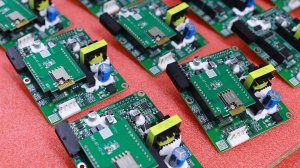
Pilot production, typically a build of 50 to 500 boards, validates the production process at near-volume conditions. The pilot build uses production tooling, production process parameters, and production test equipment. The purpose is to verify that the process, as designed, produces acceptable quality at the intended production rate.
During pilot production, process engineers refine solder paste printing parameters, placement programs, and reflow profiles. Test engineers validate the test strategy and fixturing. Quality engineers establish statistical process control baselines and verify that inspection criteria are effective. This stage is where the process is hardened against the variability that will occur in volume production.
Pilot production data provides the first reliable quality metrics. First-pass yield, defect types and frequencies, and test coverage effectiveness are all measured during pilot builds. These metrics establish targets for volume production and identify the process areas that need improvement before volume ramp-up.
Production Part Approval Process
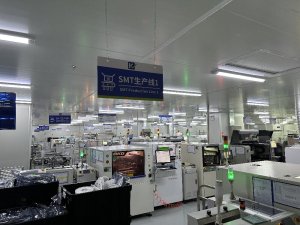
For customers requiring formal process validation, particularly in automotive and medical applications, the pilot build may include production part approval process submission. PPAP documentation provides evidence that the production process is stable, capable, and produces conforming product. The documentation includes process flow diagrams, failure mode analysis, control plans, measurement system analysis, and capability studies.
While PPAP is resource-intensive, it provides a structured framework for validating production readiness. Even when not required by the customer, the PPAP methodology is valuable for organizing the process validation activities that should occur during pilot production.
Stage 3: Volume Production Ramp
Volume production begins with a ramp phase, gradually increasing daily output from pilot levels to full production targets. The ramp allows the manufacturing team to identify and address issues that appear only at higher volumes, such as equipment thermal limits, feeder capacity constraints, or process drift over longer continuous runs.
During the ramp, quality metrics should be monitored closely. If defect rates increase as volume increases, the root cause should be investigated before further ramp-up. Common causes of volume-related quality degradation include stencil clogging during longer runs, solder paste degradation from extended exposure to ambient conditions, component lot-to-lot variation, and operator fatigue on longer shifts.
The ramp should follow a planned schedule with quality gates at each volume step. If quality targets are not met at a step, production should pause for root cause analysis and corrective action before proceeding to the next volume level. This disciplined approach prevents the accumulation of quality issues that can become difficult to untangle later.
Supply Chain Preparation
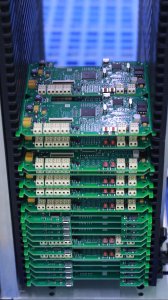
Component sourcing must transition from prototype quantities to volume quantities during the scaling process. This transition requires early planning because lead times for volume quantities may be significantly longer than for prototype quantities. Component manufacturers may need to schedule production runs to fulfill volume orders, and this scheduling depends on receiving accurate forecasts well in advance.
Buffer stock strategies should be established before volume production begins. The buffer should account for supplier lead time variability, transportation time variability, and the production schedule’s tolerance for material shortages. A buffer that is too thin risks production stoppages; a buffer that is too thick ties up working capital and risks obsolescence if the product design changes.
Second-source qualification for critical components should be completed during the pilot phase. If a sole-source component enters allocation or becomes unavailable, having a qualified alternative prevents production disruption. Second-source qualification involves verifying that the alternative component meets all functional and quality requirements and documenting the qualification for regulatory compliance if needed.
Documentation and Process Control
Volume production requires comprehensive documentation that did not exist during prototyping. Assembly work instructions must be written for every operation, with enough detail that a trained operator can perform the task consistently. Inspection criteria must be documented with reference photographs or images. Test specifications must define pass/fail criteria and the actions required for failures.
Process control plans must be established for all critical process parameters. The control plan defines the parameter, the measurement method, the control limits, the measurement frequency, and the response to out-of-control conditions. Control plans ensure that the process that was validated during pilot production is maintained consistently during volume production.
Change management procedures must be in place before volume production begins. Any proposed change to materials, equipment, process parameters, or documentation must be reviewed and approved before implementation. Uncontrolled changes are the most common cause of quality degradation during volume production. A single component substitution, stencil modification, or reflow profile adjustment can introduce defects that were not present during pilot production validation.
Common Pitfalls in Production Scaling
Several common mistakes derail the prototype-to-production transition. Insufficient prototype validation occurs when teams rush to production without adequate functional, environmental, and manufacturability testing. The result is defect discovery during production when correction costs are highest.
Skipping pilot production happens when teams believe that successful prototypes prove production readiness. Prototypes validate the design; pilot production validates the process. Without pilot builds, the first volume production run becomes the pilot, with all the process issues discovered at full volume.
Inadequate supply chain planning delays production ramp-up when components are not available at volume. Late planning means the first volume build waits for components, wasting the engineering investment in process validation.
Weak documentation creates inconsistency in volume production when different operators interpret ambiguous instructions differently. The result is quality variation that is difficult to diagnose because the root cause is inconsistent execution.
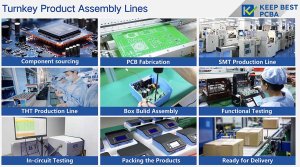
Avoiding these pitfalls requires a PCB assembly manufacturer with structured NPI processes, experienced process engineering, and robust documentation systems. The right PCBA partner will guide your product through each stage of the scaling process, applying lessons from pilot production to ensure a smooth transition to volume manufacturing.