
RoHS, REACH, and Environmental Compliance for PCBA Manufacturing
Environmental regulation is no longer a niche concern for green-minded companies. It is a legal requirement that governs market access, product liability, and supply chain architecture for every electronics manufacturer worldwide. The Restriction of Hazardous Substances directive, the REACH regulation, and emerging frameworks such as the EU Circular Economy Action Plan create a complex compliance landscape. PCBA manufacturers must navigate this landscape with precision. At Keepbest, environmental compliance is integrated into every stage of our manufacturing process from incoming material inspection to outgoing shipment documentation.
This guide explains the major environmental regulations affecting PCBA manufacturing. It covers what compliance requires in practice. It also explains how to work with a manufacturing partner who treats regulatory adherence as a competitive advantage rather than a burden.

RoHS: Restriction of Hazardous Substances
The original RoHS Directive 2002/95/EC restricted six hazardous substances in electrical and electronic equipment sold in the European Union. RoHS 3, formally Directive 2015/863, expanded the restricted list to ten substances.
| Restricted Substance | Maximum Concentration | Common Sources in PCBA |
| Lead (Pb) | 0.1% by weight | Solder, component finishes, glass in LEDs |
| Mercury (Hg) | 0.1% | Switches, relays, fluorescent lamps |
| Cadmium (Cd) | 0.01% | Contacts, pigments, NiCd batteries |
| Hexavalent chromium | 0.1% | Metal finishes, passivation coatings |
| PBB | 0.1% | Flame retardants in plastics |
| PBDE | 0.1% | Flame retardants in plastics |
| DEHP | 0.1% | Plasticizers in cables and housings |
| BBP | 0.1% | Plasticizers |
| DBP | 0.1% | Plasticizers |
| DIBP | 0.1% | Plasticizers |
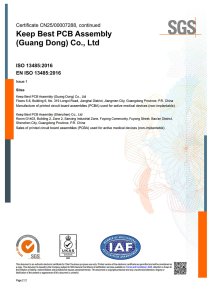
Compliance Verification: Your manufacturing partner verifies RoHS compliance at multiple gates. Incoming materials are accompanied by material declarations per IPC-1752A. Suspect materials undergo XRF screening for Pb, Cd, and Hg. Supplier certificates of conformity are maintained per lot.
Exemptions: Certain applications such as military, aerospace, and medical implants may qualify for temporary RoHS exemptions. The EMS provider maintains documentation for exempt builds and ensures segregated processing to prevent cross-contamination.
REACH: Registration, Evaluation, Authorization, and Restriction of Chemicals
REACH is broader than RoHS. While RoHS restricts substances in the final product, REACH regulates chemicals throughout the supply chain. The REACH Substances of Very High Concern list currently exceeds 200 entries and continues to grow.
SCIP Database: The EU Waste Framework Directive requires companies to submit information on articles containing SVHCs above 0.1% weight to the SCIP database. Our assembly team supports customers with SCIP data compilation based on material declarations from our supply chain.
Conflict Minerals: While not formally part of REACH, the Dodd-Frank Act and EU Conflict Minerals Regulation require disclosure of certain minerals. These include tin, tantalum, tungsten, and gold sourced from the Democratic Republic of Congo and adjoining countries. A qualified PCBA supplier collects smelter and refiner data from our supply chain and provides conflict minerals reports upon request.

WEEE and Extended Producer Responsibility
The Waste Electrical and Electronic Equipment directive requires producers to finance collection and recycling of end-of-life electronics. PCBA manufacturers are not directly responsible for WEEE compliance, but they must design for recyclability and provide disassembly instructions.
Design for Recycling: Keepbest advises customers on material choices that facilitate recycling, including halogen-free substrates, lead-free solder, and separable material combinations.

Carbon Footprint and Sustainability Reporting
The EU Carbon Border Adjustment Mechanism will eventually impose carbon tariffs on imported goods based on production emissions. While PCBA manufacturing is not yet a primary CBAM target, customer sustainability reporting increasingly demands supply chain carbon data.
The production partner Sustainability Practices: We track energy consumption per board produced, optimize reflow oven nitrogen usage, and recycle solder dross and waste metal. We are evaluating renewable energy procurement for our facilities.
Frequently Asked Questions
Q: Does RoHS apply to products sold outside the EU?
RoHS originated in the EU but has been adopted by many jurisdictions including China, South Korea, and several U.S. states. Even if your primary market is outside the EU, RoHS compliance is increasingly a global baseline expectation.
Q: How does Your PCBA partner verify that components are RoHS compliant?
We require material declarations from all suppliers. For high-risk components, we perform XRF screening. We maintain a prohibited materials list and reject any component that lacks acceptable documentation.
Q: What happens if a non-compliant component is discovered?
The component is quarantined and removed from inventory. Affected lots are identified through traceability records. The supplier is notified and corrective action is required before future shipments are accepted.
Q: Can The supplier support customers’ sustainability reporting requirements?
Yes. We provide carbon footprint estimates per board, energy consumption data, waste recycling percentages, and material content declarations to support customer ESG reporting.
Q: Is lead-free solder mandatory for all products?
Lead-free SAC305 is our default solder alloy. Leaded solder is available only for specific exempt applications such as certain military, aerospace, and medical implants with documented justification and segregated processing.
Q: What is the difference between RoHS and REACH?
RoHS restricts specific hazardous substances in electrical and electronic equipment. REACH regulates chemicals across all industries and requires registration, evaluation, and authorization of substances throughout the supply chain.
Need environmental compliance documentation for your product? Contact the Keepbest quality team. We provide material declarations, conflict minerals reports, carbon footprint data, and SCIP database support to ensure your products meet global regulatory requirements.