

A PCBA shipment is not the end of the manufacturing relationship. It is the beginning of the reliability relationship. When a board fails in the field, the manufacturer must act. Whether the failure occurs after six months or six years, the provider must be prepared to investigate, diagnose, and correct the root cause. At Keepbest, our commitment to customers extends beyond the shipping dock through warranty support, failure analysis, and continuous process improvement driven by field feedback.
This guide explains what happens when a PCBA fails in service, how root cause analysis is conducted, and what customers should expect from a manufacturing partner with mature after-sales capabilities.
The Field Failure Response Process
When a customer reports a field failure, time is critical. The response follows a structured sequence designed to contain risk, identify cause, and prevent recurrence.
Step 1: Failure Reporting and Containment
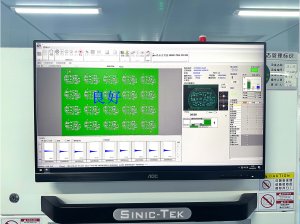
The customer submits a failure report including serial number, failure symptoms, operating conditions, and failure rate data. Your manufacturing partner immediately checks traceability records to identify the production lot, component lots, test data, and process parameters associated with the failed unit.
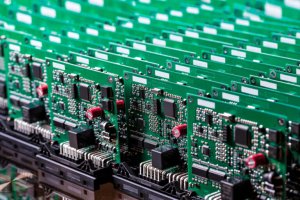
If the failure rate exceeds acceptable thresholds or involves safety-critical applications, a containment action is triggered. This may include quarantine of suspect inventory, notification of other customers who received boards from the same component lots, and suspension of shipments pending investigation.
Step 2: Failure Analysis
The failed board is returned to The EMS provider for detailed analysis. The investigation follows a systematic protocol:
Visual Inspection: Examine the board for obvious damage, corrosion, contamination, or mechanical stress indicators. Document with high-resolution photography.
Electrical Characterization: Compare failed board electrical parameters against original test records. Identify which circuit function degraded and under what conditions.
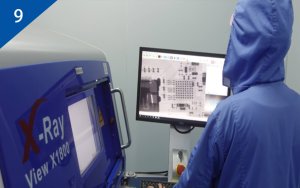
Non-Destructive Analysis: X-ray inspection reveals hidden solder joint degradation, void growth, or component displacement. Thermal imaging identifies hotspots indicating abnormal power dissipation.
Destructive Analysis: For complex failures, cross-sectional analysis through suspect solder joints reveals intermetallic growth, crack propagation, or plating defects. Scanning electron microscopy and energy-dispersive X-ray spectroscopy identify material anomalies.
Component Teardown: Suspect components are removed and tested independently to determine whether the failure originated in the component, the solder joint, the PCB, or the design.
Root Cause Categories
Field failures typically fall into one of several categories, each with distinct corrective actions.
| Category | Typical Causes | Corrective Action |
| Design-related | Insufficient margin for voltage, temperature, or load; inadequate protection circuits | Feedback to customer design team; design rule updates |
| Component-related | Counterfeit or substandard parts; lot-specific defect; incorrect alternates | Supplier corrective action; alternate qualification; incoming inspection enhancement |
| Process-related | Solder joint degradation; contamination; ESD damage; handling damage | Process parameter adjustment; operator retraining; fixture modification |
| Application-related | Operating conditions beyond specification; improper installation; environmental exposure | Customer application guidance; derating recommendations; packaging improvements |
| Wear-out | Normal end-of-life degradation in capacitors, batteries, or mechanical relays | Predictive maintenance guidance; lifecycle monitoring |
Corrective Action and Prevention
Once root cause is established, the 8D methodology drives structured corrective action.
D1: Team Formation: Cross-functional team including quality, engineering, production, and supplier representatives.
D2: Problem Description: Quantify failure rate, affected lots, failure mode, and customer impact.
D3: Containment: Quarantine suspect material, implement sorting or rework, and notify affected customers.
D4: Root Cause Analysis: Use fishbone diagrams, 5-why analysis, and fault tree analysis to identify contributing factors.
D5: Corrective Action: Implement changes to design, process, supplier, or material to eliminate the root cause.
D6: Verification: Validate corrective action effectiveness through testing, simulation, or extended burn-in.
D7: Prevention: Update control plans, FMEAs, and design guidelines to prevent similar failures in future products.
D8: Recognition: Document lessons learned and recognize team contributions.

Warranty and Service Programs
Standard Warranty: Our assembly team provides a 12-month warranty against manufacturing defects from date of shipment. Warranty coverage includes rework, replacement, or credit at A qualified PCBA supplier discretion.
Extended Warranty: For medical, automotive, and industrial applications, extended warranty programs up to 36 months are available with defined reliability metrics and service level agreements.
Repair and Refurbishment: Failed boards are repaired under warranty or on a time-and-materials basis out of warranty. Repair procedures are documented and repair data is logged for trend analysis.
Reverse Logistics: Keepbest manages return material authorization processes, shipping logistics, and customs documentation for international returns.

Continuous Improvement from Field Data
Field failure data is a valuable input to process improvement.
Trend Analysis: Failure patterns across multiple customers and products reveal systemic issues that single-failure investigations miss. Monthly reliability reviews identify emerging trends.
Design Feedback: Failure analysis findings are fed back to the DFM team. Design rules are updated to prevent recurrence in future designs.
Supplier Scorecards: Component-related failures impact supplier quality ratings. Chronic underperformers are replaced with qualified alternates.
Process Optimization: Process-related failures trigger SPC limit reviews, equipment maintenance schedules, and operator training updates.
Frequently Asked Questions
Q: What is the typical turnaround time for failure analysis?
Simple visual and electrical analysis completes in 3-5 days. Complex destructive analysis requiring cross-sections or SEM imaging may take 2-3 weeks. Expedited analysis is available for safety-critical failures.
Q: Who pays for failure analysis?
If the failure is determined to be manufacturing-related, The production partner covers analysis and corrective action costs. If the failure is design-related or application-related, analysis costs may be billed to the customer.
Q: Can Your PCBA partner analyze failures on boards we did not manufacture?
Yes. We offer independent failure analysis services for boards manufactured by other suppliers. This is useful when validating second-source qualifications or resolving supplier disputes.
Q: What documentation is provided with failure analysis?
A formal failure analysis report including visual documentation, electrical characterization data, analysis findings, root cause determination, and corrective action recommendations.
Q: How does The supplier handle customer notification for potential lot-related issues?
If analysis indicates a lot-specific defect, affected customers are notified within 24 hours with containment recommendations, quarantine instructions, and replacement scheduling.
Q: Is field failure data shared with other customers?
No. Customer-specific failure data is confidential. Aggregated trend data may be shared in anonymized form for industry benchmarking, but never with customer identification.
Experiencing a field failure or want to establish warranty terms before production begins? Contact the Keepbest quality team. We will review your reliability requirements, define warranty coverage, and establish the failure analysis protocol that protects your product and your customers.