
Mixed-Assembly Processes in PCB Assembly: Designing for the Coexistence of Through-Hole and Surface-Mount Components
Modern electronic products often require the simultaneous use of through-hole components (THT) and surface-mount components (SMT); this mixed-assembly process places specific demands on the production workflow. This article analyses the key design considerations and manufacturing strategies for mixed-assembly PCBs to help you optimise your product’s manufacturability.
Application Scenarios for Mixed-Assembly Processes
In certain scenarios, through-hole components are irreplaceable:
1.High-power connectors requiring mechanical strength
2.Heat dissipation requirements for large components such as electrolytic capacitors
3.Manual operation required for components such as variable resistors and switches
4.Special requirements for soldering reliability in defence products
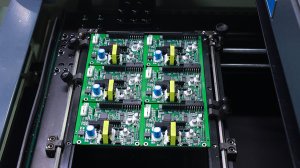
Component Layout Strategies
The layout of mixed-assembly boards directly impacts production efficiency and yield rates.
Layout principles: Group components of the same type together; ensure through-hole components are positioned away from the reflow zones of surface-mount components; take into account the directionality of wave soldering; and allow sufficient space for soldering operations.
Selection of Process Flows
1.Select an appropriate process based on component distribution:
2.Surface-mount first, through-hole second: SMT reflow followed by THT wave soldering or manual soldering
3.SMT adhesive process: Secure SMT components with SMT adhesive and wave solder them together with THT components
4.Selective wave soldering: Solder only the THT joints locally to protect surrounding SMT components

Detailed Explanation of the Red Adhesive Process
Red adhesive (SMT Adhesive) is used to secure the underside of surface-mount components, preventing them from detaching during wave soldering.
Key process points: precise control of adhesive dot size and position; strict management of curing temperature and time; and adaptation to the wave soldering temperature profile.
Advantages of Selective Wave Soldering
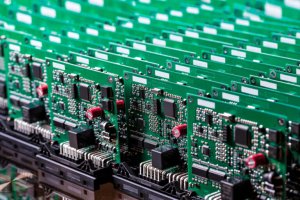
Compared to traditional wave soldering, selective wave soldering heats only the areas requiring soldering.
Advantages: Protects temperature-sensitive components, reduces flux residue, improves solder joint quality, and is suitable for small-batch, high-variety production.
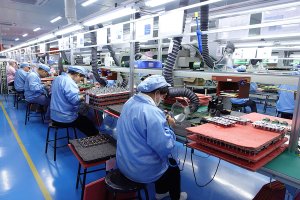
Design Document Annotations
For mixed-assembly boards, process requirements must be clearly specified in the documentation:
Annotations should include: which components require wave soldering, which require hand soldering, any special temperature requirements, and instructions on the soldering sequence.
Mixed-assembly processes increase manufacturing complexity, but appropriate design and process selection can leverage the advantages of both component types. Confirm the PCB assembly factory’s mixed-assembly capabilities and equipment configuration at an early stage.
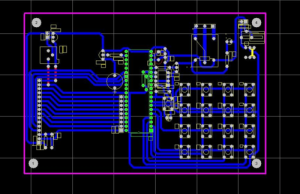
Frequently Asked Questions (FAQ)
Q1: How much more expensive are mixed-assembly boards compared to pure SMT boards?
A: Costs typically increase by 15–30 per cent, primarily due to additional process steps (wave soldering or selective wave soldering), fixture fabrication and manual insertion labour. However, this is a necessary investment for applications requiring mechanical strength or heat dissipation capabilities.
Q2: Can red glue and solder paste be applied simultaneously on a single stencil?
A: Yes, using a stepped stencil. Solder paste is applied to the thicker areas, whilst red glue is applied to the thinner areas. However, process control is more complex and requires precise alignment and pressure control.
Q3: What is the difference between selective wave soldering and conventional wave soldering?
A: Selective wave soldering uses small nozzles to precisely apply solder to individual solder joints or areas, whereas conventional wave soldering involves passing the entire PCB through a wave of solder. Selective wave soldering is suitable for mixed-assembly boards to protect already mounted SMT components, but it is slower.
Q4: Can through-hole components be processed using reflow soldering?
A: Some through-hole components support reflow soldering (the ‘Pin-in-Paste’ process), whereby solder paste is printed onto the through-hole pads and the component leads are inserted before undergoing reflow together. However, this requires the components to be temperature-resistant and the lead lengths to be suitable; not all THT components are suitable.
Q5: How can the proportion of manual soldering on mixed-assembly boards be reduced?
A: Strategies include: concentrating THT components on one side wherever possible; using automatic insertion machines (axial/radial) instead of manual insertion; optimising the layout so that wave soldering covers more THT solder joints; and assessing the feasibility of converting THT components to SMT packages.