Comfort · Entertainment · Everyday convenience

Automotive PCBA
for the passenger experience

PCB assembly for interior lighting, entertainment audio, device charging and auxiliary cabin interfaces. Keep Best PCBA focuses on non-safety-critical automotive electronics, with each project reviewed for its actual function and installation.

Discuss your PCBA project ↗

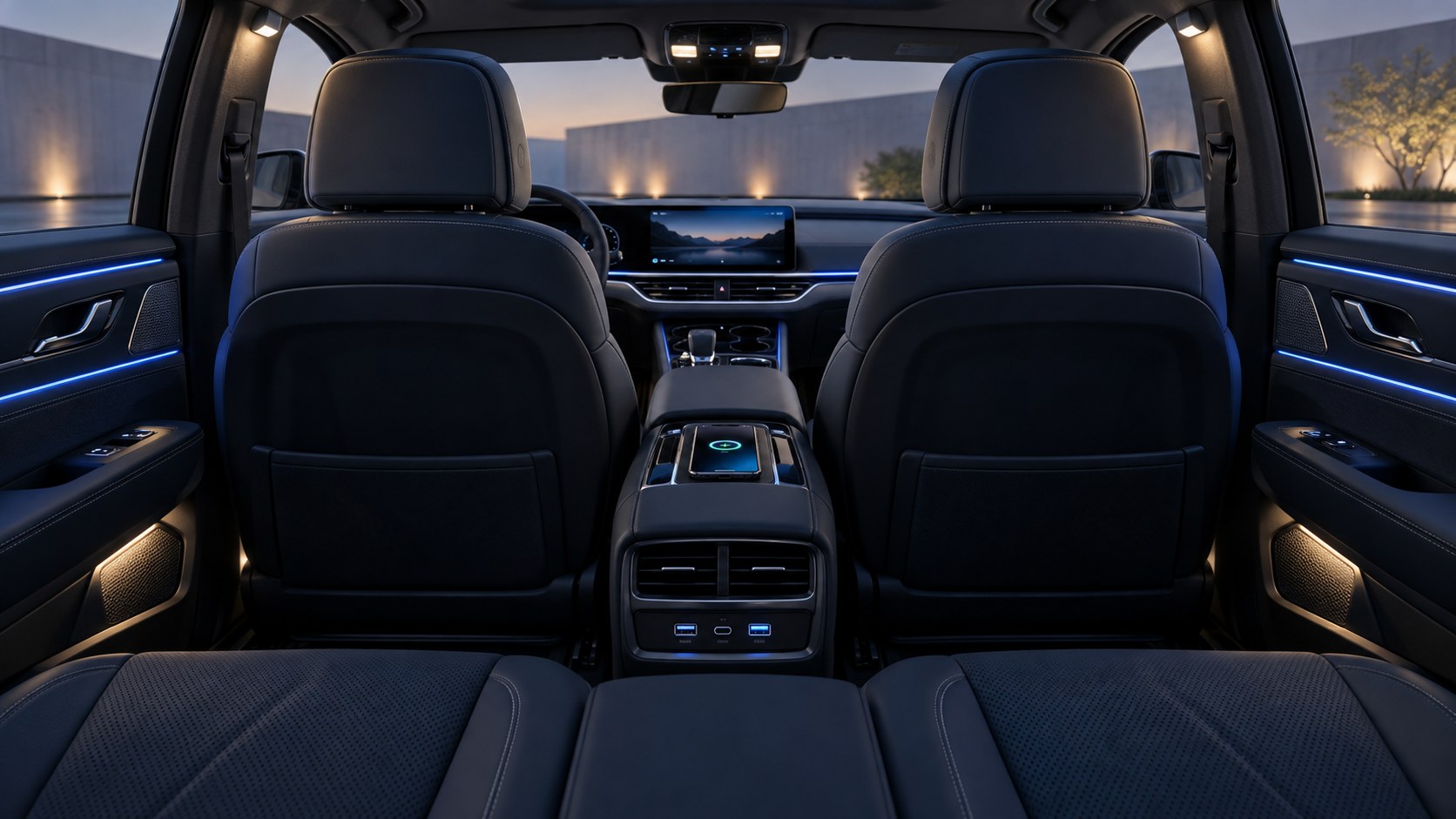
Passenger cabin illustrating ambient lighting, reading lamps and device charging locations
Conceptual application illustration. Vehicle systems and installation details vary by project.
Interior & accessory electronicsA clearly defined application focus
Prototype through productionBuild requirements reviewed with your team
Function-specific inspectionAcceptance criteria matched to the board
Find your application

Start with its place
inside the vehicle.

A light strip in a door trim, a USB socket behind the console and a rear-seat media panel have different board shapes and test needs. Explore the location closest to your product.

Project scope: this service focuses on non-safety-critical functions. Steering, braking, airbags, ADAS, powertrain control, traction-battery management and high-voltage charging electronics are outside the scope presented here. Combined-function modules require review before acceptance.

Blue decorative lighting along passenger door trims and the center console
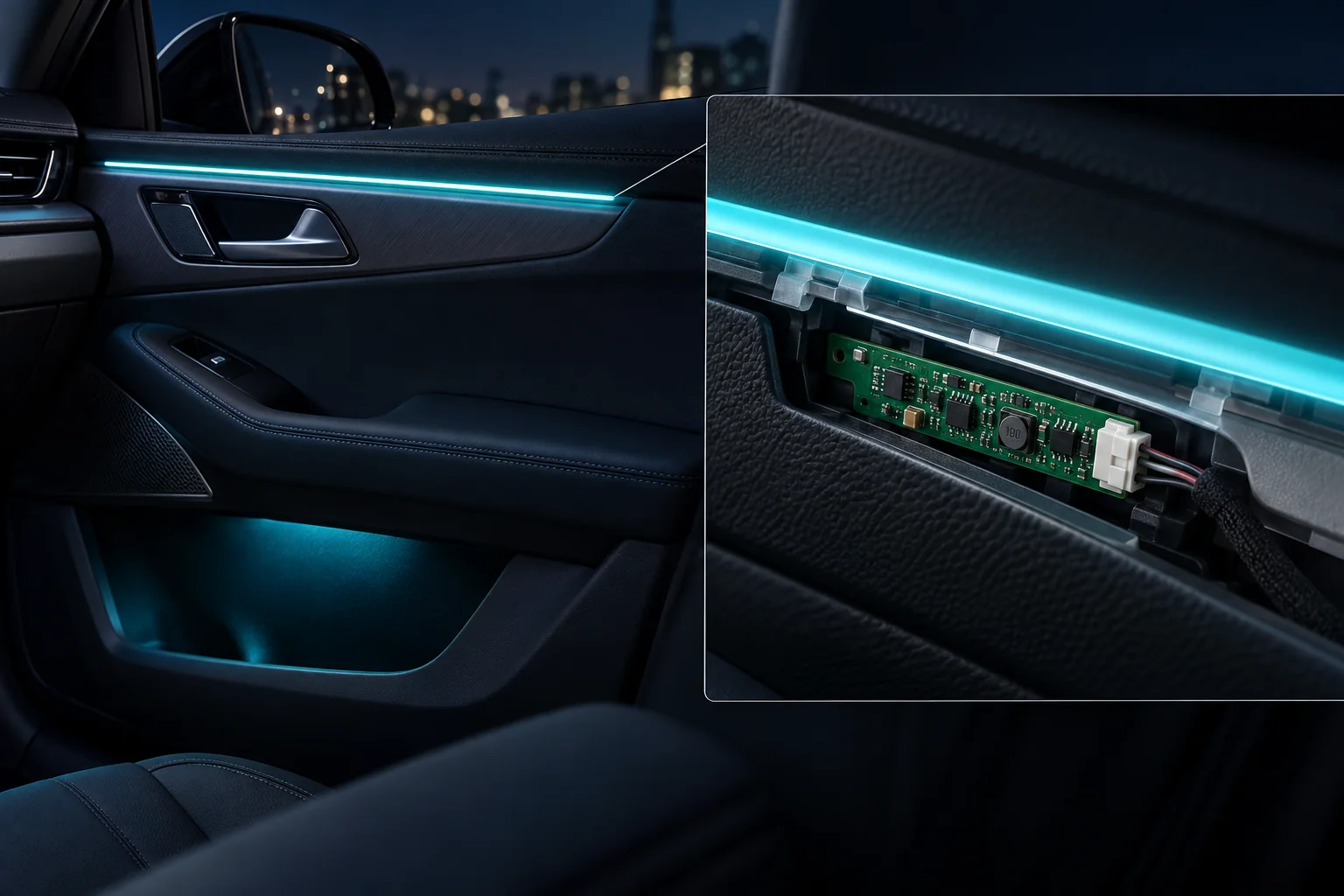
01 / Interior lighting PCBA

The electronics behind
a consistent cabin glow.

Ambient light modules translate color and brightness commands into controlled LED output. Their boards often follow narrow door trims, dashboard accents or footwell housings, leaving little space for connectors and heat dissipation.

  • RGB and single-color LED driver boards for decorative interior lighting.
  • Small light-engine boards for cup holders, storage pockets and illuminated trim.
  • Local dimming controls and interface boards for customer-defined lighting networks.
  • Rigid boards or compact interconnected assemblies matched to the housing.

Build & test focus: LED polarity, specified color bins, connector orientation, dimming response and brightness consistency. Optical limits and any calibration method should be provided with the test specification.

Conceptual accessory USB charging board and wireless charging coil
02 / Personal-device charging PCBA

Small ports.
Detailed power requirements.

Console and rear-seat charging modules combine power conversion with frequently handled connectors. A successful assembly needs consistent solder joints, suitable heat paths and a test plan that reflects the charging profiles supported by the design.

  • USB-A and USB-C charging-port PCBAs.
  • Multi-port passenger charging hubs and port daughterboards.
  • Wireless phone-charging controller and interface assemblies.
  • Low-voltage accessory power boards for cabin products.

Build & test focus: output regulation under defined loads, supported USB negotiation, connector retention and thermal sensing. Wireless charging projects should specify coil alignment, foreign-object detection and temperature-limit checks.

These applications charge personal devices. They do not include vehicle traction batteries or EV charging power stages.

03 / Passenger entertainment

Clear audio.
Responsive controls.
Repeatable assembly.

Entertainment audio amplifiersRear-seat media interfacesAccessory button & display boards
Audio & media interface PCBA

Made for the listening
and viewing experience.

Entertainment assemblies can combine audio signal paths, digital interfaces and local power supplies. Dense connectors and mixed analog and switching circuits make assembly cleanliness, grounding and test access important review points.

  • Audio amplifier and audio-interface PCBAs for entertainment use.
  • Rear-seat entertainment control and connector boards.
  • Media USB interfaces, accessory receivers and local user controls.
  • Non-critical display backlight and button-panel assemblies.

Build & test focus: channel routing, noise, gain, speaker-load behavior, port detection and firmware version. Display interfaces need customer-defined checks for pixels, backlighting, touch response and connectors where applicable.

Safety warning sounds, driver alerts, instrument clusters and controls shared with vehicle safety functions are not included in this entertainment scope.

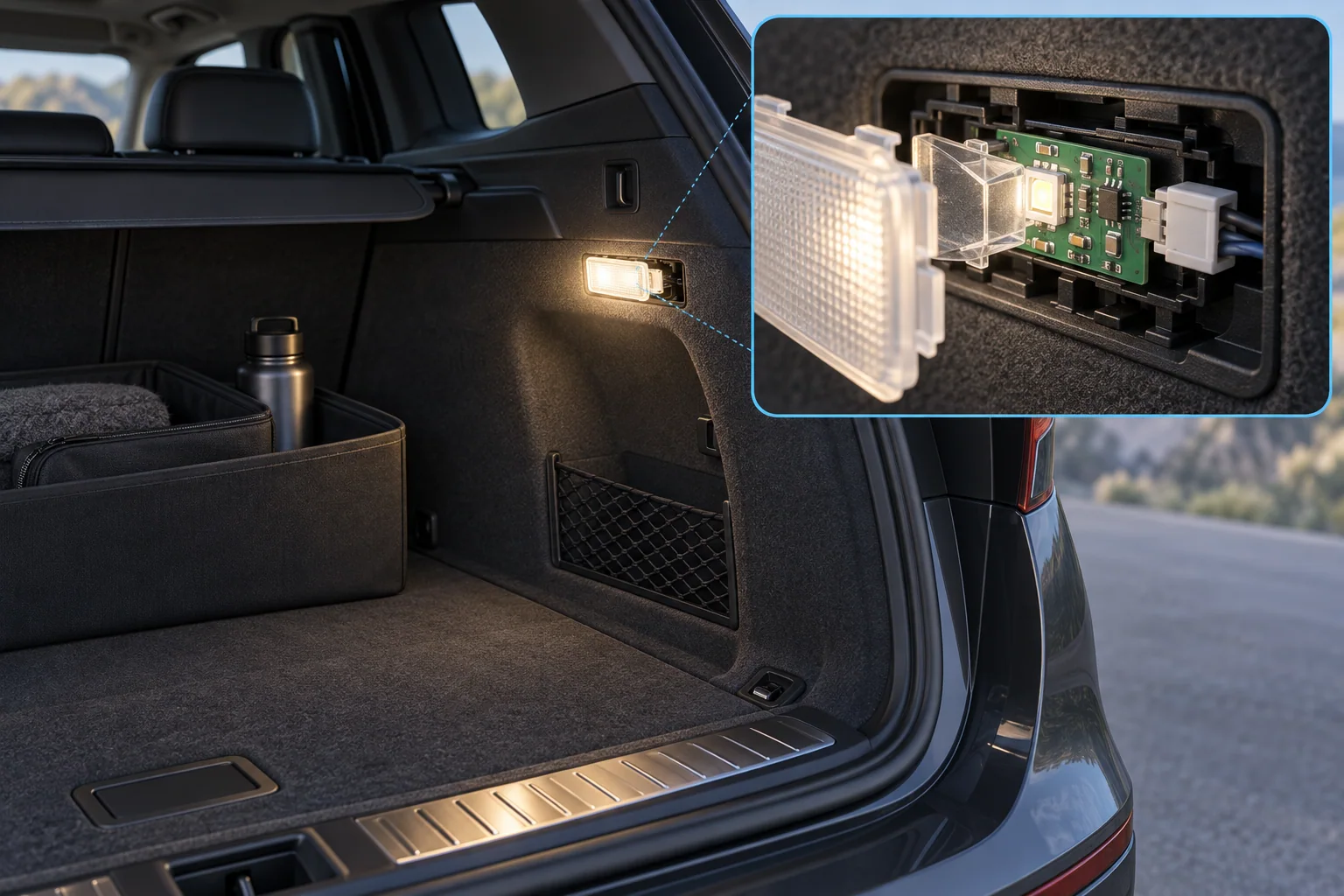
04 / Overhead & vanity

Reading lamps and local light controls

Dome, map and vanity-light assemblies need accurate placement around lenses and touch surfaces. The board geometry often follows the trim, with limited room for switch travel and tall components.

  • Individual reading-light and dome-light boards.
  • Vanity-mirror illumination and courtesy-light PCBAs.
  • Local touch or button controls dedicated to interior lamps.

Review points: optical alignment, switch response, dimming, sleep current and the mechanical fit of connectors. Emergency-call and occupant-monitoring modules are excluded.

05 / Auxiliary interfaces

Convenience in the small details

Small auxiliary boards bring together indicators, backlighting and physical controls. Clear drawings help align the assembled board with light guides, keycaps and mounting features.

  • Entertainment button and rotary-input boards.
  • Decorative indicator and backlight PCBAs.
  • Glovebox, luggage-area and storage-compartment lighting.
  • Passenger accessory status-display boards.

Review points: button registration, illumination uniformity, contact behavior and harness orientation. Door latches, window anti-pinch, seat-motion and restraint functions are outside this scope.

What the installation changes

A comfort feature still needs
a disciplined build.

Non-safety-critical does not mean automotive conditions disappear. The location, supply interface and failure effects determine the engineering and acceptance requirements.

01

Power supply & standby behavior

Specify the input range, wake and sleep sequence, protection requirements and standby-current limit. Review transient protection and the effect of a module fault on its supply connection.

02

Heat in a small enclosure

Provide the installation temperature range and enclosure details. LED drivers, charging converters and amplifiers need defined thermal interfaces and agreed load conditions for testing.

03

Connectors & mechanical fit

Port position, mounting holes, light guides and harness direction affect final assembly. Define keep-outs, connector reinforcement and retention criteria before the prototype build.

04

Noise & interface integrity

Switching supplies and LED dimming can disturb audio and communications. Identify sensitive circuits, shielding provisions and the functional checks needed for the intended installation.

05

Moisture & contamination

Door pockets and cup-holder areas have different exposure from a protected roof console. Specify cleaning and any coating or masking requirements, particularly around optical and connector surfaces.

06

Revision & material control

Define approved parts, substitutions, firmware versions and the required record depth. Agree on labeling and traceability deliverables as part of the quotation.

Inspection follows the function

Define what a good board must do.

Visual inspection finds assembly defects; functional checks address how the board behaves. The production test plan should combine both, with clear limits and fixtures supplied or agreed for the project.

Assembly Inspection priorities Example functional checks to agree
Ambient & reading lights LED orientation, joints, specified bins and light-guide alignment. Channels, dimming steps, brightness or color limits and current draw.
USB charging modules Port anchoring, power-component joints and thermal interfaces. Negotiation profiles, output voltage under load, current limits and temperature inputs.
Wireless charging boards Coil connection, alignment, shielding and sensor installation. Device detection, defined charging loads, foreign-object response and thermal limits.
Entertainment audio Analog paths, connectors, polarity and amplifier thermal pads. Channel output, gain, noise, mute response and specified load behavior.
Auxiliary HMI & media interfaces Switch height, connector position, backlight placement and cable interfaces. Button mapping, indicators, communications, firmware identity and power states.

Technical background: TI interior-light design resources and TI automotive USB charging resources. These describe application considerations, not Keep Best certifications or test capability commitments.

From files to a repeatable build

Resolve the details
before production.

Share the board function and manufacturing package together. We review project fit first, then agree on the assembly process, test coverage and release conditions.

01 / SCOPE

Confirm the application

Identify the installation, interfaces, fault effects and any customer-specific supplier requirements.

02 / ENGINEERING

Review the build data

Check the BOM, PCB data, mechanical drawings, polarity, test access and programming needs.

03 / PILOT

Build & evaluate

Use the agreed inspection and test plan. Review findings with your team before release.

04 / PRODUCTION

Control the revision

Build against approved files and acceptance criteria, with records and packaging defined for the order.

Explore our PCB assembly services, DFMA review and project support.

Before you send a design

A few useful
project questions.

Which automotive PCBAs are a fit?

Our focus is interior lighting, personal-device charging, entertainment audio and non-critical auxiliary cabin interfaces. Send the exact function, installation and connected systems so we can confirm whether the project is suitable.

Does a cabin location make a board non-safety-critical?

No. A cabin module may also contain emergency, restraint or driver-warning functions. Scope is determined by its actual functions and failure effects, not its location or product name.

Can you quote aftermarket accessory PCBAs?

We can review cabin and passenger-accessory projects. Include the intended vehicle supply interface, installation instructions, environment and testing requirements. Products tied to excluded safety functions are outside this page’s service scope.

What about automotive certifications and customer approvals?

If your sourcing process requires a particular certification, supplier approval or documentation package, send that requirement before requesting a production quotation. Availability must be confirmed for the specific project; this page does not claim IATF 16949 certification or functional-safety development capability.

Can functional testing be included?

Provide your test specification, firmware and fixture details. We will review the proposed coverage, equipment and acceptance limits before confirming the manufacturing scope and quotation.

Can you source parts and support design revisions?

Send manufacturer part numbers, approved alternatives and sourcing restrictions with the BOM. Engineering changes, part substitutions and firmware updates should be approved before they enter the build.

Tell us what your board does

Let’s review your automotive
accessory PCBA.

Include the product function, installation location, quantities and required delivery date. Add any supplier qualifications and test requirements so we can confirm project fit at the start.

Gerber / ODB++BOM & approved partsAssembly drawingsFirmware & test plan

Get A Quote

Fill in your requirement information and upload Gerber and BOM files, we will give you a quote within 24 hours.

Get A quote

Fill in your requirement information and upload Gerber and BOM files, we will give you a quote within 24 hours.