
The Value of a BOM in PCBA Manufacturing
A BOM, or Bill of Materials, is a document used in PCBA manufacturing that provides a detailed list of the required components and their specifications, covering key information such as name, model, specifications, packaging, quantity and manufacturer. This article analyses the core functions, typical content and preparation process of a BOM, and explains its key value in terms of production efficiency, cost control and quality assurance.
1.Core Concepts of the BOM
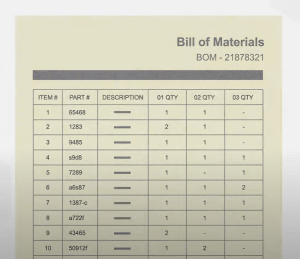
The BOM, known in Chinese as the ‘Bill of Materials’, is a document used in PCBA manufacturing that provides a detailed list of required components and their associated information. It not only includes the name of each component but also important details such as model number, specifications, package type, quantity and manufacturer. It serves as a shared information source for engineers, procurement staff and production teams throughout the entire production chain.
2.Core Functions of the BOM
Guiding Procurement: The BOM provides a comprehensive list of components, assisting the procurement department in efficiently purchasing materials that meet specification requirements and ensuring supply chain stability.
Ensuring Production: Production teams rely on the BOM for assembly and soldering operations. The information on the BOM clarifies the location and specifications of each component, reducing the error rate in production.
Cost Control: The BOM facilitates the estimation of production costs during the early stages of a project. Through precise data analysis, companies can anticipate potential cost fluctuations and make timely adjustments.
Quality Assurance: An accurate BOM reduces the rate of production defects, enhancing the consistency and reliability of finished products.

3. Typical Content of a BOM
A BOM comprises six core pieces of information. Component Number: A unique identifier for each component, facilitating easy retrieval and reference. Component Description: A brief description including function and type. Manufacturer and Model: Specifies the component’s manufacturer and exact model, ensuring components used meet design requirements. Package Type: Such as SMD (Surface Mount Device) or DIP (Dual In-Line Package). Quantity: Indicates the number of each component used on a single PCB. Remarks: Includes other special instructions, such as information on alternatives or priority.
4.The BOM Compilation Process
Design Phase: Complete the circuit design in PCB design software and generate an initial BOM.
Verification and Review: Engineers carefully check the accuracy and completeness of the BOM, confirming the availability and compatibility of each component.
Final Confirmation: The BOM is sent to the procurement and production departments to ensure that every detail is correctly understood and implemented.
5.Impact of the BOM on Production Efficiency
An accurate BOM reduces communication errors during production, making the entire process run more smoothly. Clear and unambiguous information transfer prevents repeated confirmations and production stoppages caused by misunderstandings.
6.Control of Production Risks via the BOM
An incomplete or incorrect BOM can lead to issues such as material shortages or component incompatibility during production, thereby extending delivery lead times. A comprehensive BOM mitigates these risks at source, ensuring production plans are executed on schedule.
7. Quality Assurance through the BOM
The level of detail in the BOM directly impacts the quality of product assembly. A comprehensive BOM enables the production team to assemble products strictly in accordance with design requirements, ensuring the stability and reliability of every unit.
Conclusion
The BOM serves as an indispensable information hub in PCBA manufacturing, spanning the entire process from design and procurement through to production and quality inspection. An accurate and complete BOM is a fundamental prerequisite for enhancing production efficiency, managing cost risks and safeguarding product quality. Enterprises should prioritise the standardised preparation and dynamic maintenance of BOMs, treating them as a core tool for lean manufacturing and digital management.