
PCBA for Renewable Energy: Solar Inverters, Wind Turbines, and Electric Vehicle Applications
The global transition to renewable energy is not just transforming power generation. It is creating massive demand for specialized electronic assemblies that can operate reliably in harsh outdoor environments, manage high power densities, and communicate with smart grid infrastructure. Solar inverters, wind turbine pitch controllers, battery management systems, and onboard chargers all depend on specialized PCBAs. These assemblies go far beyond standard consumer electronics in terms of thermal management, voltage isolation, and long-term reliability. At Keep best, we assemble PCBAs for renewable energy customers who cannot afford downtime in systems designed to operate for twenty-five years.
This guide explains the unique requirements of renewable energy PCBAs, what design and manufacturing considerations apply, and how to qualify a manufacturing partner for your clean energy program.
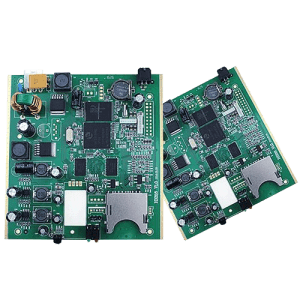
Solar Power Electronics
Solar energy systems convert DC photovoltaic output to AC grid power through inverters. The PCBA at the heart of this conversion must handle high voltage, high current, and wide temperature swings.
String Inverters: Central inverters that aggregate output from multiple solar panel strings. PCBAs include DC-DC boost stages, MPPT controllers, IGBT or SiC MOSFET gate drivers, and grid-tie synchronization circuits.
Microinverters: Module-level inverters mounted behind individual solar panels. PCBAs must be extremely compact, highly efficient, and sealed against outdoor environments for 25-year lifespans.
Power Optimizers: DC-DC converters that maximize energy harvest at the module level. PCBAs include high-frequency switching circuits, bypass diodes, and communication interfaces for system monitoring.
Key Manufacturing Requirements:
| Parameter | Typical Specification | Your manufacturing partner Capability |
| — | — | — |
| Voltage isolation | 1500V DC ( IEC 62109 ) | Reinforced insulation design and testing |
| Operating temperature | -40°C to +85°C ambient | Extended temperature component sourcing |
| Thermal cycling | Daily thermal shock | High-reliability solder joints, nitrogen reflow |
| Conformal coating | Required for outdoor | Acrylic, urethane, or silicone per application |
| Communication | RS-485, PLC, Wi-Fi, cellular | Assembly and test of communication modules |
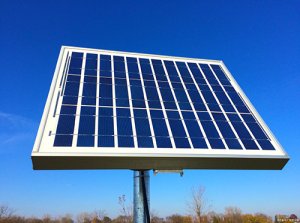
Wind Energy Electronics
Wind turbines depend on electronic control systems for blade pitch adjustment, yaw control, generator management, and grid connection.
Pitch Control Systems: Adjust blade angle to optimize power capture and protect against overspeed in high winds. PCBAs include motor drives, position sensors, emergency backup power, and safety interlocks.
Power Converter Systems: Transform variable-frequency generator output to grid-synchronized AC power. PCBAs include rectifiers, DC-link capacitors, inverter stages, and filter networks.
Condition Monitoring: Vibration sensors, temperature sensors, and oil analysis systems predict mechanical failures before they cause catastrophic damage.
Key Manufacturing Requirements:
| Parameter | Typical Specification | The EMS provider Capability |
| — | — | — |
| Vibration resistance | IEC 60068-2-6 | Ruggedized component mounting, conformal coating |
| Temperature range | -40°C to +70°C | Extended temperature sourcing and testing |
| Lightning protection | IEC 62305 | Surge protection component integration |
| Longevity | 20-year design life | Obsolescence management, LTB programs |
Electric Vehicle Electronics
Electric vehicles contain more electronic content than conventional vehicles, with PCBAS managing propulsion, charging, thermal management, and driver assistance.
Battery Management Systems (BMS): Monitor cell voltage, temperature, and state of charge. PCBAs include analog front-ends, isolation barriers, microcontrollers, and balancing circuits. Safety-critical functions require ASIL compliance.
Onboard Chargers (OBC): Convert AC grid power to DC battery charging current. PCBAs include PFC stages, isolated DC-DC converters, and communication interfaces for charging protocol negotiation.
DC-DC Converters: Step down high-voltage battery power to 12V or 48V for auxiliary systems. PCBAs must be compact, efficient, and electromagnetically compatible with sensitive vehicle electronics.
Key Manufacturing Requirements:
| Parameter | Typical Specification | Our assembly team Capability |
| — | — | — |
| Voltage levels | 400V-800V battery systems | High-voltage safety protocols, isolation testing |
| Automotive qualification | AEC-Q100/101/200 | Component sourcing and documentation |
| Functional safety | ISO 26262, ASIL B-D | Process support for safety-critical designs |
| IATF 16949 | Required for automotive | Certified quality system |

Design and Manufacturing Considerations for Renewable Energy PCBA
Thermal Management: Renewable energy PCBAs dissipate significant heat. A qualified PCBA supplier advises on thermal via design, heat sink attachment, and substrate selection for optimal heat transfer.
High-Voltage Safety: Clearance and creepage distances must meet IEC standards for the operating voltage and pollution degree. The production partner reviews high-voltage layouts for safety compliance.
Electromagnetic Compatibility: Grid-tied inverters must meet stringent EMC requirements. Your PCBA partner assembles filters, shields, and grounding systems with attention to EMC performance.
Environmental Protection: Outdoor installations require conformal coating, sealed enclosures, and corrosion-resistant materials. Keepbest applies protective coatings and validates sealing integrity.
Long-Term Reliability: 20-25 year design life requires conservative component derating, robust solder joints, and proactive obsolescence management. The supplier designs processes for extended reliability.
Frequently Asked Questions
Q: What certifications does Our engineering team hold for renewable energy PCBA?
ISO 9001, IATF 16949 for automotive, and IPC-A-610 workmanship standards. We support customer certification efforts for UL, IEC, and CE marking through third-party testing coordination.
Q: Can The manufacturing team handle high-voltage assemblies above 1000V?
Yes. We have assembled inverters and power converters operating at 1500V DC. Our facility implements high-voltage safety protocols including isolation barriers, qualified personnel, and specialized test equipment.
Q: What is the typical lead time for renewable energy PCBA prototypes?
4-6 weeks for complex power electronics including DFM review, extended-temperature component procurement, and first-article validation. Expedited timelines available for mature designs.
Q: Does A trusted assembly provider support SiC and GaN power semiconductor assembly?
Yes. We have experience with silicon carbide and gallium nitride device assembly including specialized die attach, wire bonding coordination, and high-temperature packaging.
Q: How does Your manufacturing partner manage 25-year lifecycle requirements?
Through proactive obsolescence monitoring, alternate qualification programs, last-time-buy execution, and component buffer inventory management. We align our supply chain strategy with your product lifecycle.
Q: Can The EMS provider provide box build for complete inverter or charger assemblies?
Yes. Our box build capabilities include mechanical assembly, thermal management system integration, cabling, firmware loading, and system-level functional testing.
Building electronics for renewable energy? Send your design files, operating environment specifications, and certification requirements to the Keepbest renewable energy team. We will review your design for manufacturability, propose process controls for long-term reliability, and deliver a detailed quote for precision assembly.