
Selection and Control of Cleaning Processes in PCB Assembly
Soldering residues (flux, solder balls, dust) can lead to electrochemical migration, corrosion, and electrical leakage. The cleaning process is a critical step in ensuring long-term reliability. This article analyzes the applicable scenarios and key control points for different cleaning technologies.
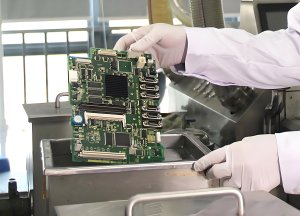
Hazards of Residues
“No-clean” flux is not truly “no-clean”; low-solid-content residues may still conduct electricity in humid environments.
Major Risks: Ion migration (dendritic crystal growth), decreased surface insulation resistance (SIR), and corrosion (especially with halogen-containing fluxes).
Water-Based Cleaning Process
Uses deionized water + cleaning agent; environmentally friendly and low-cost.
Applicable to: General electronic products and solvent-sensitive materials.
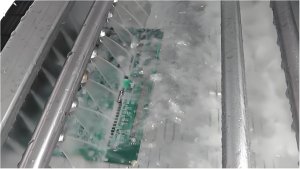
Process: Spray or ultrasonic cleaning → Rinsing with deionized water → Hot-air drying (80–120°C).
Note: Thorough drying is required to prevent water residue; not suitable for water-sensitive components (such as certain sensors).
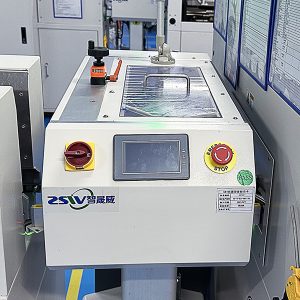
Solvent Cleaning Process
Uses isopropyl alcohol (IPA), hydrocarbon solvents, or modified alcohols.
Advantages: Fast evaporation, residue-free, and safe for precision components.
Disadvantages: Flammable (requires explosion-proof equipment), subject to environmental regulations (VOC emissions), and relatively high cost.
Vapor-Phase Cleaning Process
Uses solvent vapor with a moderate boiling point that condenses to clean the surface.
Principle: Solvent vapor condenses on the PCB surface, dissolves residues, and drips off to be reused.
Advantages: Uniform cleaning, thorough drying, and suitable for complex structures (such as the underside of BGAs).
Disadvantages: High equipment investment, high solvent costs, and environmental pressure.

Conditions for No-Clean Processes
Not all products are suitable for no-clean processes.
Applicable conditions: Low-solid-content flux (<2%), use in dry environments, non-high-reliability applications, and subsequent coverage with conformal coating.
Risks: Insufficient long-term reliability data; failure may still occur in high-humidity or contaminated environments.
Cleanliness Testing Standards
Quantitative evaluation of cleaning effectiveness.
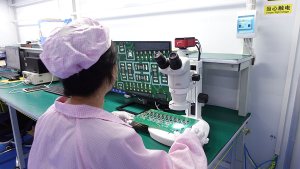
Test Methods: Ion chromatography (IC, most accurate), surface insulation resistance (SIR, simulates real-world environments), and visual inspection (magnifying glass or AOI).
Standards: IPC-TM-650 specifies an ionic contamination level of <1.56 μg NaCl eq/cm² (for general products); high-reliability products require <0.5.
The selection of a cleaning process must comprehensively consider product reliability requirements, cost budgets, and environmental regulations. Confirm the cleaning equipment capabilities and testing methods with the PCB assembly factory.
Frequently Asked Questions (FAQ)
Q1: Do “no-clean” fluxes really not require cleaning?
A: “No-clean” refers to low residue and low reactivity, meaning they do not immediately cause problems under normal conditions. However, in high-humidity, high-voltage, or prolonged high-temperature environments, residues may still cause ion migration. For automotive, medical, and military products, cleaning is recommended even when using no-clean flux.
Q2: What should I do if the PCB turns white after water-based cleaning?
A: Whitening is typically caused by water stains or cleaning agent residue. Solutions: 1) Increase the drying temperature or extend the drying time; 2) Increase the number of rinse cycles; 3) Check the conductivity of the deionized water (should be <5 μS/cm); 4) Switch to a more compatible cleaning agent. Severe whitening requires re-cleaning.
Q3: How do I clean flux residue from the underside of a BGA?
A: The space beneath a BGA is confined, making it difficult to reach with conventional spray cleaning. Methods: 1) Ultrasonic cleaning (frequency 40 kHz, to avoid damaging components); 2) Vapor-phase cleaning (steam has good penetrating ability); 3) Dedicated BGA cleaning nozzles. After cleaning, verify the results via X-ray or cross-section analysis.
Q4: Does cleaning affect the adhesion of conformal coating?
A: Yes. Excessive cleaning or cleaning agent residue may alter surface energy, leading to reduced conformal coating adhesion. Countermeasures: 1) Perform pre-treatment before coating (e.g., plasma treatment or primer application) after cleaning; 2) Control the type of cleaning agent used (avoid silicone oil residue); 3) Conduct adhesion testing (cross-cut test or pull-off test).
Q5: How do environmental regulations affect cleaning processes?
A: They primarily restrict VOC (volatile organic compound) emissions and the use of fluorinated/chlorinated solvents. Trends include: water-based and semi-water-based cleaning replacing solvent-based cleaning, closed-loop solvent recovery systems, and low-temperature cleaning technologies. The EU’s REACH and F-Gas regulations impose strict restrictions on specific solvents.