
PCBA Lead Time Optimization: How to Accelerate from Design to Delivery
How to Accelerate from Design to Delivery
In hardware product development, schedule is often the constraint that matters most. A competitor who ships six weeks earlier captures market share, establishes reference designs, and locks in customer relationships. Yet many teams accept PCBA lead times as a fixed constant rather than a variable they can influence. At Keepbest, we have compressed delivery schedules from twelve weeks to four weeks for customers who understand which levers to pull. This guide explains how lead time is built, where delays originate, and what actions you can take to accelerate your path to market.
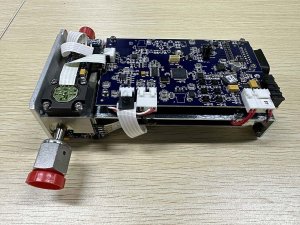
How PCBA Lead Time Is Built
Total lead time is the sum of sequential and parallel activities across design, procurement, fabrication, and assembly.
| Activity | Typical Duration | Compressible? | How |
| DFM review | 2-3 days | Yes | Submit complete file package upfront |
| Component procurement | 1-4 weeks | Yes | Pre-approve alternates; hold buffer stock |
| PCB fabrication | 1-2 weeks | Partially | Choose standard materials; avoid exotic substrates |
| Stencil fabrication | 1-2 days | No | Fixed process; included in NRE |
| Assembly and reflow | 1-3 days | Partially | Panelize efficiently; reduce changeovers |
| Inspection and test | 1-3 days | Partially | Pre-approve test coverage level |
| Final QC and packaging | 1 day | No | Standard process |
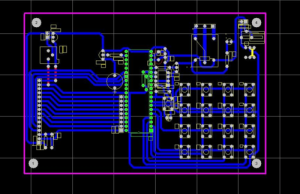
Typical total lead time: 3-5 weeks for standard turnkey production.
Compressed lead time: 2-3 weeks achievable with clean BOM, in-stock components, and expedited processing.
Prototype lead time: 10-14 days for simple designs with common components.
The Biggest Schedule Killers
Component Availability: The single largest cause of PCBA delays is a single out-of-stock component. A long-lead FPGA, a backordered connector, or an obsolete voltage regulator can hold up an entire production lot while everything else sits ready.
Design Revisions After Release: Engineering change orders after fabrication or assembly has begun require rework, remakes, or inventory scrapping. Each ECO resets the schedule by days or weeks.
Incomplete RFQ Packages: Missing centroid files, incomplete BOMs, or ambiguous assembly drawings trigger back-and-forth clarification that burns days before production even starts.
Over-Specification: Requiring Class 3 workmanship for a consumer prototype, or specifying exotic materials where standard FR-4 would suffice, adds cost and time without adding value.
Testing Scope Creep: Adding unplanned test requirements after quotation — such as full environmental stress screening or custom FCT development — extends schedule and budget.
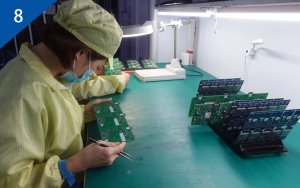
Lead Time Compression Strategies
Strategy 1: Complete File Preparation
Submit a complete RFQ package including Gerber files, BOM with manufacturer part numbers, centroid file, assembly drawing, and test requirements. Incomplete packages add 3-5 days of clarification before production can begin.
Strategy 2: Component Pre-Positioning
For programs with predictable demand, Your manufacturing partner offers Kanban inventory programs. We hold customer-owned or consigned inventory of long-lead components, releasing them against production schedules. This eliminates procurement lead time for critical parts.
Strategy 3: Alternate Pre-Approval
Identify and pre-approve alternate components for every critical line item. If the primary part goes on allocation, the alternate can be substituted without engineering review or schedule impact. The EMS provider maintains alternate documentation as part of our BOM scrub process.
Strategy 4: Standard Material Selection
Choose standard FR-4 with TG150 or TG170 rating for most applications. Exotic substrates such as Rogers, polyimide, or ceramic add 1-2 weeks to fabrication lead time and may require specialized handling during assembly.
Strategy 5: Efficient Panelization
Design boards to fit efficiently in standard panel sizes (typically 18×24 inches). Poor panel utilization increases fabrication cost and reduces assembly machine throughput. Our assembly team provides panelization recommendations during DFM review.
Strategy 6: Parallel Path Management
Do not wait for one stage to finish before starting the next. Component procurement, PCB fabrication, and stencil cutting can all run in parallel. Keepbest project managers coordinate these parallel streams to minimize calendar time.
Strategy 7: Expedited Processing
For critical prototypes or market window opportunities, A qualified PCBA supplier offers expedited processing with dedicated line time, overtime staffing, and air freight logistics. Expedite fees are typically 20-50% above standard pricing but can compress schedule by 50% or more.
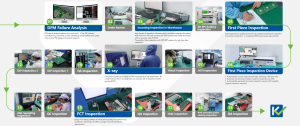
Lead Time by Product Complexity
| Product Type | Standard Lead Time | Compressed Lead Time | Key Variables |
| Simple 2-layer consumer board | 2-3 weeks | 7-10 days | Component availability |
| 4-6 layer industrial controller | 3-4 weeks | 2 weeks | BOM complexity, test requirements |
| 8+ layer medical device | 4-6 weeks | 3 weeks | Regulatory documentation, Class 3 workmanship |
| Automotive ECU with PPAP | 6-8 weeks | 4-5 weeks | IATF documentation, qualification testing |
| RF/microwave with exotic substrate | 5-7 weeks | 4 weeks | Material procurement, impedance validation |

Frequently Asked Questions
Q: What is the fastest possible lead time for a PCBA prototype?
Five to seven days for simple designs with all components in stock, standard FR-4, and basic test requirements. This requires expedited processing and may incur premium pricing.
Q: How much does expedited processing cost?
Typically 20-50% above standard pricing depending on compression target and resource requirements. Expedite fees are itemized separately in The production partner quotes.
Q: Can lead time be compressed without increasing cost?
Sometimes. Complete file preparation, pre-approved alternates, and efficient panelization compress schedule at no additional cost by eliminating delays rather than adding resources.
Q: What is the most common reason for missed delivery dates?
Component unavailability. Even a single out-of-stock part can stop the line. Pre-positioning inventory and pre-approving alternates are the most effective preventive measures.
Q: Does Your PCBA partner offer scheduled delivery programs?
Yes. For customers with predictable demand, we offer Kanban and consignment inventory programs with scheduled releases. This converts variable lead times into fixed delivery windows.
Q: How does design revision affect lead time?
Minor revisions such as silkscreen updates add 2-3 days. Major revisions affecting layer stack-up or component placement reset the schedule by 1-2 weeks for refabrication and requalification.
Facing a tight deadline? Send your design package to the Keepbest project management team. We will analyze your BOM for long-lead items, identify compression opportunities, and propose an accelerated schedule with transparent pricing for any expedite requirements.