
PCBA for Industrial IoT and Edge Computing: Rugged Design and Manufacturing
The Industrial Internet of Things and edge computing are transforming factories, energy grids, transportation networks, and smart cities. The PCBA at the center of these systems cannot afford to fail. At Keepbest, we assemble industrial-grade PCBAs for customers who cannot tolerate downtime. Temperature swings, vibration, electromagnetic noise, and years of unattended operation make industrial PCBAs a different class of product from consumer electronics. This guide explores the design and manufacturing requirements that separate industrial-grade PCBAs from standard assemblies. It covers component selection, board layout, environmental protection, and testing protocols that ensure reliable performance in the field.
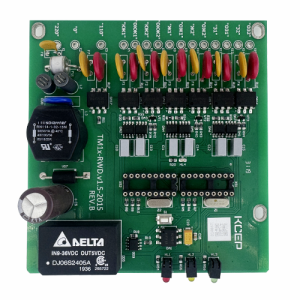
What Makes Industrial IoT and Edge Computing Different?
Industrial IoT connects sensors, actuators, and controllers to enterprise networks. Edge computing moves data processing closer to the source to reduce latency and bandwidth costs. Both applications place PCBAs in environments that consumer devices never see.
Extended Temperature Range: Industrial systems often operate from minus 40 degrees Celsius to plus 85 degrees Celsius. Automotive under-hood applications extend this range to plus 125 degrees Celsius. Standard commercial-grade components rated for 0 to 70 degrees Celsius will fail prematurely under these conditions.
Mechanical Stress: Factory equipment generates continuous vibration. Railway systems produce shock during acceleration and braking. Mining equipment faces multi-axis vibration and dust infiltration. PCBAs must survive these stresses for years without solder joint fatigue or connector fretting.
Electromagnetic Compatibility: Industrial environments contain motor drives, welding equipment, and high-power switching supplies that generate intense electromagnetic interference. PCBAs must neither emit excessive noise nor malfunction when exposed to external interference.
Longevity and Obsolescence Management: Industrial systems remain in service for 10 to 20 years. Component suppliers may discontinue parts within 3 to 5 years. A manufacturing partner who understands lifecycle management is essential for sustained production.

Component Selection for Industrial PCBA
Choosing the right components is the foundation of industrial reliability.
Temperature Ratings: Specify industrial-grade or automotive-grade components with verified operating ranges. For extreme environments, consider military-grade or COTS components with extended temperature screening. Always verify that oscillator crystals, electrolytic capacitors, and power semiconductors maintain performance across the full temperature range.
Mechanical Robustness: Select surface-mount devices with larger package sizes where possible. A 1206 resistor absorbs more mechanical stress than an 0402. Use metal film resistors instead of thick film for better stability under thermal cycling. Choose connectors with positive retention latches and gold-plated contacts for vibration resistance.
Memory and Storage: Industrial systems often use SPI NOR flash or SLC NAND flash for firmware storage. These technologies tolerate wider temperature ranges and higher program-erase cycles than consumer-grade eMMC or microSD cards. For edge computing with machine learning inference, consider industrial-rated LPDDR4 or GDDR modules with ECC support.
Power Supply Components: Industrial systems frequently operate from 24V DC bus voltages found in factory automation. DC-DC converters must tolerate input transients, brownouts, and reverse polarity. Select controllers with wide input ranges and built-in protections. Use solid tantalum or ceramic capacitors instead of aluminum electrolytics for longer life at high temperatures.
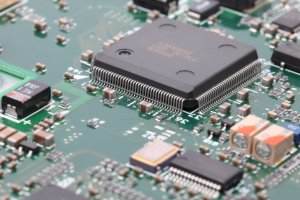
Board Design Considerations
The PCB layout must address thermal management, signal integrity, and manufacturability simultaneously.
Layer Stackup and Material: Four to eight layers are typical for industrial IoT PCBAs. Use high-Tg FR-4 with a glass transition temperature above 150 degrees Celsius. For high-speed edge computing with processors and DDR memory, consider low-Dk materials or mixed stackups with Rogers 4350B for RF sections. Always include dedicated ground planes to minimize EMI and provide low-impedance return paths.
Thermal Management: Industrial systems rarely have fans. Heat must conduct through the PCB to thermal vias, copper planes, and ultimately to the enclosure. Place power components near board edges or mounting holes. Use thermal vias under QFN and DFN packages with exposed pads. For processors exceeding 5 watts, consider metal-core PCBs or integrated heat sinks.
Connector and Interface Placement: Locate heavy connectors near board edges and support them with mechanical standoffs. Keep sensitive analog traces away from switching power supplies. Route high-speed differential pairs with consistent impedance and minimal via transitions. Maintain 3W spacing between aggressive signals to reduce crosstalk.
Conformal Coating: Most industrial PCBAs benefit from conformal coating to protect against moisture, dust, and chemical exposure. Acrylic is easy to repair. Polyurethane offers better chemical resistance. Silicone provides the best thermal shock protection. Specify coating thickness between 25 and 75 microns and mask connectors, test points, and LEDs.
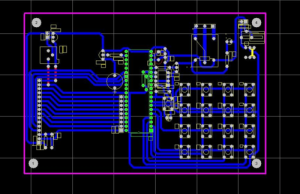
Manufacturing and Assembly Requirements
Building industrial PCBAs requires tighter process control than consumer products.
Solder Paste and Profile: Use no-clean solder paste formulated for extended temperature operation. Lead-free SAC305 with additions of bismuth or antimony can improve thermal fatigue resistance. Optimize reflow profiles for adequate wetting without overheating temperature-sensitive components. Consider selective soldering for through-hole connectors that experience mechanical stress.
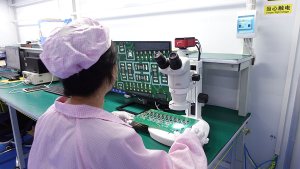
Inspection Standards: Apply IPC-A-610 Class 2 as a minimum for industrial products. For safety-critical or high-reliability applications, specify Class 3 workmanship. Use 3D AOI for solder joint inspection and X-ray for BGA and QFN hidden connections. Functional testing should include a burn-in cycle at maximum operating temperature.
Environmental Stress Screening: A typical ESS sequence includes temperature cycling from minus 40 to plus 85 degrees Celsius for 20 cycles, followed by random vibration per IEC 60068-2-64. This screening identifies infant mortality failures before deployment. Not every board needs ESS, but a sampling plan or 100-percent screening for critical batches is common.
Traceability: Maintain component lot traceability for every assembly. Industrial customers need the ability to recall specific batches if a component defect is discovered years later. This requires barcode serialization, database integration, and retention of test records for the product lifecycle.
Testing and Validation
Industrial PCBAs must pass a validation gauntlet before deployment.
Electrical Testing: In-circuit testing verifies component placement and value. Boundary scan tests digital interconnects when ICT access is limited. For edge computing boards with processors and memory, run memory BIST, CPU stress tests, and peripheral loopback tests.
Environmental Testing: Temperature cycling per IEC 60068-2-14 validates solder joint reliability. Damp heat testing per IEC 60068-2-78 verifies conformal coating effectiveness. Salt spray testing per IEC 60068-2-11 is required for marine or coastal installations.
EMC Testing: Conducted emissions and immunity per CISPR 32 and IEC 61000-4-6. Radiated emissions and immunity per CISPR 32 and IEC 61000-4-3. Electrostatic discharge per IEC 61000-4-2. Most industrial IoT products require at least Class B emissions and industrial-level immunity.
Long-Term Reliability: Accelerated life testing at elevated temperatures predicts mean time between failures. Weibull analysis of failure data determines whether the design meets target reliability metrics. For systems requiring 10-year life, reliability modeling should account for solder creep, capacitor electrolyte evaporation, and connector wear.
Key Manufacturing Requirements
| Parameter | Typical Specification | Our Capability |
| — | — | — |
| Operating temperature | Minus 40 to plus 85C | Extended range components and testing |
| Vibration | IEC 60068-2-6 random 5-500 Hz | Ruggedized assembly and conformal coating |
| Humidity | 95 percent RH non-condensing | Conformal coating and potting |
| EMC immunity | IEC 61000-4-3/4/5 industrial levels | Shielding and filtering design support |
| Longevity | 10 to 20 years | Obsolescence management programs |

Frequently Asked Questions
Q: Can you support IEC 61000 EMC compliance for industrial IoT products?
Yes. Keepbest provides pre-compliance scanning during development and coordinates third-party accredited testing for final certification. Our engineering team reviews layouts for grounding, shielding, and filtering before fabrication.
Q: Do you offer conformal coating for industrial assemblies?
Yes. We apply acrylic, polyurethane, or silicone conformal coatings per IPC-CC-830. Coating thickness is verified with eddy current measurement. Selective coating areas are masked to protect connectors and test points.
Q: Can you manage 10-year component supply for industrial programs?
Yes. Our supply chain team monitors component lifecycle status and provides quarterly BOM health reports. We negotiate long-term supply agreements with franchise distributors and manage last-time-buy decisions with customer approval.
Q: What is the minimum order quantity for industrial PCBA?
We support pilot production from 50 units for proof-of-concept and scale to 10,000 units per month for volume programs. Industrial customers often begin with 100 to 500 units for field trials.
Q: Can you assemble boards with metal-core substrates for thermal management?
Yes. We support aluminum-core and copper-core PCBs for LED drivers and power converters. Metal-core assembly requires adapted solder profiles and specialized fixturing to prevent warpage during reflow.
Conclusion
Industrial IoT and edge computing PCBAs demand a manufacturing partner who understands the difference between a laboratory prototype and a field-proven product. Component selection, thermal design, conformal coating, and environmental testing are not afterthoughts. They are integral to the design and must be validated before the first production batch ships.
Send your industrial IoT design package to the Keepbest engineering team. We will review your BOM for temperature ratings, evaluate your layout for thermal and EMC performance, and propose a manufacturing and testing plan that matches your reliability targets.