
EMS vs ODM vs CM: Understanding Manufacturing Partnership Models for PCBA
When a hardware company reaches the point of transferring design to production, the choice of manufacturing partner shapes cost structure, intellectual property control, time-to-market, and long-term competitiveness. At Keep best, we operate as an EMS provider that also supports customers navigating the broader partnership landscape. Three models dominate the electronics manufacturing landscape: the Electronic Manufacturing Service provider, the Original Design Manufacturer, and the Contract Manufacturer. Each offers a different balance of engineering support, ownership, and flexibility. This guide explains the distinctions, when to choose each model, and how to structure the relationship for maximum value.
What Is an EMS Provider?
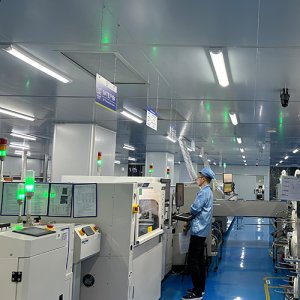
An Electronic Manufacturing Service provider focuses on executing production based on the customer’s design. The customer retains full ownership of the product definition, intellectual property, and market-facing brand.
Core Functions: The EMS partner sources components, fabricates PCBAs, performs assembly and test, manages logistics, and often provides repair and warranty services. The EMS provider adds value through manufacturing scale, supply chain leverage, and quality systems rather than product design.
Customer Responsibility: The customer provides complete design packages including schematics, Gerber files, bill of materials, assembly drawings, and test specifications. The customer also manages product roadmaps, firmware development, regulatory certifications, and market distribution.
When to Choose EMS: Select an EMS partner when you have a mature design team, proprietary technology you want to protect, and a need for flexible capacity without capital investment. EMS is the default choice for established hardware companies, startups with strong technical founders, and any business where the product design is a competitive differentiator.
What Is an ODM?
An Original Design Manufacturer designs and builds products that are sold under the customer’s brand. The ODM retains ownership of the design until the customer purchases it, and often licenses the design for exclusive or semi-exclusive use.
Core Functions: The ODM provides full product development from concept to production. This includes industrial design, mechanical engineering, electrical design, firmware development, and manufacturing. The customer contributes market requirements, branding, and distribution channels.
Intellectual Property: ODM arrangements vary widely. Some ODMs sell the design outright for a one-time fee. Others retain ownership and license production rights. Semi-exclusive agreements allow the ODM to sell the same base design to multiple customers with minor customizations. Negotiating IP ownership, territory restrictions, and modification rights is critical before engaging an ODM.
When to Choose ODM: ODM makes sense when speed to market matters more than design ownership, when your internal engineering team lacks the bandwidth or expertise to develop the product, or when the product category is a commodity where differentiation comes from branding and channel rather than technology.
Risks: Over-reliance on a single ODM creates supply concentration risk. If the ODM owns the design and decides to prioritize another customer, your product pipeline stalls. Competitors may license similar products from the same ODM, diluting your market position. Always negotiate design file escrow and second-source rights.

What Is a Contract Manufacturer?
The term Contract Manufacturer is often used interchangeably with EMS, but historically it carries a slightly narrower meaning. A CM typically focuses on build-to-print manufacturing with less supply chain integration and less value-added engineering than a full-service EMS.
Core Functions: The CM builds PCBAs to the customer’s documentation. Component sourcing may be turnkey or consigned. The CM manages production scheduling, labor, and basic quality control. Advanced services like design for manufacturability review, test development, and logistics management may not be included.
Customer Responsibility: The customer maintains tighter control over procurement, test development, and scheduling. This requires more internal resources but also provides more transparency into costs and component choices.
When to Choose CM: A traditional CM suits companies with established supply chain teams, complex component sourcing requirements, or a need for direct supplier relationships. It also fits low-complexity products where the additional engineering services of an EMS would be underutilized.

Comparing the Three Models
| Attribute | EMS | ODM | CM |
| — | — | — | — |
| Design ownership | Customer | ODM or shared | Customer |
| Engineering support | DFM, test, NPI | Full design | Limited |
| Component sourcing | Turnkey preferred | ODM handles | Flexible |
| IP protection | Strong | Negotiated | Strong |
| Speed to market | Moderate | Fastest | Moderate |
| Capital investment | Low | Low to moderate | Low |
| Best for | Proprietary designs, scaling | Speed, limited R&D | Simple products, control |
Hybrid and Evolving Models
The boundaries between EMS, ODM, and CM are blurring as manufacturing partners expand their service portfolios.
EMS with Design Services: Many EMS providers now offer electrical and mechanical engineering support. This ranges from DFM and test fixture design to partial schematic review and firmware loading. The customer retains design ownership while leveraging the EMS partner’s manufacturing expertise to improve yields and reduce costs.
ODM with Customer Engineering: Some customers engage ODMs for mechanical and industrial design while retaining electrical and firmware development internally. This hybrid model captures ODM speed for enclosure and assembly design while protecting core technology.
Joint Development Models: For complex products like medical devices or automotive systems, a joint development agreement structures shared investment, milestone payments, and revenue sharing. Both parties contribute engineering resources and share risk proportionally.
Regional vs Global Partners: EMS and ODM partners operate at different scales. Global tier-one providers offer massive capacity, multinational logistics, and sophisticated quality systems. Regional specialists provide faster response, closer communication, and greater flexibility for smaller volumes. The right choice depends on product complexity, volume forecasts, and geographic requirements.
Selecting the Right Partner
The decision between EMS, ODM, and CM should be driven by capability fit rather than cost alone.
Assess Internal Capabilities: If your team has strong hardware design, firmware, and regulatory expertise, an EMS or CM preserves IP control. If you are a software company entering hardware or a brand with limited engineering resources, an ODM accelerates your timeline.
Evaluate IP Sensitivity: Products with proprietary algorithms, unique sensor integrations, or patentable mechanisms should stay under EMS with strong NDA and contractual protections. Commodity products with standard electronics benefit less from IP hoarding.
Consider Volume Trajectory: Low initial volumes with uncertain growth suit regional EMS or CM partners who accept smaller batches. High volumes with predictable demand justify tier-one EMS providers with global capacity and component leverage.
Audit Manufacturing Quality: Regardless of model, audit the partner’s quality system. ISO 9001 is baseline. Industry-specific certifications like ISO 13485 for medical, IATF 16949 for automotive, or AS9100 for aerospace indicate mature processes. Request customer references and visit the factory floor before committing.
Negotiating the Agreement
The manufacturing agreement should address scope, pricing, IP, and exit terms explicitly.
Statement of Work: Define build volumes, delivery schedules, quality standards, and reporting cadence. Include engineering service scopes if the partner provides DFM, test development, or failure analysis.
Pricing Structure: Negotiate component pricing transparency. EMS providers typically pass through component costs with a modest margin. Labor and overhead are quoted as a fixed fee per board or per operation. ODM pricing is all-inclusive and harder to dissect.
Intellectual Property Terms: For EMS and CM, the customer retains all IP. For ODM, negotiate design ownership transfer, exclusivity periods, and modification rights. Require source code escrow for firmware and design file escrow for schematics and layouts.
Termination and Transition: Include provisions for transferring production to another facility, porting test programs, and receiving remaining inventory and tooling. A 90-day transition period is standard but may need to be longer for complex products.
Frequently Asked Questions
Q: Can an EMS provider help with early-stage prototype development?
Yes. Keepbest offers New Product Introduction services including DFM review, test fixture design, and pilot production. This bridges the gap between engineering prototype and mass production.
Q: How do I protect my design when working with an ODM?
Negotiate a development agreement with clear IP ownership terms before sharing specifications. Require design file transfer upon project completion. Use legal escrow services for critical source files. Consider segmenting the design so the ODM only sees the non-proprietary portions.
Q: What is the typical minimum order quantity for EMS vs ODM?
EMS partners often accept 50 to 100 units for pilot runs. ODMs usually require volume commitments of 1,000 units or more per year to justify their design investment. High-complexity ODM products may require 5,000 or 10,000 unit annual forecasts.
Q: Can I switch from ODM to EMS later if my volumes grow?
Yes, but it requires careful planning. Negotiate design ownership and source code rights in the original ODM agreement. Budget for engineering validation when transitioning production to a new EMS partner. The ODM may retain rights to components or firmware they developed.
Q: Do EMS providers handle regulatory certifications?
Most EMS partners coordinate third-party testing for FCC, CE, UL, and other certifications. They do not typically perform the certification themselves but manage the process using accredited laboratories. The customer remains the certificate holder.
Conclusion
There is no universally best manufacturing model. EMS preserves control and IP. ODM accelerates time to market. CM offers simplicity and transparency. The right choice depends on your internal capabilities, IP sensitivity, volume forecasts, and strategic priorities.
Contact the Keepbest team to review your next hardware program against these criteria. If you need a manufacturing partner who can support EMS or CM engagements with engineering depth, quality systems, and flexible capacity, we will review your design, propose a production strategy, and provide a transparent quotation that aligns with your business model.