
The BOM (Bill of Materials) serves as the command center for PCB assembly, and its accuracy directly determines the success or failure of production. This article provides a practical guide to creating, reviewing, and optimizing BOMs to help you minimize delays and losses caused by BOM errors.
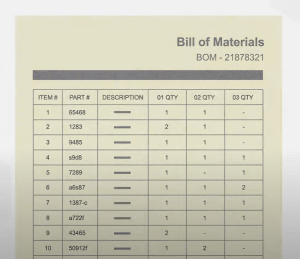
Basic Structure of a BOM
A standard BOM should include the following fields: part number, description, specifications, package, reference designator, quantity, manufacturer, and manufacturer part number.
Key Field: The reference designator must match the Gerber silkscreen exactly; this is the most common source of errors.

Substitute Component Management
Substitute components are a key strategy for addressing stockouts and reducing costs.
Substitution Principles: Consistent electrical parameters, compatible packaging, identical pin definitions, and matching temperature ratings.
Substitute Component Labeling: Clearly indicate “Preferred/Substitute” priority in the BOM and provide the substitute part number and manufacturer.

Life Cycle Management
Electronic components have short life cycles, so a monitoring mechanism must be established.
Management Strategies: Use PLM or ERP systems to track component status, set end-of-life (EOL) alerts, stockpile long-lead-time materials in advance, and share material alert information with the factory.
BOM Review Process
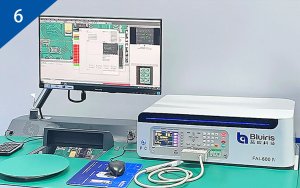
Pre-production BOM review is an essential step.
Key Review Points: Verify consistency between part numbers and Gerber files; check for complete polarity markings on polar components; ensure package types match actual components; confirm the availability of alternative parts; and screen for prohibited materials (e.g., RoHS-noncompliant materials).
Version Control
Design changes are commonplace, making BOM version management critical.
Control Methods: Version numbering rules (e.g., V1.0, V1.1), change logs (ECN), handling procedures for obsolete components, and sharing the latest version with the factory.
Cost Optimization Strategies
BOM costs account for 60–80% of the total PCB assembly cost.
Optimization Approaches: Standardize designs to reduce the use of special components, evaluate domestic alternatives, leverage the factory’s bulk purchasing advantages, and analyze usage forecasts to optimize minimum order quantities (MOQs).
An accurate BOM is the foundation of efficient production. Investing time in optimizing the BOM management process will significantly reduce production risks and total costs.

Frequently Asked Questions (FAQ)
Q1: What are the most common errors in a BOM?
A: The most common error is a mismatch between part numbers and Gerber silkscreen markings, which causes the placement machine to fail to recognize components or place them in the wrong locations. Other common issues include vague package descriptions (e.g., listing only “0805” without specifying resistor or capacitor), failure to indicate the orientation of polarized components, and errors in quantity calculations.
Q2: How should alternative components be selected?
A: Alternative components must meet the following criteria: 1) identical or superior electrical parameters; 2) compatible package dimensions and pinout; 3) matching operating temperature range; 4) successful sample validation. It is recommended to provide 2–3 alternative options in the BOM and indicate their priority.
Q3: How should we address component end-of-life (EOL)?
A: Establish an EOL monitoring mechanism with 6–12 months’ advance warning. Solutions include: last-tube-batch (LTB) procurement, identifying pin-compatible alternatives, or redesigning the circuit. Share EOL information with the factory to leverage their supplier network for a rapid response.
Q4: What problems can arise from BOM version confusion?
A: It may lead to the mixed use of old and new components, production errors, and excess inventory. Strict version control must be established: issue an ECN (Engineering Change Notice) for every change; clearly mark the expiration date on old versions; and ensure that the factory accepts only the latest authorized version.
Q5: How can BOM costs be reduced without compromising quality?
A: Strategies include: standardizing designs using common packages (e.g., uniformly using 0603 resistors and capacitors); evaluating high-quality domestic alternatives; asking the factory to recommend cost-effective solutions (as they understand market conditions); and optimizing usage forecasts to reduce surcharges from emergency purchases.