

Selective wave soldering and conventional wave soldering are two core processes for DIP component soldering in PCBA manufacturing. Conventional wave soldering is suitable for high-volume, simple boards, whilst selective wave soldering excels at precision soldering of complex, high-density boards. This article compares the characteristics, advantages, disadvantages and suitable applications of both processes, and provides guidance on selecting the appropriate method based on case studies involving automotive electronics and home appliance control boards.
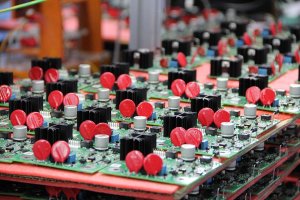
1.Overview of the Conventional Wave Soldering Process
Conventional wave soldering is a mature mass-production soldering technology. It involves inserting through-hole components into the PCB and then passing the entire board through a wave of molten solder to achieve mass soldering. This process is suitable for soldering large numbers of through-hole components and demonstrates high efficiency, particularly in the production of simple, regular-shaped boards.
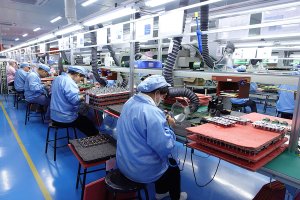
2.Advantages of Traditional Wave Soldering
High efficiency is its core advantage, as the soldering of an entire PCB can be completed in a single pass, making it suitable for high-volume production. Low cost is reflected in lower equipment investment and consumable costs, making it a cost-effective choice. Operation is straightforward due to the maturity of the process, and it is easy to maintain and operate.
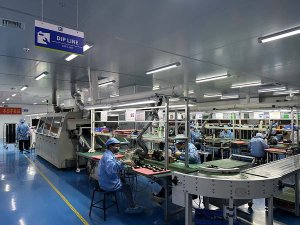
3.Disadvantages of Traditional Wave Soldering
Limited selectivity: It cannot target specific areas for soldering, which may affect pre-mounted components or require additional shielding. Soldering flexibility is poor, and defects are prone to occur in complex or high-density circuit boards. Environmental concerns arise from the use of large quantities of solder, and the volatilisation of flux may impact the environment and operators.

4.Applications of Traditional Wave Soldering
Suitable for high-volume production and the soldering of single-sided PCBs or those with a high density of through-hole components and simple layouts, such as control boards for domestic appliances and mainboards for industrial equipment.
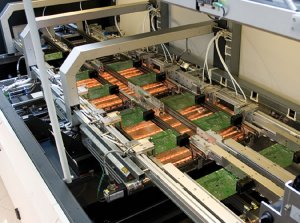
5.Overview of Selective Wave Soldering
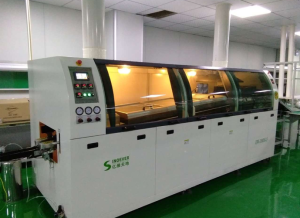
Selective wave soldering is a precision soldering technique that uses specialised nozzles to precisely spray molten solder onto designated solder joints, thereby achieving accurate soldering in specific areas. It is suitable for complex PCBs that require high soldering precision.
6.Advantages of Selective Wave Soldering
High precision, avoiding interference with surrounding components; particularly suitable for PCBs with a mixed layout of surface-mount and through-hole components. Reduced material consumption, as only the required solder joints are processed, making the use of solder and flux more economical and environmentally friendly. Improved soldering quality, reducing defects such as bridging or cold solder joints. High adaptability, supporting irregularly shaped components and complex circuit designs.
7.Disadvantages of Selective Wave Soldering
Lower efficiency, with slower processing speeds compared to conventional wave soldering. High equipment costs, as selective wave soldering equipment is complex and requires a significant initial investment. The complexity of the process places higher demands on operators and process control.
8.Applications of Selective Wave Soldering
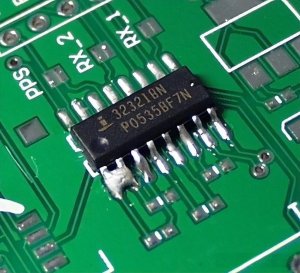
It is particularly suitable for high-density boards featuring a mix of double-sided surface-mount and through-hole components, as well as PCBs containing numerous sensitive components requiring protection, such as those found in medical electronics, telecommunications equipment and automotive electronics.
9.Case Study: Automotive Electronic Control Boards
Automotive electronic control boards typically contain a large number of sensitive surface-mount components, whilst also requiring the soldering of some through-hole components. Traditional wave soldering may result in damage to the solder joints of surface-mount components, whereas selective wave soldering effectively protects other areas through precise soldering, ensuring soldering quality.
10.Case Study: Home Appliance Control Boards
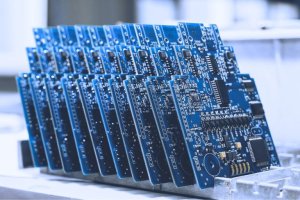
Home appliance control boards are mostly single-sided, with a regular layout and a high density of through-hole components. Conventional wave soldering offers higher efficiency and better value for money, enabling a significant reduction in production costs.
Conclusion
Selective wave soldering and conventional wave soldering are not mutually exclusive; rather, they complement and coexist. Conventional wave soldering is the preferred choice for simple, high-volume through-hole boards, whilst selective wave soldering is essential for complex, mixed-component, high-density boards. Only by selecting the appropriate process based on product characteristics, production volume and cost budget can the optimal balance between soldering quality and production efficiency be achieved.