
How to Select PCBA Surface Treatment Processes?
PCBA surface treatment processes directly impact soldering quality, product reliability, and cost. This article analyzes the advantages, disadvantages, and suitable applications of five mainstream processes—HASL (Hot Air Leveling), ENIG (Electroless Nickel Immersion Gold), OSP (Organic Solderable Phosphate), selective gold plating for gold fingers, and electroless silver plating—and provides a comprehensive selection strategy.
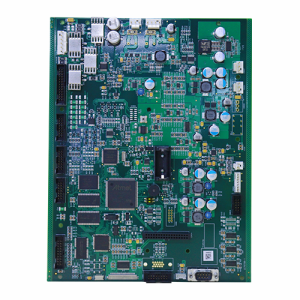
1.HASL (Hot Air Leveling) Process
Advantages: HASL is a relatively low-cost process suitable for most electronic products, particularly consumer electronics. The tin-lead plating layer provides good solderability, facilitating soldering operations.
Disadvantages: Due to its process characteristics, HASL may result in uneven pad surfaces, affecting the placement of high-precision or fine-pitch components. Lead-based HASL contains hazardous substances and may not meet environmental requirements.
Applications: HASL is primarily used for cost-sensitive products with modest soldering requirements, such as home appliances and certain low-end electronic devices.
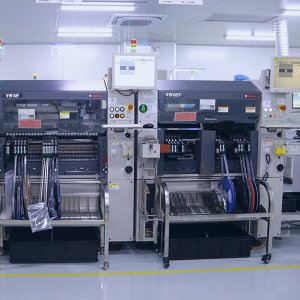
2.ENIG (Electroless Nickel-Immersion Gold) Process
Advantages: The ENIG process produces a smooth surface, making it highly suitable for soldering BGA and other high-density packages. The gold plating layer offers strong oxidation resistance, effectively extending the board’s shelf life.
Disadvantages: The ENIG process is relatively expensive, increasing the overall production cost of PCBA. There is a potential risk of “black board” defects, which may lead to connection issues.
Applications: ENIG is suitable for high-reliability products, such as servers, communication equipment, and avionics, particularly in applications requiring multiple soldering cycles and precision assembly.
3. OSP (Organic Solderable Phosphate) Process
Advantages: The OSP process does not use harmful metals and complies with environmental standards. Compared to ENIG, OSP is a cost-effective process.
Disadvantages: OSP is not suitable for multiple reflow soldering cycles, as the surface layer is easily damaged at high temperatures. It has weaker oxidation resistance and requires strict storage and handling conditions.
Applications: The OSP process is suitable for cost-sensitive electronic products with short soldering cycles, such as small consumer electronics.
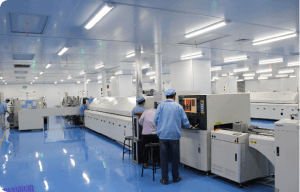
4.Selective Gold Plating Process
Advantages: The gold finger process provides excellent conductivity and wear resistance, making it suitable for high-frequency contact applications. The gold layer offers exceptional corrosion resistance, making it suitable for use in harsh environments.
Disadvantages: The selective gold plating process is relatively expensive and is not suitable for all products. The process flow is relatively complex, increasing production time and costs.
Applications: The gold finger process is widely used in interfaces requiring frequent plugging and unplugging, such as computer connectors and network equipment.
5.Chemical Silver Plating Process
Advantages: The silver plating layer provides excellent solderability and conductivity. The surface is smooth, making it highly suitable for fine-pitch soldering.
Disadvantages: The silver layer is prone to oxidation when exposed to air and requires special protection. In high-humidity environments, electrochemical migration issues may occur.
Applications: Chemical silver plating is suitable for high-frequency signal boards and products requiring high conductivity, such as RFID antennas and certain high-speed circuits.
6.Strategies for Selecting Surface Treatment Processes
When selecting a surface treatment process for PCBA boards, three factors should be comprehensively considered.
In terms of cost, HASL and OSP are more suitable for cost-sensitive projects, while ENIG and gold fingers are suitable for products with higher performance and reliability requirements.
In terms of product type, consumer electronics typically choose HASL or OSP, while high-precision, industrial, and military products often adopt ENIG or gold finger processes.
Environmental conditions: Storage and operating environments are critical for processes such as OSP and electroless silver plating, requiring consideration of external factors like humidity and temperature.
Conclusion
There is no absolute superiority or inferiority among PCBA surface treatment processes; the key lies in aligning them with the product’s positioning and actual requirements. Cost-sensitive consumer products should prioritize HASL or OSP, high-reliability industrial equipment must use ENIG, gold fingers are suitable for frequently plugged-in interfaces, and electroless silver plating should be considered for high-frequency, high-speed signal boards. Only through scientific selection can the optimal balance between performance, cost, and reliability be achieved.