
The size and shape of PCBs are key considerations in SMT assembly, directly affecting production efficiency, placement accuracy and processing costs. This article analyses the characteristics and mitigation strategies for four types of PCBs—large-sized, small-sized, regular-shaped and irregular-shaped boards—in SMT assembly, providing guidance for optimising PCB design.
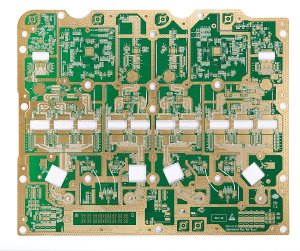
1.The Impact of Large-Sized PCBs
Production efficiency:
Large-sized PCBs generally require longer transfer times and greater positioning accuracy during production, which consequently affects overall production efficiency. For example, large boards measuring 310 mm by 410 mm require precise alignment by the equipment after being loaded onto the SMT machine to ensure placement accuracy. In such cases, the equipment’s conveyance, alignment and inspection processes are all slightly more time-consuming than for smaller boards, which may result in a reduction in the number of components placed per unit of time.
Stability and Precision:
Large-sized PCBs are susceptible to temperature fluctuations and stress, which can cause slight warping or deformation, thereby affecting placement accuracy. If the temperature is uneven when large-sized boards pass through the reflow oven, warping may occur, thereby affecting the positional accuracy of the mounted components and leading to an increase in the defect rate of finished products. To address this issue, appropriate board materials and support designs must be adopted to minimise board deformation.
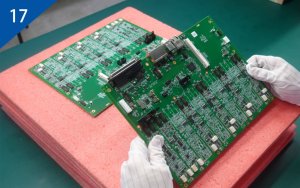
2.The Impact of Small-Sized PCBs
Production Efficiency and Stability:
Small-sized PCBs typically demonstrate higher production efficiency in SMT assembly. As the transfer time for small boards is short, equipment can complete placement operations in a shorter timeframe, thereby enhancing overall production speed. However, due to their limited surface area and high component density, small boards impose extremely stringent requirements on placement accuracy. For example, small components in 0201 packages demand even higher precision from placement machines. If the placement machine lacks sufficient accuracy, this may result in component misalignment, affecting circuit performance.
Flexibility of panelised processing:
To process small-sized PCBs more efficiently, factories typically opt for panelised processing, which involves joining multiple small boards into a single large panel to undergo the placement and soldering processes collectively. This method not only improves production efficiency but also reduces the likelihood of misalignment during the transport of individual boards, ensuring placement stability. However, the cutting pattern and board edge design must be appropriate to ensure that the subsequent de-panelling process does not compromise the integrity of the components.
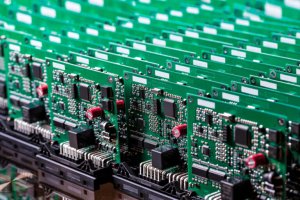
3. The Impact of Regularly Shaped PCBs
Square or rectangular PCBs have regular shapes, making it easier for SMT equipment to maintain stability during transport and positioning. Rectangular boards are currently the most common shape; they are relatively straightforward to manufacture and are better suited to standardised production processes. Particularly in cases of high placement density, rectangular PCBs facilitate precise positioning and placement by the equipment. For example, a square board measuring 150 mm by 150 mm can make full use of the equipment’s placement area, thereby improving placement efficiency.
Although circular or polygonal PCBs are less common than rectangular ones, they are required in certain specialised applications. For instance, smart wearable devices often utilise circular or irregularly shaped PCBs to meet miniaturisation requirements. The processing of such boards typically requires specialised fixtures to ensure they do not move or rotate during the placement process, thereby preventing placement inaccuracies. Furthermore, the edges of non-rectangular PCBs often complicate assembly and handling, affecting overall production efficiency.
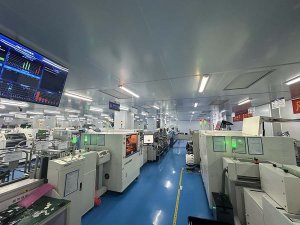
4.The Impact of Irregularly Shaped PCBs
Asymmetrical and irregularly shaped PCBs are adopted in certain specific applications to meet product design requirements. Not only do such PCBs require customised fixtures, but they may also slip or tilt during conveyance, increasing the difficulty of placement. This necessitates greater adaptability in production equipment and processes, as well as specially designed fixtures and positioning systems to ensure placement accuracy. As PCBs of this shape require specialised processes and equipment, manufacturing costs are often higher.

Conclusion
The impact of PCB dimensions and shapes on SMT assembly extends throughout the entire production process. For large-sized boards, attention must be paid to warpage control and positioning accuracy; for small-sized boards, a balance must be struck between panelisation efficiency and board separation integrity; standard-shaped boards are suited to standardised processes, whilst irregularly shaped boards require customised fixtures and specialised processes. Fully considering the impact of dimensions and shapes on SMT processing during the PCB design stage is a key prerequisite for improving production efficiency, ensuring assembly accuracy and controlling manufacturing costs.