
Component Obsolescence Management and Last-Time-Buy Strategy for PCBA
The semiconductor industry has a brutal truth: the component you designed in today may not be available tomorrow. Manufacturers discontinue parts for reasons ranging from process node migration to corporate restructuring to simple profit optimization. For products with long lifecycles — medical devices, industrial controls, automotive electronics, and military systems — component obsolescence is not an occasional headache. It is a persistent strategic threat that can force expensive redesigns, trigger production shutdowns, and strand inventory investments. At Keep best, we manage obsolescence risk proactively so our customers are never surprised by a discontinued part number.
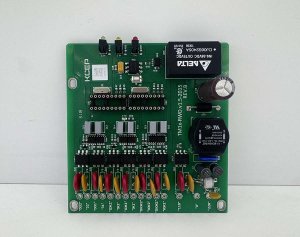
This guide explains how obsolescence happens, how to monitor and mitigate the risk, and how to execute last-time-buy strategies that protect your production without bankrupting your inventory budget.
Why Components Become Obsolete
Process Node Migration: Semiconductor manufacturers retire older fabrication processes as they invest in newer, smaller geometries. A microcontroller built on a 180-nanometer process may be discontinued when the foundry converts that line to 40-nanometer production.
End-of-Life Product Strategy: Manufacturers periodically prune their product portfolios to focus on high-margin segments. Low-volume or mature parts are discontinued even when demand still exists.
Corporate Consolidation: Mergers and acquisitions frequently lead to product line rationalization. The acquiring company may discontinue the acquired company’s parts in favor of its own portfolio.
Raw Material Constraints: Rare earth shortages, geopolitical trade restrictions, or environmental regulations can render certain component technologies economically unviable.
| Obsolescence Driver | Typical Warning Period | Mitigation Strategy |
| Process node migration | 12-24 months | Identify pin-compatible alternates from newer processes |
| Portfolio pruning | 6-18 months | Negotiate lifetime buy or last-time buy |
| Corporate merger | 3-12 months | Evaluate cross-manufacturer alternates early |
| Raw material issue | 3-6 months | Pre-position buffer inventory; qualify material alternates |
Obsolescence Monitoring and Early Warning
The key to managing obsolescence is early detection. By the time a part shows up on an end-of-life notice, your options are already limited.
Your manufacturing partner Monitoring System: We track component lifecycle status through multiple channels including distributor databases, manufacturer PCN notifications, and third-party obsolescence management services such as IHS Markit and SiliconExpert.
Notification Protocol: When a component is flagged as not recommended for new designs or end-of-life, The EMS provider notifies the customer within 5 business days. The notification includes a risk assessment, alternate recommendations, and a last-time-buy timeline.
BOM Health Reports: For ongoing production programs, Our assembly team provides quarterly BOM health reports classifying each component as active, NRND, EOL, or obsolete with recommended actions.
Last-Time-Buy Strategy
A last-time-buy is the final procurement of a component before it becomes unavailable. Executed well, it secures supply for the remaining product lifecycle. Executed poorly, it ties up cash in excess inventory or leaves you short when demand exceeds projections.
Lifetime Demand Forecasting: The foundation of a successful LTB is an accurate demand forecast. A qualified PCBA supplier works with customers to project remaining production volume based on historical consumption, market forecasts, and contractual commitments.
Attrition and Yield Buffers: Component attrition during assembly — from setup, feeder loading, and handling losses — must be factored into LTB quantities. Typical attrition rates range from 1% for expensive ICs to 5% for small passives.
Storage and Shelf Life: LTB inventory must be stored under conditions that preserve component reliability. Moisture-sensitive components require dry storage at less than 10% relative humidity. Electrolytic capacitors have finite shelf life due to electrolyte degradation.
| Storage Condition | Suitable For | The production partner Practice |
| — | — | — |
| Standard warehouse | Non-MSL passive components | Temperature controlled; FIFO rotation |
| Dry cabinet (less than 10% RH) | MSL 2-5a components | Nitrogen-purged cabinets with humidity monitoring |
| Vacuum-sealed with desiccant | MSL 5b-6 components | Factory-sealed packaging; bake before use |
| Refrigerated (0-10°C) | Solder paste, certain polymers | Temperature logging; equilibration before opening |
Financial Considerations: LTB quantities can represent significant capital investment. Your PCBA partner offers consignment inventory arrangements where the customer owns the LTB stock but stores it in our warehouse, releasing it against production schedules without requiring customer warehouse space.
Alternate Qualification
The best defense against obsolescence is a qualified alternate. When the primary component becomes unavailable, a pre-qualified alternate can be substituted without engineering review or production delay.
Form-Fit-Function Equivalence: The alternate must match the original in package dimensions, pinout, electrical parameters, and environmental ratings. The supplier maintains alternate qualification documentation including datasheets, pinout comparisons, and electrical equivalence statements.
Process Qualification: Even electrically equivalent alternates may behave differently during soldering or testing. Keepbest performs first-article builds with alternates to verify process compatibility before production release.
Customer Notification: Alternate substitutions are never made without customer approval. Our engineering team presents alternate recommendations with supporting data and obtains written authorization before changing the BOM.
Frequently Asked Questions
Q: How far in advance does The manufacturing team warn customers of obsolescence?
Typically 12-24 months for NRND notifications and 6-12 months for formal EOL notices. This provides time for alternate qualification or last-time-buy execution.
Q: What if the last-time-buy quantity is wrong?
Over-procurement ties up working capital but secures supply. Under-procurement creates a shortage requiring emergency redesign or broker sourcing at premium prices. A trusted assembly provider provides demand modeling to optimize LTB quantity.
Q: Can Your manufacturing partner store LTB inventory for multi-year programs?
Yes. We offer vendor-managed inventory programs with climate-controlled storage, inventory tracking, and scheduled releases against production plans.
Q: What happens to obsolete inventory in our warehouse?
The EMS provider evaluates disposition options including return to distributor (if within return window), transfer to other programs, broker sale, or environmentally responsible disposal. We manage the entire disposition process.
Q: How much does obsolescence management cost?
Our assembly team includes basic obsolescence monitoring as part of our standard service. LTB execution, alternate qualification, and long-term inventory storage are quoted separately based on component count and storage duration.
Q: Does A qualified PCBA supplier manage obsolescence for consignment components?
Yes. Even when you supply components, we monitor their lifecycle status and notify you of obsolescence risks. However, the procurement and LTB execution remain your responsibility in a consignment model.
Concerned about component obsolescence in your product lifecycle?
Send your BOM to the Keep best supply chain team. We will deliver a comprehensive obsolescence risk assessment with recommended alternates, LTB timelines, and inventory strategies matched to your production horizon.