
The cost of small-volume SMT assembly prototyping often exceeds customers’ expectations, primarily because fixed costs cannot be spread across a small number of units. This article breaks down the cost components—such as set-up fees, engineering charges and stencil costs—to reveal the fundamental differences between small-volume and large-volume production, thereby helping customers to rationally understand the logic behind the quotations.
1.Common Misconceptions Among Clients
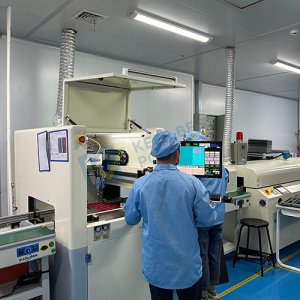
Clients new to SMT assembly often have unrealistic price expectations. For prototyping requirements of ten to twenty boards, their mental budget typically falls within the range of three to five hundred yuan, yet actual quotations often exceed one thousand yuan—a discrepancy of several times. This gap stems from a lack of understanding of the fixed cost structure in electronics manufacturing, leading to the mistaken belief that the process is simply a piecework-based labour model.
2.Detailed Breakdown of Small-Batch SMT Assembly Costs
2.1 Set-up Fees and Engineering Fees
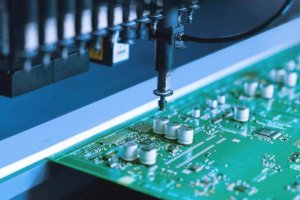
Set-up fees represent the minimum threshold required to cover the costs of starting up the production line, including basic investments such as equipment preheating, programme loading and first-piece verification. Engineering fees correspond to technical preparations such as the compilation of process documentation, the creation of placement programmes and BOM verification. As small-batch orders lack the volume to spread these fixed costs through economies of scale, they are reflected as a minimum charge.
2.2 Stencil Production Costs
The stencil is a precision mould used for solder paste printing, with production costs per sheet ranging from several hundred to over a thousand yuan. As the stencil investment remains the same whether producing one or a thousand boards, the proportion of stencil costs in small-batch orders is significantly higher than in large-volume orders.
2.3 Per-Solder-Joint Processing Fee
Standard batches are priced per solder joint, with unit prices ranging from 0.002 to 0.03 yuan per joint; additional charges apply for special processes. Although unit prices for small batches are similar, the total volume is too low for this revenue to cover the underlying costs.
3. The Inherent Nature of Fixed Costs
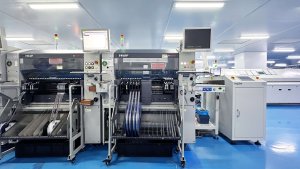
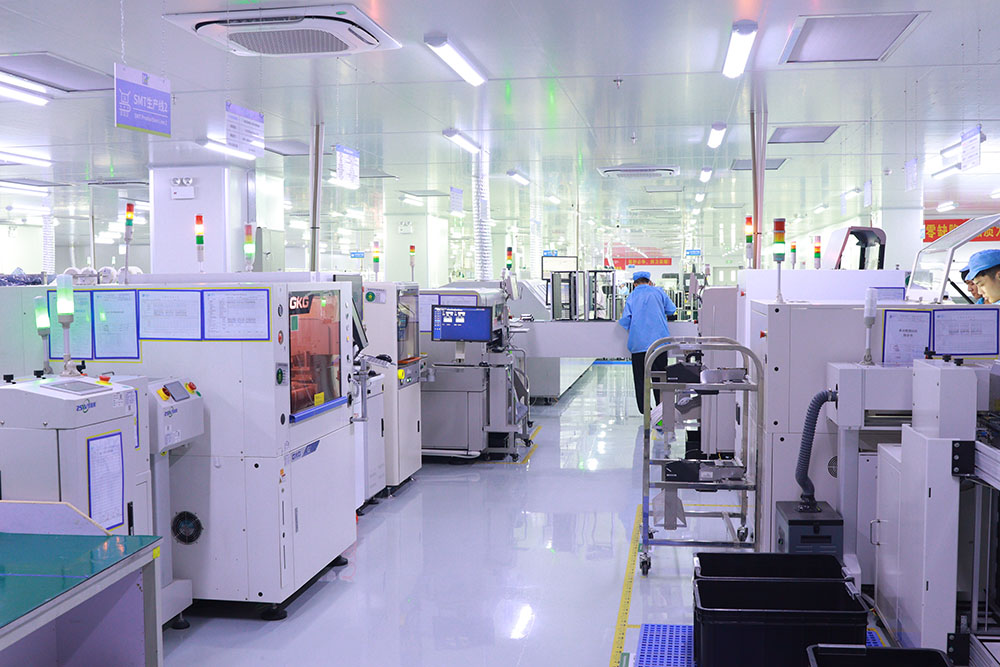
The integrity of the manufacturing process is not simplified by a reduction in quantity. Processes such as incoming component inspection, sample archiving and system entry, solder paste re-heating and stirring, PCB baking and dehumidification, SMT program programming, SPI solder paste inspection, AOI visual inspection, first-article functional verification, ageing and reliability testing, assembly, packaging and dispatch are all indispensable.
Labour costs are inherently fixed. The difference in pure SMT time between a single board and a hundred boards is minimal, yet the labour input required for each process remains exactly the same. Large-volume orders spread labour costs across thousands of units, whereas small-volume orders lack a sufficient base for allocation, causing unit costs to rise naturally.
4.Hidden Losses in Production Efficiency
Frequent start-ups and shutdowns of production lines severely hamper capacity utilisation. Standard production lines are halted immediately after line changeover and debugging, whilst equipment depreciation and staff waiting costs continue to accrue. Dedicated prototyping lines or small-batch production lines alleviate this issue through flexible configuration, but dedicated lines themselves entail higher equipment investment and maintenance expenditure.
5.Recommendations for Rational Cost Control
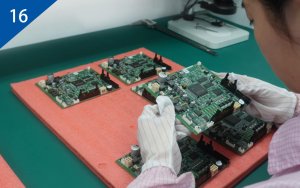
Customers can optimise costs in three areas. At the design stage, consolidate prototyping requirements to increase the order quantity per batch. At the supply chain stage, select manufacturers equipped with dedicated prototyping lines to avoid occupying standard production lines. At the planning stage, set aside a reasonable budget in advance and incorporate prototyping costs into the overall product R&D cost calculation.
6.Conclusion
The pricing for small-batch SMT assembly is not inflated, but rather a true reflection of the economies of scale inherent in the electronics manufacturing industry. Understanding the inevitability of fixed costs, such as set-up fees and engineering charges, helps establish reasonable cost expectations, promotes efficient collaboration between clients and manufacturers, and jointly facilitates the smooth transition of electronic products from prototype to mass production.