
Choosing the right PCB assembly manufacturer is one of the most consequential supply-chain decisions a hardware team can make. The partner you select will influence unit cost, yield rate, time-to-market, regulatory compliance, and the long-term reliability of every product you ship. In 2026, with shorter product lifecycles, tighter compliance requirements, and increasingly complex component supply chains, a transactional quoting mindset is no longer enough. Engineering teams need a structured framework for evaluating PCB assembly manufacturer candidates before committing tooling and intellectual property.

This guide walks through seven factors that separate exceptional electronic manufacturing partners from average ones. Whether you are launching a first prototype or transferring a mature product to mass production, these criteria will help you identify a turnkey PCB assembly provider capable of scaling with your business.
Why Partner Selection Defines Product Success
A PCBA partner is not merely a vendor that solders components onto boards. It is an extension of your product development organization. The best manufacturers contribute design-for-manufacturability feedback, source hard-to-find components, manage process documentation, and maintain quality systems that protect your brand reputation.
Conversely, a weak partner can introduce delays that cascade through your entire go-to-market plan. Late prototypes, hidden tooling fees, opaque pricing revisions, and inconsistent solder joint quality are common symptoms of a mismatch between customer expectations and factory capabilities. Investing time upfront to evaluate candidates prevents these problems from surfacing when schedule pressure is highest.
The Real Cost of a Wrong Choice
- Engineering rework: Layout or BOM issues caught late require expensive design iterations.
- Production delays: Component shortages and capacity constraints push out delivery dates.
- Quality escapes: Inadequate inspection or test coverage lets defective units reach customers.
- Compliance risk: Missing certifications can block shipments into regulated markets.
Factor 1: Technical Capability and Equipment Portfolio
The first filter is whether the factory can actually build your product. Modern electronics span everything from simple single-sided consumer boards to high-density HDI assemblies with micro-BGAs, buried vias, and rigid-flex construction. A capable PCBA manufacturer China or regional partner should disclose its equipment list, placement accuracy, and supported board formats without hesitation.
Ask specifically about SMT line capacity, maximum board size, minimum component pitch, and support for advanced packages such as QFN, DFN, LGA, and BGA. If your design includes through-hole connectors or high-current devices, confirm that wave soldering, selective soldering, and hand-assembly stations are available. A factory that only excels at one process may become a bottleneck when your product mix diversifies.
Inspection and Test Infrastructure
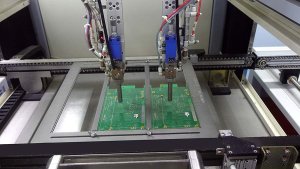
Placement accuracy means little without verification. Look for a layered inspection strategy that includes solder-paste inspection (SPI), 3D automated optical inspection (AOI), X-ray inspection for hidden solder joints, and in-circuit or functional test capabilities. These systems catch defects before they compound downstream.
- SPI: Validates solder paste volume and position after stencil printing.
- 3D AOI: Checks component placement, polarity, solder joint shape, and solder volume.
- X-ray: Reveals voids, bridging, and insufficient solder beneath BGA and QFN packages.
- ICT/FCT: Confirms electrical performance against product specifications.
Factor 2: Certifications and Quality Systems
Certifications are not decorative badges. They demonstrate that a factory follows documented, audited processes for quality management, traceability, and risk control. For general industrial and consumer products, ISO 9001 is the baseline. If you serve automotive, medical, or aerospace markets, IATF 16949 and ISO 13485 become essential.
Do not accept a certificate logo on a website as proof. Request the certificate number, issuing body, and scope of certification. Then verify validity through the registrar’s online database. A legitimate electronic manufacturing services provider will welcome this diligence because it differentiates them from unqualified competitors.

Regulatory and Environmental Compliance
Beyond quality systems, confirm that the partner understands RoHS, REACH, halogen-free requirements, and any market-specific regulations such as UL, CE, or FCC. If your product contains batteries, RF modules, or medical sensors, the compliance landscape becomes significantly more complex and requires documented control plans.
Factor 3: Supply Chain and Component Sourcing
Component availability has been volatile for years, and lead times remain unpredictable for many semiconductor families. A strong PCB assembly manufacturer treats procurement as a core competence, not an administrative afterthought. Ask how they manage BOM health checks, alternates, lifecycle monitoring, and allocation sourcing.
At Keep Best PCB Assembly, the procurement team cross-references every BOM line against distributor inventory, manufacturer lead times, and end-of-life notices before production commitment. This proactive approach prevents the unpleasant discovery that a critical IC is unavailable two weeks before a scheduled build.
What to Ask About Sourcing
- Do you purchase directly from authorized distributors and manufacturers?
- How do you handle component allocation and shortage situations?
- Can you source equivalent alternates and present them for approval?
- What is your policy on counterfeit prevention and incoming material inspection?
Factor 4: Geographic Footprint and Scalability
Manufacturing geography affects logistics cost, communication latency, tariff exposure, and business continuity. A partner with multiple facilities can balance cost efficiency with regional proximity. For example, a one-stop PCBA solution provider with headquarters in Shenzhen, additional capacity in Jiangmen, and an emerging site in Thailand offers flexibility that a single-location factory cannot match.
Scalability matters just as much as location. The ideal partner can support you from ten prototype units through tens of thousands of production units without forcing a factory transfer. Ask about capacity utilization, expansion plans, and how they handle demand spikes. If your forecast doubles next year, you want a partner that celebrates your growth rather than one that turns away orders.
Factor 5: Engineering Support and DFM Culture
Early engineering engagement is where the best partners create outsized value. A factory with a strong DFM culture will review your Gerber files, BOM, and assembly drawings before the first solder paste print. They will flag pad geometry issues, component spacing concerns, thermal relief problems, and test accessibility gaps before they become production defects.
This collaboration is especially valuable for startups and teams launching their first hardware product. Instead of learning manufacturing constraints through painful trial and error, you receive structured feedback that improves your design while it is still inexpensive to change.
Signs of a Strong DFM Process
- Written DFM report with actionable recommendations, not just a pass-fail checklist.
- Direct access to process engineers who can explain trade-offs.
- Willingness to participate in design reviews before layout freeze.
- Clear documentation of design changes and their manufacturing impact.
Factor 6: Traceability and Manufacturing Intelligence
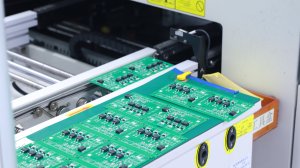
In regulated industries and high-reliability applications, traceability is non-negotiable. Every component lot, every solder paste batch, every machine program, and every test result should be linked to a specific serial number or work order. Modern factories use MES systems to capture this data in real time.
Manufacturing intelligence goes beyond record-keeping. Dashboards that track first-pass yield, defect pareto charts, machine utilization, and downtime reasons give both the factory and the customer visibility into performance. When evaluating electronic manufacturing services providers, ask for examples of the reports they share and how quickly they can investigate a quality issue.
Factor 7: Commercial Model and Pricing Transparency
Price is always important, but the lowest quote rarely delivers the lowest total cost. A transparent commercial model separates true costs from hidden ones. Your quotation should clearly show NRE, stencil charges, programming fees, component costs, labor rates, test development, and any recurring engineering support.
Be cautious of quotes that seem artificially low. They often omit critical items that appear later as change orders. Equally, be wary of partners who cannot explain why their price differs from a competitor. A professional PCB assembly manufacturer will walk you through the cost drivers and suggest design or process changes that reduce cost without sacrificing quality.
Pricing Red Flags
- Vague line items such as “miscellaneous” or “administrative fees.”
- No breakdown between material, labor, and overhead.
- Large price swings between prototype and production without clear justification.
- Reluctance to share component cost breakdowns.
Building a Scorecard for Your Evaluation
With these seven factors in mind, create a simple scorecard for each candidate. Rate technical capability, certifications, supply chain strength, geographic fit, engineering support, traceability, and pricing transparency on a consistent scale. Weight each category according to your product’s priorities. A medical device may weight certifications and traceability highest, while a consumer wearable may prioritize cost and scalability.
The scorecard keeps the evaluation objective and helps stakeholders align on a decision. It also surfaces gaps that can be addressed through supplier development before production begins.
Common Mistakes to Avoid When Selecting a PCBA Partner
Even experienced procurement teams fall into predictable traps. One common mistake is selecting a partner based solely on the lowest unit price, only to discover later that stencil fees, programming charges, and expedite premiums erase the apparent savings. Another is overestimating a factory’s capabilities because of a polished website rather than verified equipment and certifications.
A third mistake is neglecting communication cadence. If responses take days during the quoting phase, they will likely take days during a production crisis. Finally, avoid partners who resist sharing process data or quality metrics. Transparency is a leading indicator of a mature operation, and its absence often predicts future problems.
Conclusion
Selecting a PCB assembly manufacturer is a strategic decision that deserves the same rigor as selecting a semiconductor vendor or a software development partner. The right turnkey PCBA provider brings technical depth, quality discipline, supply chain resilience, and engineering collaboration that accelerate your product roadmap. The wrong one introduces risk, delay, and cost that erode margins and damage customer relationships.

By evaluating technical capability, certifications, sourcing strength, geographic scalability, DFM culture, traceability, and pricing transparency, you position your team for a productive long-term partnership. Contact Keep Best PCBA for professional get a free quote guidance and discover how our one-stop PCBA solution can support your next project from prototype through global production.