
Guide to Selecting SMT Surface-Mount Inductors for Small-Volume Production
In SMT manufacturing, surface-mount inductors perform functions such as choking, decoupling, filtering and tuning. This article systematically outlines the classification of surface-mount inductors, soldering processes, selection parameters and usage precautions, providing a technical reference for the appropriate application of wire-wound and multilayer inductors.
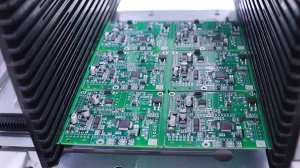
1.Basic Types of Surface-Mount Inductors
Surface-mount inductors are primarily divided into two major categories: wire-wound and multilayer. Wire-wound inductors achieve inductance by winding enameled wire around a core; they feature high Q-factors and strong current-carrying capacity, making them suitable for high-frequency circuits. Multilayer inductors utilise a multi-layer printing process; they are compact and offer good consistency, making them suitable for high-density assembly scenarios.

2.Selection Based on Frequency Band Suitability
General-purpose inductors are suitable for standard frequency bands in the tens of megahertz range, meeting conventional filtering and decoupling requirements. High-frequency inductors for microwave applications are designed for frequency bands above 1 GHz, ensuring impedance matching in RF circuits. Specialised high-frequency surface-mount inductors for resonant circuits are used in frequency-selective circuits to ensure centre frequency accuracy. Wire-wound inductors are suitable for communication equipment operating in the 150 to 900 MHz frequency range, whilst microwave high-frequency inductors are intended for circuits operating at frequencies above 1 GHz.
3.Soldering Process Compatibility
Most surface-mount inductors support both reflow and wave soldering processes. However, certain inductors with specialised structures may be restricted from wave soldering due to limitations in the internal core or coil encapsulation; process compatibility must be verified during selection. Verify the temperature profile requirements in the inductor datasheet prior to soldering to avoid thermal shock, which may cause the core to crack or the inductance value to drift.
4.Key Considerations for Pad Design
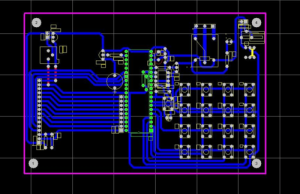
The net width of the pads on a surface-mount inductor should be smaller than the net width of the inductor body. This design prevents excess solder and avoids tensile stress caused by solder shrinkage during the cooling phase, which could alter the inductance value, thereby ensuring the stability of electrical parameters.
5.Accuracy and Lead Times
Standard surface-mount inductors on the market have an accuracy of ±10%, which is sufficient for general filtering and power supply applications. High-precision inductors with an accuracy better than ±5% require advance ordering and have longer production lead times; therefore, sufficient procurement time must be allowed for during project planning.
6.Precautions for Repair and Replacement
During repairs, surface-mount inductors must not be replaced based solely on their inductance value. It is essential to verify key parameters such as the inductor’s operating frequency range, rated current and Q-factor to ensure that the replacement component matches the original design and guarantees normal circuit functionality.
7.Visual Identification and Error Prevention
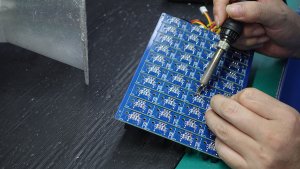
Surface-mount inductors are highly similar in appearance and are difficult to distinguish by visual inspection alone. During manual soldering or surface-mount assembly, strictly adhere to the part number verification procedure to avoid circuit failure caused by incorrect component selection.
8.Relationship Between DC Resistance and Q-Factor
For the same inductance value, the DC resistance of coils with different wire gauges varies. In high-frequency circuits, DC resistance directly affects the Q-factor; a design with low DC resistance helps improve the selectivity and efficiency of the filter.
9.High-Current Carrying Capacity
The maximum allowable current is a key parameter for surface-mount inductors. When the circuit requires high current, the inductor’s saturation current and temperature rise current must be comprehensively assessed to prevent a sudden drop in inductance or device damage due to core saturation.
10.Adjustment Methods for Power Inductors
When power inductors are used in DC/DC converters, the inductance directly affects output ripple and efficiency. The inductance can be fine-tuned by increasing or decreasing the number of coil turns to optimise the power supply’s operating conditions. Adjustments must ensure that the core is not saturated and that the temperature rise remains within permissible limits.

11.Conclusion
The selection of surface-mount inductors requires a comprehensive consideration of frequency characteristics, soldering processes, accuracy grades, current capacity and Q-factor requirements. Both wire-wound and multilayer types have their respective applications; for high-frequency applications, priority should be given to DC resistance and self-resonant frequency. Standardised pad design and strict part number management are fundamental to ensuring the quality of small-batch SMT manufacturing.